


Why your grass seed is not germinating — the honest step by step diagnosis for Texas homeowners
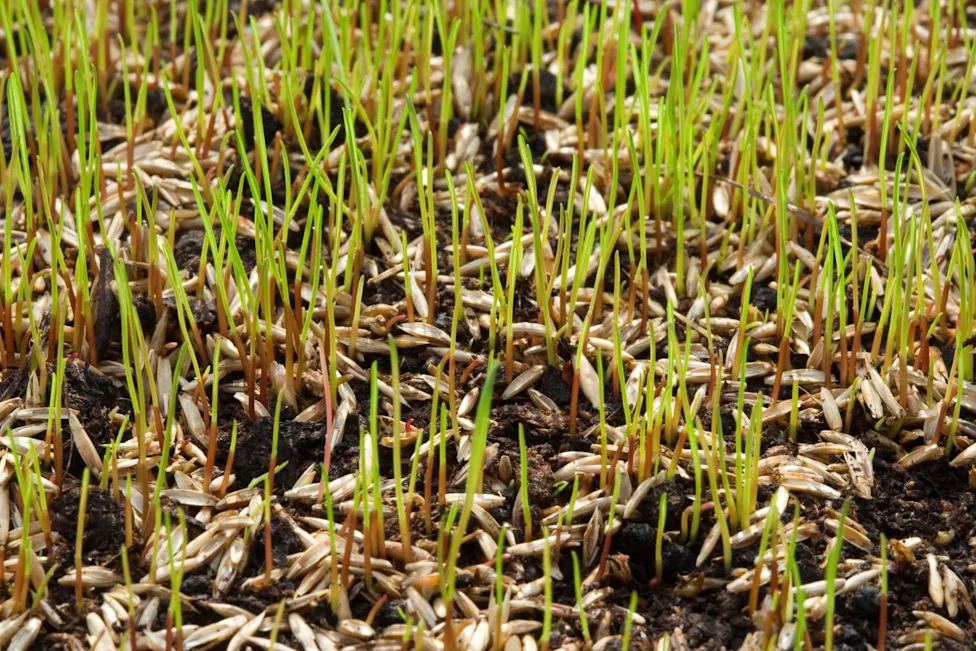
You put seed down days ago and nothing is growing. Maybe it has been a week. Maybe it has been two weeks. The yard looks exactly like it did when you seeded it — bare ground with maybe a few scattered spots that might be the beginning of something or might be weeds. The question is not whether something is wrong — clearly something is — but what specifically is causing the failure and whether it can be fixed or whether the seed needs to be reapplied.
The honest answer is that grass seed failure to germinate in Texas has a small number of causes that account for the vast majority of cases. Identifying which cause applies to your specific situation is the step that most homeowners skip — and the one that determines whether the fix works or whether the next attempt fails for the same reason.
This guide walks through every significant cause of grass seed germination failure in Texas conditions with specific diagnostic criteria for each one so you can identify what went wrong and what the appropriate response is.
Before diagnosing — confirm the timeline is actually overdue
The most important diagnostic step is confirming that the timeline is genuinely overdue rather than simply at the point where impatience has set in before germination has had adequate time to occur.
Bermudagrass in appropriate soil temperatures with consistent moisture shows first sprouts in five to seven days. At day four with no visible germination the timeline is not overdue — it is normal. At day ten with no visible germination anywhere despite adequate soil temperature and consistent watering something is genuinely wrong.
Tall Fescue in fall cool-season conditions shows first sprouts in five to ten days. Buffalograss is slower — ten to fourteen days for first germination is normal.
The specific diagnostic threshold for genuine germination failure is no visible germination anywhere across the majority of the seeded area at day twelve to fourteen for Bermuda and Fescue or day eighteen to twenty-one for Buffalograss with consistent moisture and appropriate soil temperatures. Before that threshold visible germination in some sections but not others is normal variation rather than failure.
Cause one: soil temperature outside the germination range
Soil temperature at the germination depth is the most fundamental variable in grass seed activation — and it is the cause most commonly responsible for complete germination failure across the full seeded area rather than partial or variable germination.
Bermudagrass requires soil temperatures consistently above 65 degrees Fahrenheit at the two-inch depth. Seeded when soil temperatures are below this threshold Bermuda does not germinate reliably regardless of how consistent the watering is or how good the seed quality is. The biology of warm-season grass germination simply does not activate reliably below the temperature threshold.
Tall Fescue requires soil temperatures between 50 and 65 degrees. Fescue seeded in summer when soil temperatures exceed 80 degrees faces biology that works against germination — the cool-season grass does not germinate reliably in hot soil conditions.
How to diagnose this cause: use a soil thermometer to check the actual temperature at the two-inch depth — not the air temperature not the feel of the weather. A reading below 65 degrees for Bermuda or above 70 degrees for Fescue confirms the temperature mismatch.
What to do: if the soil temperature is outside the germination range the seed cannot be activated by more watering better technique or patience. The practical path forward is either waiting for the appropriate seasonal window when soil temperatures enter the germination range or accepting that the current attempt will produce minimal germination and planning a reapplication in the correct timing window.
Cause two: inadequate or inconsistent moisture
Grass seed that begins the germination process and then dries out before completing it loses viability — the biological process that germination requires needs continuous moisture from activation through sprout emergence. A watering schedule that produces adequate moisture for part of the day and allows the seed bed to dry completely during the rest of it produces the initiation of germination in seeds that then fail to complete the process.
In Texas conditions this cause is more common than in more humid climates because the combination of heat low humidity and drying winds removes surface moisture from bare seed much faster than typical schedules anticipate. The homeowner who waters once a day in July in the DFW area and wonders why germination is sparse or absent is watering at a schedule that does not maintain the continuous moisture that Texas summer conditions require for germination.
How to diagnose this cause: check the seed bed surface condition between scheduled watering sessions. If the surface is completely dry to the touch two to three hours after a session the current schedule is not maintaining adequate moisture between sessions. Dried cracked soil surface between sessions is the visible confirmation of this cause.
What to do: increase session frequency immediately. Move from once daily to two or three times daily if conditions are drying the surface between sessions. If the seed has been on the surface for more than ten days with inconsistent moisture some seed viability may have been lost — give the increased frequency schedule ten to fourteen additional days before concluding that reapplication is needed.
Cause three: poor seed-to-soil contact
Grass seed that is sitting on top of thatch dead vegetation or a hard dried clay crust without making direct contact with actual soil has dramatically reduced germination rates compared to seed in direct soil contact. The seed may be viable the moisture may be adequate and the temperature may be right — but germination that completes without soil contact does not produce the root anchoring that allows the seedling to survive past emergence.
On existing lawns with thatch buildup this is the cause of the inconsistent germination pattern where some sections — the ones where seed found its way through the thatch to soil — germinate while others — the ones where seed sat in the thatch canopy — do not. On bare new construction lots the hard dried clay surface that forms between watering sessions creates a physical barrier between the seed and workable soil.
How to diagnose this cause: on existing lawns probe the surface in sections that are not germinating and check whether seed is sitting in thatch or has reached soil contact. On bare construction lots assess the surface hardness — a surface that has formed a crust between sessions is presenting the seed with a physical barrier rather than a welcoming germination medium.
What to do: on existing lawns dethatch before reseeding to create the soil contact that seeds need. On bare construction lots pre-irrigating the surface for a day or two before seeding softens the clay crust and creates a more receptive germination medium. For future applications on challenging clay surfaces hydroseeding on properly prepared soil addresses the seed-to-soil contact problem structurally rather than requiring the homeowner to manage it through timing.
Cause four: seed quality problems
Seed viability — the percentage of seed in the bag that is actually capable of germinating — varies with seed quality age storage conditions and whether the seed was damaged during handling or storage. Old seed improperly stored seed and low-quality commodity seed can have germination rates significantly below what the label claims — meaning that a meaningful portion of what was applied was never capable of germinating regardless of how well everything else was managed.
How to diagnose this cause: germination is uniformly low or absent across the full application area despite correct soil temperature consistent moisture and adequate seed-to-soil contact — a pattern suggesting the problem is the seed rather than a site-specific condition. Very low-cost seed from a discount source or old seed from a previous season that was stored in non-optimal conditions are both higher risk for viability problems.
What to do: for reapplication use certified quality seed with labeled germination rate specifications from a reputable source. For a hydroseeding application ask the contractor specifically about seed source and germination rate certification — a contractor who uses certified seed and can provide germination rate specifications is using seed quality that the application rate assumes.
Cause five: herbicide interference
Pre-emergent herbicides prevent germination by design — and they do not distinguish grass seed from weed seed. A pre-emergent application made within eight to twelve weeks before a seeding attempt will suppress or eliminate germination of the new grass as effectively as it suppresses weeds.
Post-emergent herbicides applied too early in the germination or establishment process can damage or kill seedlings that have germinated but have not yet developed the maturity to tolerate the chemical.
How to diagnose this cause: pre-emergent was applied on a routine spring schedule without awareness of the conflict with the planned seeding. The application date and the pre-emergent application date are within the eight to twelve week window where interference is likely.
What to do: if pre-emergent interference is suspected the seed viability window for the current application has likely closed. Wait for the pre-emergent to pass its active period — typically eight to twelve weeks from application — before reseeding. Plan future seeding applications with awareness of the pre-emergent timing conflict and either adjust the pre-emergent timing to avoid the conflict or accept that weed management during the establishment window will be managed through means other than pre-emergent.
Cause six: soil compaction preventing root development
On severely compacted soils germination can occur at the surface while root development hits the compaction layer within the first inch or two — producing seedlings that emerge and then die rather than seedlings that emerge and establish. The germination appears to happen and then fails — a pattern distinct from complete germination failure that indicates the establishment environment rather than the germination conditions as the limiting factor.
How to diagnose this cause: germination appeared at days five to seven but seedlings are dying or disappearing rather than developing. The soil surface is hard and barely gives underfoot. A soil probe meets significant resistance within two to three inches.
What to do: the fix requires mechanical compaction relief before reseeding — aeration for moderate compaction skid steer or deep tilling for severe compaction. Seeding again on the same compacted surface produces the same seedling mortality pattern.
Cause seven: the seed washed away
A significant rain event within 48 hours of seeding — before any surface bonding has occurred to hold the seed in place — can displace broadcast seed from the location where it was applied and concentrate it in low spots drainage channels or off the property entirely. The sections from which seed washed produce no germination because there is no viable seed present to germinate.
How to diagnose this cause: application was followed by significant rainfall within 48 hours. The germination pattern shows bare sections that correspond to areas where water would have flowed and germination in low spots where displaced seed concentrated.
What to do: reseed the sections that were bare — after confirming that the rain event that caused the displacement is not being followed immediately by another event that would displace the replacement seed. For future applications on slopes or in areas prone to heavy rainfall events hydroseeding with BFM provides the bonding that resists seed displacement from the rain events that defeat broadcast seed placement.
When reapplication is the right answer
After diagnosing the specific cause the determination of whether to continue waiting for the current application to produce results or to proceed with reapplication follows from whether the cause is correctable without reapplication.
Soil temperature that is outside the germination range requires waiting for the appropriate season rather than reapplication now — reseeding at the same soil temperature produces the same germination failure.
Inadequate moisture that has been corrected by increasing session frequency may still produce germination if the seed has not been on the surface long enough to have lost viability — give the corrected schedule two weeks before concluding that reapplication is needed.
Poor seed-to-soil contact corrected through dethatching or surface preparation warrants reapplication on the improved surface — the seed that was present without adequate contact has likely lost viability after weeks on the thatch surface.
Herbicide interference requires waiting for the active period to pass before reapplication rather than applying immediately.
Compaction requires mechanical relief before reapplication — reapplication on the same compacted surface produces the same result.
Seed wash displacement warrants immediate touchup reapplication on the bare sections with awareness of any forecast rain events that might repeat the displacement.
The bottom line on grass seed germination failure in Texas
Grass seed that does not germinate in Texas has a specific cause that accounts for the failure. The cause is identifiable through the pattern of the germination failure the timing relative to the application the soil temperature at the germination depth and the moisture consistency of the management through the waiting period.
Identifying the cause before reapplication is the step that makes the reapplication different from the attempt that failed — because the cause that produced the failure is addressed before more seed goes down rather than repeated with the next attempt.

Seeded your Texas lawn and not seeing the germination you expected?
Fox Hydroseeding LLC is owner-operated and personally available to assess germination concerns and identify what went wrong before recommending a corrective approach. We diagnose before we prescribe.
Get Your Free Estimate → foxhydroseeding.com/contact
Bring Your Property to Life With Expert Hydroseeding
Find Us On


Email address

Phone Number

