


What to look for when getting a hydroseeding estimate — a homeowner's guide to comparing quotes
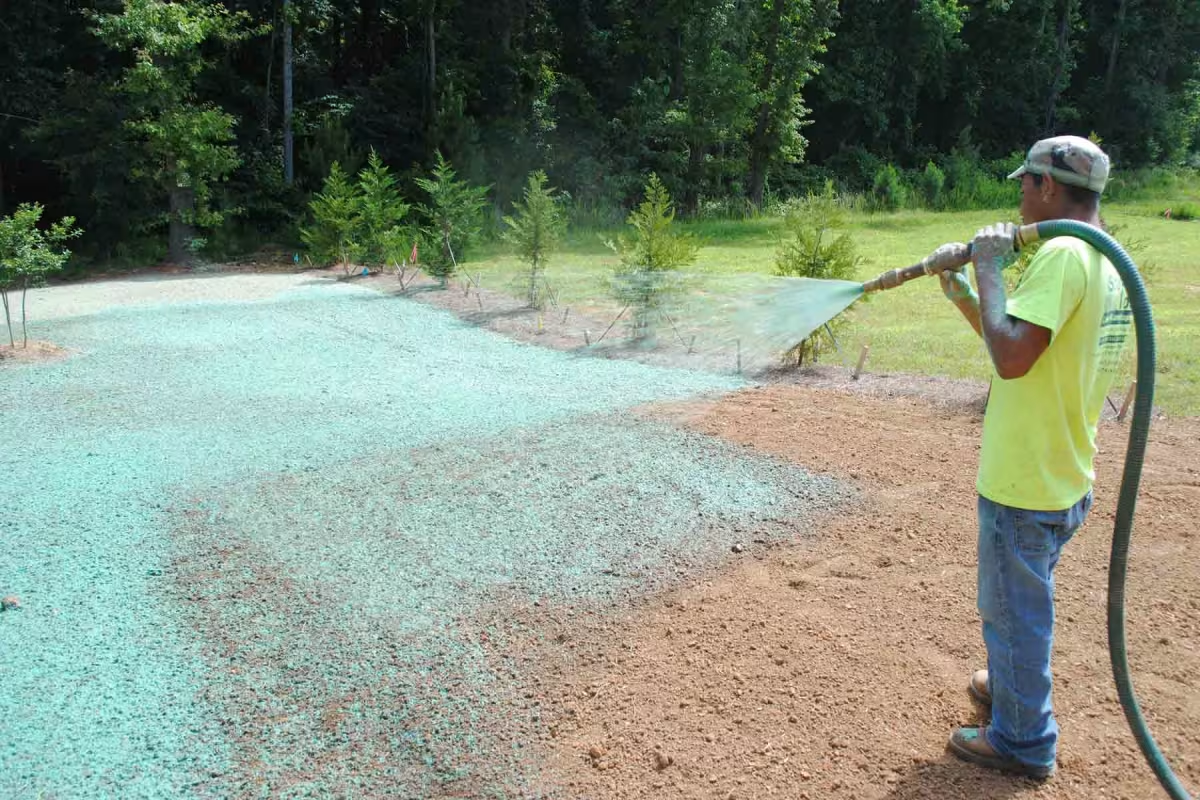
Getting a hydroseeding estimate is not complicated but knowing what to look for in one makes a significant difference in whether you end up with a quality result or a disappointing one. Not all estimates are created equal and the differences between a thorough professional quote and a vague low-ball number tell you a lot about the contractor behind it before any work begins.
This guide walks you through exactly what a quality hydroseeding estimate should include what questions to ask before signing anything and what warning signs to watch for when comparing quotes.
Why the estimate matters as much as the application
The estimate is the first real test of a hydroseeding contractor. It is where you find out whether they understand your specific property whether they can explain what they are recommending and why and whether they are willing to put the details of the job in writing before asking for your business.
A contractor who gives you a thorough accurate estimate with clear details about what is included is showing you how they operate — attention to detail clear communication and professional accountability. A contractor who gives you a rough number over the phone without seeing your yard is showing you the same thing.
The estimate conversation also sets the expectations that determine your satisfaction with the result. A contractor who explains the realistic germination timeline answers your questions about aftercare and identifies site preparation needs before the application eliminates the surprises that cause most homeowner complaints about hydroseeding results. What looks like a performance issue after the job is often a communication failure before it.
The first thing to check: did they walk your property
A quality hydroseeding estimate starts with an on-site visit. The contractor should walk your entire yard — not just look at it from the driveway — before putting any numbers together. They should be looking at the soil condition the terrain the sun exposure the access points and any features of the property that affect how the job is approached.
A quote based on square footage alone without a property walkthrough is a quote built on incomplete information. The square footage tells you how much area needs to be covered. It does not tell you whether the soil needs topsoil addition whether there are slopes that require different mulch products whether access for the equipment requires special consideration or whether existing vegetation needs to be addressed before the application.
If a contractor gives you a firm price over the phone or by email without visiting your property treat that number as a placeholder not a real estimate. Ask them to come out and walk the yard before committing to anything.
What should be itemized in a written estimate
A professional hydroseeding estimate should be written not verbal and it should break down what is included with enough specificity that you understand exactly what you are paying for. These are the line items and details that should appear in any quality estimate.
Total square footage to be hydroseeded. This should match your walkthrough conversation. If the contractor measured a different area than you expected ask them to walk you through what was included and what was not.
Seed mix specification. The estimate should name the grass type or types being used — Bermudagrass Tall Fescue Buffalograss or whatever mix is being recommended — and ideally the specific variety or blend. A generic reference to grass seed without specifying the type is not sufficient. You should know what is going into the ground before you agree to pay for it.
Mulch product specification. Standard wood fiber paper fiber or bonded fiber matrix — the estimate should specify which product is being used. If BFM is included the estimate should explain why your site conditions require it. If standard mulch is being used on a site with significant slopes that should prompt a question about whether the product is appropriate.
Starter fertilizer inclusion. Most professional hydroseeding applications include starter fertilizer in the slurry. Confirm it is included rather than assuming — a low quote that does not include fertilizer is not directly comparable to one that does.
Tackifier inclusion. Tackifier helps the slurry bond to the soil surface and is a standard component of a quality application. It should be included in the mix without needing to be asked for specifically.
Site preparation scope. This is one of the most important items and one of the most commonly unclear points in hydroseeding estimates. The estimate should clearly state what site preparation is included — basic surface raking light debris removal minor grading — and what is excluded or quoted separately — skid steer work topsoil addition significant grading. If you need substantial site prep and the estimate does not address it you are likely going to get a surprise conversation on application day about extra costs.
Application area details. If your yard has specific areas being treated differently — slopes getting BFM shaded zones getting a different seed mix areas excluded from the application — these distinctions should be reflected in the estimate rather than lumped into a single line item.
Aftercare instructions. A quality estimate or the estimate conversation should include clear aftercare expectations — watering schedule germination timeline first mow timing and what to contact the contractor about if something looks wrong. This information does not have to be in the written estimate itself but it should be communicated clearly before the job is done.
Questions to ask before accepting any estimate
Beyond reviewing what is in the written estimate these are the questions worth asking directly during the estimate conversation.
Why are you recommending this specific seed mix for my yard. A contractor who can explain the reasoning — your sun exposure your soil type the time of year your intended use — is demonstrating real knowledge of your property. One who gives a generic answer or cannot explain the recommendation is applying a one-size-fits-all approach.
What mulch product are you using and why. The answer should reflect your specific site conditions. If you have slopes ask specifically whether the grade warrants BFM over standard mulch. If the contractor cannot explain the difference between mulch products that is worth noting.
Is site preparation included in this estimate. If not what does my yard need and what would it cost. Do not assume site prep is included — confirm it explicitly and understand what level of prep the contractor thinks your yard needs before the application.
What germination timeline should I realistically expect. The answer should be specific to your grass type the time of year and the current soil temperature conditions in the DFW area — not a generic one-size-fits-all number.
What should I do if something looks wrong after the job. A contractor who is confident in their work has a clear answer to this question. One who deflects or becomes evasive is showing you something worth paying attention to.
Do you have references from similar projects in the area. Completed residential or commercial work in the DFW area that you can verify is the most reliable indicator of consistent quality.
Warning signs in a hydroseeding estimate
Just as important as knowing what a good estimate includes is knowing what a questionable one looks like.
A price significantly below other quotes without explanation should prompt questions rather than excitement. Hydroseeding quality is directly tied to seed quality mulch fiber content and application technique. A dramatically lower price usually reflects cuts somewhere in the product or process — lower fiber content mulch lower quality seed lower application rate or skipped site prep steps. Ask specifically what is different about the lower quote before accepting it.
Vague product descriptions — grass seed and mulch without specifics — indicate either that the contractor does not want you to know the details or that they have not thought through the specifics of your project. Either way it is a reason to ask more questions.
Reluctance to put the estimate in writing is a significant warning sign. A contractor who is comfortable with their work and their pricing should have no problem providing a written quote that documents what they are committing to deliver.
Pressure to sign quickly or accept a verbal agreement without documentation is worth resisting. Quality contractors do not need to close deals through urgency. They let their work and their detailed estimates speak for themselves.
No mention of site preparation needs on a property that clearly requires them — particularly a new construction lot or a yard with visible compaction or drainage issues — suggests either that the contractor did not look carefully at the property or that they are underscoping the job to produce a more competitive price.
Comparing multiple hydroseeding estimates
Getting two or three estimates before choosing a contractor is reasonable and worth the time. When comparing quotes make sure you are comparing equivalent scopes of work — the same square footage the same seed type the same mulch product and the same site preparation included. Quotes that look dramatically different in price are often quoting different things rather than representing different prices for identical work.
Price is one factor in the comparison but it should not be the only one. The communication quality during the estimate process the clarity of the written quote the specificity of product recommendations and the contractor's willingness to walk your property and answer questions are all indicators of how the job itself will go.
The cheapest estimate is not automatically the wrong choice and the most expensive is not automatically the best. The estimate that reflects the most thorough assessment of your specific property with the clearest breakdown of what is included at a competitive price is the one most likely to result in the outcome you are paying for.
What happens after you accept an estimate
Once you accept a hydroseeding estimate confirm the application date and any weather contingency plan. Ask what you need to have done before the contractor arrives — site prep completion vegetation removal irrigation verification — so the application day goes smoothly.
Confirm payment terms and timing before the work begins. Know what is expected at the time of the application versus after completion and make sure those terms are documented.
Make a note of the specific aftercare instructions — watering schedule germination timeline mow timing — so you have them in writing rather than relying on memory after the contractor leaves. The first two weeks after the application are when the aftercare information is most critical and having it documented means you are not guessing about the right thing to do when questions come up.
The bottom line on hydroseeding estimates
A quality hydroseeding estimate is specific transparent and based on an actual assessment of your property. It tells you what seed is going in what mulch product is being used what site preparation is included and what you should realistically expect from the result. It gives you the information you need to make a confident decision and a clear basis for holding the contractor accountable to what they committed to deliver.
An estimate that lacks that specificity is not protecting you — it is leaving room for a result that does not match your expectations and a conversation after the job about why the details were different than you assumed.

Want a hydroseeding estimate that actually tells you what you are getting?
Fox Hydroseeding LLC provides written on-site estimates that break down every detail of the job — seed mix mulch product site prep scope and realistic expectations for your specific yard. Every estimate is handled personally by the owner.
Get Your Free Estimate → foxhydroseeding.com/contact
Bring Your Property to Life With Expert Hydroseeding
Find Us On


Email address

Phone Number

