

What is bonded fiber matrix — and does your project actually need it?
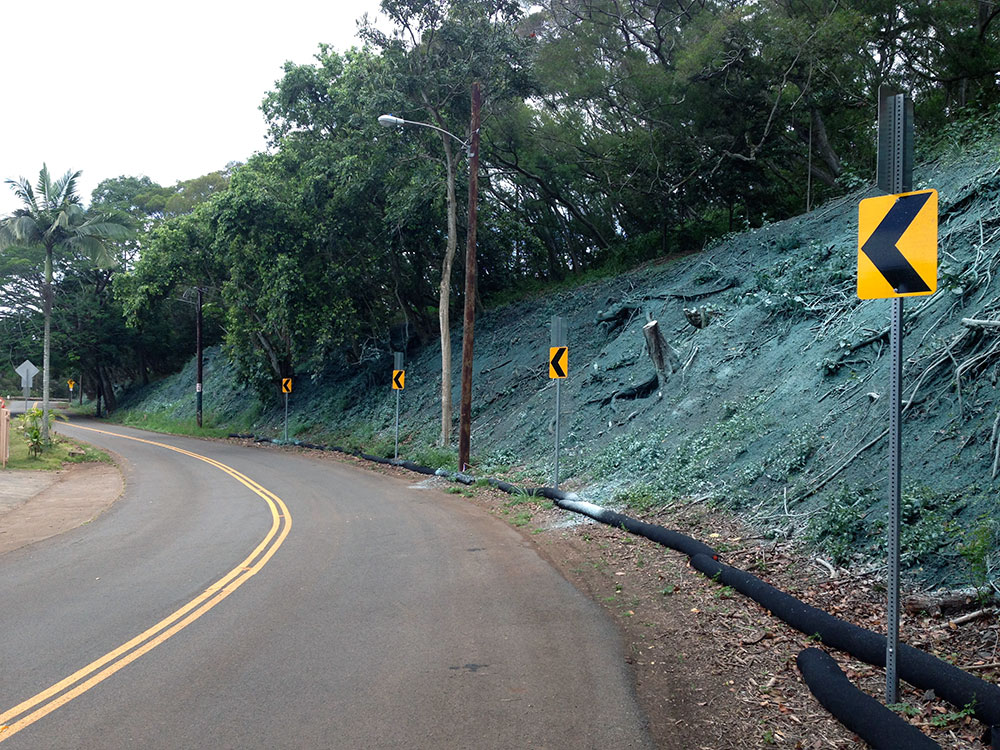
Bonded fiber matrix is a premium hydroseeding mulch product made from wood or cellulose fibers combined with bonding agents — sometimes called tackifiers or matrix agents — that cause the fibers to interlock and bond together after application. The result is a continuous, mat-like layer over the soil surface rather than a loose collection of fibers sitting on top of the ground.
That distinction matters more than it might sound. Standard wood or paper fiber mulch works well for most residential hydroseeding applications — it holds moisture, protects seed from heat and wind, and breaks down over time to add organic matter to the soil. But it does not form a cohesive mat. Under significant rainfall or on a steep slope, standard mulch can shift, wash off, or fail to maintain the continuous coverage that seed needs during the critical germination window.
BFM stays in place. The bonding agents cure after application and create a surface that resists erosion even through heavy rain events. On a slope or a disturbed construction site where standard mulch would wash away in the first significant storm, BFM maintains coverage long enough for the grass to germinate and the root system to begin providing permanent soil stabilization.
How bonded fiber matrix is applied
BFM is applied the same way as standard hydromulch — mixed into a slurry with seed, fertilizer, water, and other components and sprayed onto the prepared soil surface using a hydroseeder. The application process from the outside looks identical to a standard hydroseeding job.
The difference is in what happens after the slurry hits the surface. As the BFM application dries, the bonding agents activate and the fibers begin to interlock, forming the continuous mat that gives BFM its erosion control performance. The curing process typically takes 24 to 48 hours under normal conditions, which is why protecting a fresh BFM application from significant rainfall in the first two days is important when possible.
Application rates for BFM are typically higher than standard hydromulch — more product per square foot is needed to achieve the mat formation that makes BFM perform differently. This is a significant part of why BFM applications cost more than standard hydromulch on the same square footage.
When does a project actually need bonded fiber matrix?
This is the most important question to answer honestly, because BFM is the right product in some situations and unnecessary in others.
Steep slopes are the clearest case for BFM. If your project involves grades where standard hydromulch would be at risk of washing off during a rain event before the grass establishes, BFM is the appropriate product. The steeper the grade and the more exposed the slope to rainfall and runoff, the stronger the case for BFM over standard mulch.
There is no universal grade threshold that automatically triggers a BFM requirement — it depends on the specific slope, the soil type, the anticipated rainfall during the establishment window, and the consequences of erosion if the mulch fails. An experienced hydroseeding contractor will assess the grade and give you an honest recommendation. As a general reference point, slopes steeper than 3:1 — meaning three feet of horizontal run for every one foot of vertical rise — are typically where BFM starts becoming the appropriate choice over standard mulch.
Permitted construction sites are another clear BFM application. Many municipalities in the DFW area and across Texas specify BFM or an equivalent product on permitted construction sites as part of stormwater pollution prevention plan requirements. If your project has a permit and stormwater management requirements, check the specifications before accepting a quote that only includes standard hydromulch. A contractor who submits a quote with standard mulch on a BFM-specified site either has not read the plans or is cutting corners.
Highly disturbed soils on construction or grading projects benefit from BFM because the soil structure has been disrupted and the surface is more vulnerable to erosion than an undisturbed site. Even on moderate grades, disturbed soil has less cohesion than undisturbed soil, which increases the erosion risk during the establishment window.
Areas adjacent to drainage channels, retention ponds, or waterways where sediment runoff would be a problem are strong candidates for BFM regardless of slope. The cost of a BFM application in these areas is small compared to the cost of managing sediment discharge or dealing with regulatory violations from inadequate erosion control.
When standard hydromulch is sufficient
For most standard residential lawn hydroseeding applications in the DFW area, standard wood fiber hydromulch is the appropriate product. A flat or gently sloping residential yard being seeded with Bermuda or Fescue does not need BFM. The standard mulch provides adequate moisture retention and seed protection for a well-watered residential lawn under normal conditions.
Using BFM on a flat residential lawn where standard mulch would perform just as well is an unnecessary cost. If a contractor is recommending BFM for your flat backyard without a clear explanation of why the site conditions require it, that is worth questioning.
The honest guideline is straightforward — if the primary goal is lawn establishment on a relatively flat, non-eroding residential surface with consistent irrigation, standard hydromulch is right. If the primary goal involves erosion control, steep slopes, permitted sites, or disturbed soils where runoff is a real risk, BFM earns its cost.
BFM vs standard hydromulch: a direct comparison
Standard hydromulch is made of wood or paper fiber without bonding agents, does not form a continuous mat after application, performs well on flat to moderate slopes with consistent watering, is less expensive per square foot than BFM, and is the right choice for most standard residential lawn hydroseeding.
Bonded fiber matrix contains bonding agents that cause fibers to interlock and form a continuous mat, provides significantly better erosion protection on steep slopes and disturbed sites, maintains coverage through heavy rainfall events that would displace standard mulch, costs more per square foot due to higher material costs and application rates, and is the right choice for slopes, permitted construction sites, erosion-prone areas, and drainage-adjacent applications.
What to ask your contractor about mulch product selection
Before accepting any hydroseeding quote that includes BFM, ask your contractor to explain specifically why BFM is recommended for your project. A good contractor will point to the specific site condition — slope grade, soil disturbance, permit requirements, drainage proximity — that makes BFM the appropriate product rather than just defaulting to it because it increases the invoice.
Equally, if you have a project with significant slopes or erosion concerns and a contractor quotes you standard hydromulch without mentioning BFM, ask why. It may be that the grade does not require it. But it may also mean the contractor is quoting the cheaper product without fully assessing the site.
The right mulch product for your project is determined by your site conditions — not by what is cheapest or what produces the highest margin for the contractor. Asking the question directly and getting a clear answer is the best way to make sure you are getting the right recommendation.
The bottom line on bonded fiber matrix
BFM is a legitimate, high-performance erosion control product that earns its cost on the right projects. On steep slopes, disturbed construction sites, permitted applications with stormwater requirements, and areas adjacent to drainage where sediment control matters, BFM is often not just the better choice — it is the only appropriate one.
On flat residential lawns where standard hydromulch would perform just as well, it is an unnecessary upgrade. Understanding which situation your project falls into helps you make an informed decision and ask the right questions before any work begins.

Not sure whether your project needs bonded fiber matrix or standard hydromulch?
Fox Hydroseeding LLC assesses every site personally and recommends the right product for your specific conditions — no unnecessary upgrades, no cutting corners where the right product matters.
Get Your Free Estimate → foxhydroseeding.com/contact
Bring Your Property to Life With Expert Hydroseeding
Find Us On


Email address

Phone Number

