


What a hydroseeded lawn looks like after one year — an honest month by month account
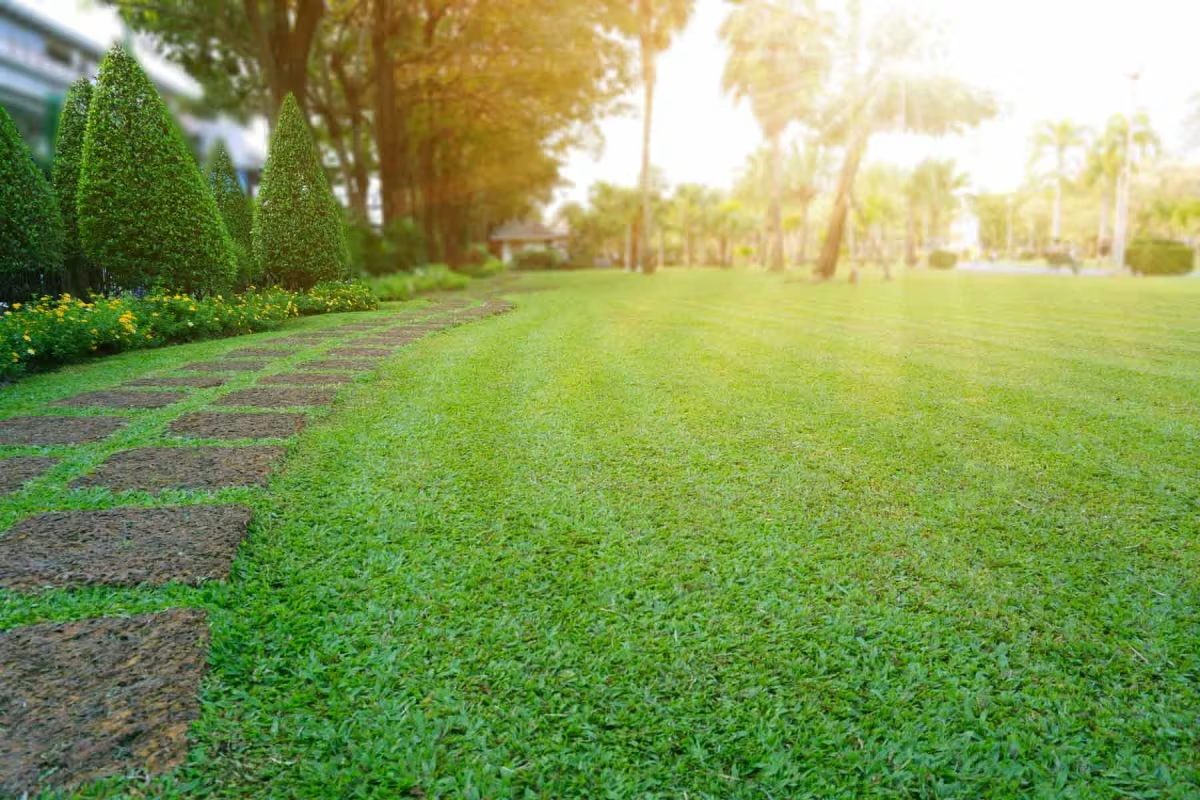
The before and after photos that lawn companies post online always show the same two moments — bare dirt before and thick green lawn after. What they never show is everything in between and what the lawn actually looked like at each stage of the first year. The anxiety of week two. The uneven early coverage that looked alarming. The first summer test. The moment it all came together.
This is that story. A month by month honest account of what a hydroseeded lawn in the DFW area actually looks like through the first year — not the highlight reel but the full picture including the stages that are normal and temporary and the management decisions that determined how the year ended.
Month one: the application and establishment
The application happened in late April — right in the optimal spring window for Bermudagrass in North Texas. The preparation work had been done the week before — compaction relief on a new construction lot that had been sitting bare since the builder finished in February topsoil addition to improve the stripped subsoil surface and debris removal that took longer than expected because construction material was mixed deeper into the surface layer than the initial walkthrough revealed.
Application day took about three hours for the full front and back yard. The characteristic green slurry went down evenly and the yard looked vivid and uniform when the contractor left. The mulch dye green is striking in person — more vivid than photos suggest and convincingly uniform across sections that the contractor reached with the hose at different points in the application.
Days one through five looked exactly like application day except the green faded slightly as the mulch dried. No sprouts. The irrigation ran on its programmed three-times-daily schedule. The anxiety of watching nothing happen for five days while questioning whether three sessions per day was actually necessary was real — and was managed by reminding myself repeatedly that this is what days one through five look like.
Day six produced the first sprouts. Thin individual green hairs in the section of the back yard with the most afternoon sun. By day seven there were dozens — still scattered still concentrated in the best-light sections but clearly present.
Day ten the germination had spread to most of the yard. The front yard was slightly behind the back — less sun exposure during the establishment window. Both were clearly on track.
Day fourteen the transition from three daily sessions to two slightly deeper sessions began. The lawn looked thin but alive across the full area. The mulch was fading from vivid green toward a lighter muted tone.
Week three the lawn started looking like a lawn from a distance. Coverage was developing visibly from week to week. The sparse appearance of week two was giving way to something that was clearly heading toward the finished result.
Week five the first mow. The front yard reached three and a half inches first — mowed with the blade at three inches with a freshly sharpened blade. The back yard followed three days later when it caught up to the same height. The first mow is one of the more satisfying home improvement moments — the lawn that was bare dirt five weeks earlier looked like a finished yard for the first time.
Month two: growing into itself
May was the month the lawn started looking like the result rather than the project. The coverage that had been developing through establishment was now clearly established. The mulch had largely disappeared. What was visible was all grass.
The front yard filled in a thin section along the north fence line that had been slower than the rest — the shade from the fence affecting both germination timing and early growth. By the end of May even that section was approaching the coverage of the rest of the front yard.
Mowing was on a weekly schedule through May as the Bermuda grew aggressively in the warm spring conditions. The mowing height stayed at two to two and a half inches — appropriate for established Bermuda in active growth.
Irrigation transitioned to a Tuesday and Saturday schedule — two deep sessions per week that were each long enough to penetrate six to eight inches. The shift from establishment watering to maintenance watering felt like a significant reduction in effort — from three daily sessions to twice weekly — and the lawn responded exactly as it was supposed to with continued development rather than stress.
First fertilization at six weeks post-application with a balanced starter fertilizer that continued supporting the root development that the starter in the slurry had begun. The lawn responded with noticeably deeper color through the second half of May.
Month three: the first heat test
June was when the lawn had its first real test. North Texas heat arrived in earnest — temperatures in the mid-90s through most of the month with a week pushing into the triple digits in the third week of June.
The irrigation schedule adjusted to three times per week as temperatures rose — still deep sessions but more frequent than the twice-weekly spring schedule to compensate for the increased evapotranspiration demand of the heat.
The lawn handled the June heat better than expected. Coverage remained solid. Color stayed acceptable — not the deep vibrant green of the cool spring weeks but the appropriate slightly lighter tone of Bermuda under heat stress with adequate water. No significant drought stress signals appeared.
The section along the north fence line that had been the last to establish showed slightly more stress response than the rest of the yard — the combination of less sun for density development during establishment and less heat tolerance than full-sun sections. Not a failure — just a reminder that shaded sections of a Bermuda lawn require more attention during heat stress than open sections.
Month four: summer maintenance and watching it hold
July was the hardest month of the first year. Not because the lawn failed but because maintaining it required the most consistent attention of any month in the year. Triple-digit temperatures for extended stretches. Several days of irrigation running every other day to maintain adequate moisture between sessions.
The lawn held. Not perfectly — one area near the back corner showed some thinning by mid-July where the root depth was apparently slightly less developed than surrounding sections. Not bare ground — just noticeably thinner than the rest of the yard. This became the section to watch for the fall and a candidate for touchup if it did not improve through fall regrowth.
The rest of the yard performed through July in a way that validated the spring preparation investment. The compaction relief and topsoil addition that had preceded the application had given the roots a growing medium they could penetrate and the deep watering progression through spring had built the root depth that accessed moisture from below the surface heat zone. The root depth that had been built through four months of deep watering was the reason the lawn held through July when other first-year lawns without that foundation were struggling visibly.
Month five: recovery and fill-in
August brought some recovery from the peak July stress as temperatures moderated slightly in the second half of the month. The thinned section in the back corner began recovering as the heat intensity decreased and the root system that had developed through the spring continued to provide the moisture access that summer recovery requires.
By the end of August the back corner section had recovered to a coverage level that was only slightly behind the surrounding sections — not fully caught up but clearly improving rather than continuing to decline.
Irrigation returned to the twice-weekly schedule in the second half of August as temperatures moderated. The transition felt like relief after the every-other-day schedule of peak July.
Month six and seven: fall transition and first dormancy
September and October brought the fall transition — temperatures moderating rainfall patterns shifting and the Bermuda beginning the slow approach toward dormancy.
The lawn entered fall dormancy in late October — browning beginning at the exposed sections first and spreading progressively toward the shaded areas that held green slightly longer. By early November the yard was fully dormant.
This was the first time looking out at a brown yard since the application — and the knowledge that it was normal healthy dormancy rather than failure made the appearance entirely acceptable. The root system that had been built through the first growing season was alive underground maintaining the crown viability that would generate spring green-up.
The fall assessment was straightforward. Approximately 85 to 90 percent of the yard had performed through the first growing season at or above expectations. The back corner section and the north fence area were the candidates for spring touchup — worth evaluating at mid-April green-up before deciding whether to address them.
Month eight through twelve: dormancy and spring anticipation
The winter months required minimal management. Occasional deep watering during dry periods to maintain crown moisture. Leaf removal from the deciduous tree in the back corner that had affected the north fence section through its canopy. Planning for the spring season — what preparation if any would precede any touchup applications.
The mid-April green-up assessment in month twelve of the year revealed a lawn that was recovering uniformly and vigorously across most of the yard. The back corner section was behind the surrounding area — confirming it as a touchup candidate. The north fence area was recovering acceptably and did not appear to require renovation.
The touchup hydroseeding on the back corner section was scheduled for late April — exactly one year after the original application. The rest of the lawn entered year two with the established root system and turf density that made the second growing season noticeably easier than the first.
What year one actually produced
The honest year-one summary for this lawn on a new construction lot in the DFW area is this. Application to first mow in five weeks. Solid established coverage through the first growing season with one section that required spring touchup. The lawn held through a Texas summer that tested it with triple digits and extended dry stretches. Root depth built through first-year management made the second summer significantly less demanding than the first.
That is what year one of a quality hydroseeded lawn on a properly prepared surface with committed establishment management and first-year deep watering produces. Not perfection in every section. Not instant results or effortless performance. A genuine established lawn that improved throughout the year and entered year two better positioned than it started.
The before and after photos at the one-year mark looked exactly like the after photos that lawn companies post online. What they did not show was every month in between that made them possible.
The bottom line on year one
Year one of a hydroseeded lawn is the foundation year. Everything that follows is built on it. The preparation that preceded it determined the ceiling of what was possible. The establishment management determined how close to that ceiling the lawn got. The first-year deep watering determined the root depth that made year two easier.
Done right year one produces the foundation that compounds into the lawn the neighborhood notices in year three. Done casually year one produces the thin struggling lawn that requires the renovation that year one good management would have prevented.

Ready to start year one of your own hydroseeded lawn the right way?
Fox Hydroseeding LLC personally walks every property and handles every step of the process from preparation assessment through application and aftercare guidance. Every estimate is handled by the owner.
Get Your Free Estimate → foxhydroseeding.com/contact
Bring Your Property to Life With Expert Hydroseeding
Find Us On


Email address

Phone Number

