


Topdressing and hydroseeding — how adding compost before the application improves everything about your lawn
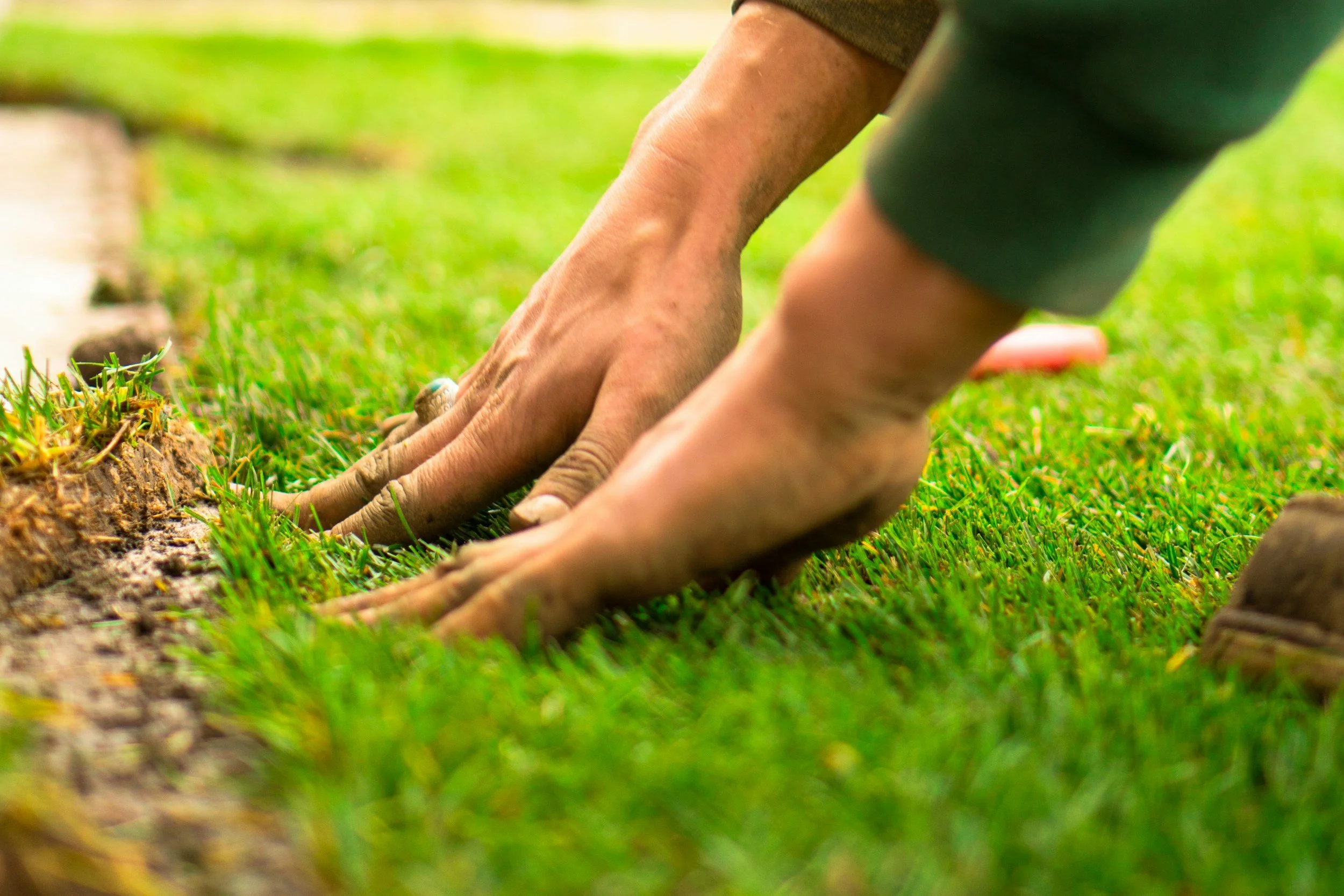
Compost topdressing before a hydroseeding application is one of the preparation investments that most significantly improves establishment outcomes on North Texas clay soil — and one that most homeowners either do not know about or skip because the benefit is not immediately visible on application day. The improvement shows through the first growing season in better germination consistency faster root development and the soil structure improvement that compounds through subsequent seasons.
This blog covers what topdressing does specifically why North Texas clay soil benefits from it more than most other soil types and how the combination of compost topdressing and hydroseeding in the same project produces establishment results that neither produces independently.
What compost topdressing actually does to soil
Compost topdressing is the application of a thin layer of quality finished compost to the soil surface — typically a quarter to half inch depth — that is either worked into the existing surface layer or left to incorporate naturally through rain irrigation and biological activity.
The specific improvements that quality compost addition provides to North Texas clay soil address the characteristics that make that soil most challenging for grass establishment.
Organic matter content improvement is the primary benefit. North Texas construction-affected clay soil often has organic matter content below one percent — the depleted condition that produces the dense plastic clay behavior that resists root penetration and repels water when dried. Quality compost with three to five percent organic matter content added to the surface soil progressively improves the organic matter percentage of the surface layer — improving soil structure moisture retention and biological activity in the zone where grass roots develop most densely.
Soil structure improvement follows from the organic matter addition. The organic compounds in compost bind clay particles into aggregates — the crumbly cluster structure that gives healthy soil its characteristic texture and that dramatically improves root penetration compared to the dense continuous clay matrix that unamended heavy clay presents. Even modest organic matter increases produce measurable aggregate structure improvements in clay soil because the clay's large surface area responds proportionally to organic matter additions.
Soil biology inoculation is the third benefit. Quality compost contains active microbial communities — bacteria fungi and other organisms — that inoculate the soil surface with the biological activity that nutrient cycling moisture retention and soil structure improvement depend on. The biologically active soil that compost inoculation creates processes nutrients more efficiently for plant uptake creates the biological glue that maintains aggregate structure and supports the mycorrhizal fungi that extend grass root systems' effective reach and water absorption capacity.
Why North Texas clay benefits more than most soil types
The organic matter and biological activity improvements that compost topdressing provides are valuable in any soil type — but the degree of improvement relative to the baseline is largest in the soils that start furthest from adequate organic matter content and biological activity. North Texas construction-affected clay subsoil starts at the lowest baseline that residential lawn establishment commonly encounters.
A soil with three to four percent organic matter receives a modest incremental improvement from compost addition — the baseline is already adequate for most lawn establishment purposes and the marginal improvement is real but not dramatic.
A soil with less than one percent organic matter — the typical new construction lot in the DFW area — receives a fundamental change in soil behavior from the same compost addition. The clay that resisted root penetration develops the aggregate structure that allows it. The clay that repelled water when dried develops the moisture retention that supports germination between sessions. The clay with minimal biological activity develops the active microbial community that makes nutrient cycling efficient.
This disproportionate benefit from baseline improvement is why compost topdressing before hydroseeding produces more visible and more lasting establishment improvement on new construction lots than on established residential lots where the soil quality was already better than the construction-affected baseline.
The specific timing relationship between topdressing and hydroseeding
Like the aeration and dethatching combinations covered in previous blogs in this series the optimal timing for combined topdressing and hydroseeding is same-day or within twenty-four to forty-eight hours of each other.
Compost topdressing applied and incorporated into the surface before the hydroseeding application places the organic matter and biological community at the soil surface where the slurry will land — the germinating seed has immediate access to the improved soil environment rather than germinating in the unimproved clay and then growing roots into the amended layer above it.
The incorporation step — working the topdressed compost into the top inch or two of the loosened surface rather than leaving it as a distinct surface layer — prevents the interface problem that a distinct compost layer sitting on clay can create. A sharp compost-to-clay transition can create the same perched water table problem that a sharp topsoil-to-clay transition creates — water accumulating at the interface rather than penetrating into the clay below. Incorporation creates the gradual transition that roots move through continuously.
On a project that combines aeration dethatching and topdressing the optimal sequence is dethatching first aeration second topdressing third and hydroseeding fourth. The dethatching opens the surface the aeration creates channels the topdressing places compost in the channels and loosened surface and the hydroseeding application lands on the fully prepared surface.
The compost quality that makes the difference
Not all compost produces the same soil improvement benefit and the quality variation in the compost market is significant enough to affect the value of the topdressing investment.
Finished compost — material that has completed the thermophilic decomposition process and has been cured to a stable mature state — provides the soil structure improvement and biological inoculation that immature or partially composted material cannot. Unfinished compost that is still actively decomposing can tie up nitrogen as the decomposition process consumes available nitrogen from the soil — the opposite of the nutrient availability improvement that finished compost provides.
The specific indicators of quality finished compost are appearance smell and texture. Quality finished compost is dark brown to black in color with an earthy smell — not the ammonia smell of immature compost or the sulfur smell of anaerobic material. The texture is crumbly and uniform rather than chunky with recognizable uncomposted material.
Screened compost — material that has been passed through a screen to remove coarse particles — is more appropriate for lawn topdressing than unscreened material because the uniform fine texture distributes evenly across the surface and works into the surface layer more effectively than chunky unscreened material.
Ask the contractor or supplier about the source and maturity of the compost being used in a topdressing application. A contractor who can describe the compost source and confirm that it is finished screened material is using the quality that produces the improvement the investment intends.
The application depth that provides benefit without creating problems
The compost topdressing depth for pre-hydroseeding application is a quarter to half inch — enough to provide meaningful organic matter addition to the surface soil layer without the depth that creates the interface problem or that makes the surface too loose for effective hydroseeding slurry adhesion.
Less than a quarter inch provides minimal organic matter addition — insufficient to meaningfully change the surface soil characteristics in the zone where germination occurs.
More than half inch on a surface being hydroseeded creates a compost layer that is thick enough to absorb and hold the slurry above the soil surface rather than allowing it to penetrate through to soil contact. The thick compost layer becomes the germination medium rather than a soil improvement — the seed germinates in compost without soil contact producing the same die-off before establishment that thatch germination produces.
Quarter to half inch incorporated into the loosened surface is the specification that provides soil improvement without becoming a germination barrier.
The long-term return on the topdressing investment
The compost topdressing before hydroseeding produces immediate establishment benefits — better germination consistency and faster root development through the first growing season. It also produces long-term soil improvement benefits that compound through subsequent seasons.
The organic matter added to the surface layer before the first growing season is the foundation for the annual compost topdressing program that maintains and improves soil quality each subsequent year. The soil that starts with better organic matter content and biological activity at establishment develops more rapidly than the depleted baseline soil toward the biologically active well-structured growing medium that makes established lawn management progressively easier.
The homeowner who combines compost topdressing with the initial hydroseeding application is starting the soil improvement trajectory that annual post-aeration compost topdressing continues — the first application of what becomes the most impactful annual soil improvement investment for North Texas clay lawns.
The bottom line on topdressing and hydroseeding
Compost topdressing before hydroseeding improves germination consistency root development speed and the soil structure conditions that make the first growing season more productive — most significantly on the construction-affected clay subsoil that characterizes most new build residential lots in the DFW area.
The improvement is most dramatic on the soils that start furthest from adequate organic matter content — exactly the soils that are most common in the North Texas new construction market. The investment in quality compost topdressing before the application is the preparation investment with the most direct impact on the soil quality conditions that root development depends on.

Want to combine compost topdressing with your hydroseeding application for the best possible soil conditions?
Fox Hydroseeding LLC offers combined topdressing and hydroseeding projects across the DFW area — the soil preparation and the application done together at the optimal timing for your specific property.
Get Your Free Estimate → foxhydroseeding.com/contact
Bring Your Property to Life With Expert Hydroseeding
Find Us On


Email address

Phone Number

