


Signs your lawn needs to be reseeded — how to know when it is time and what to do next
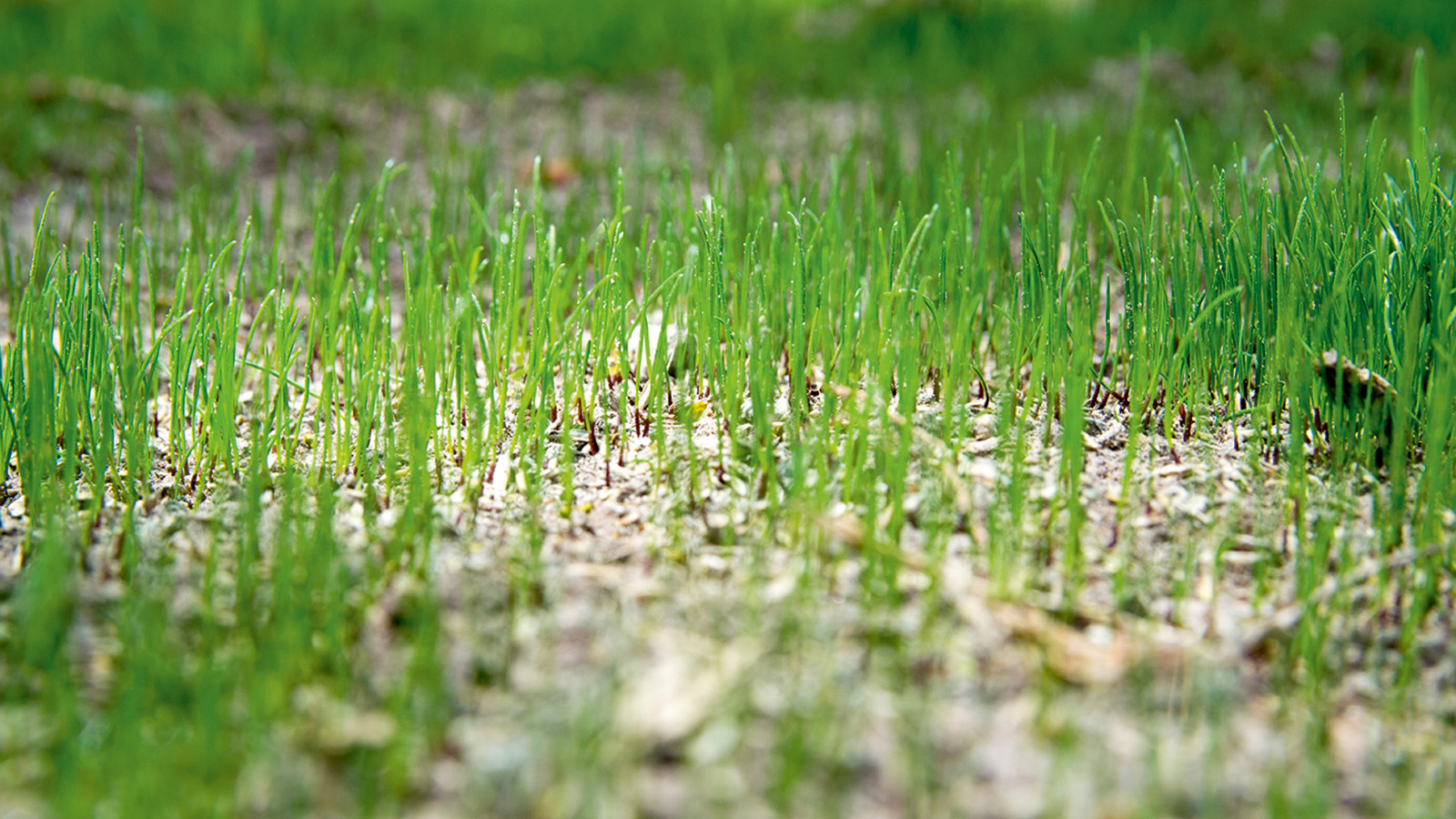
Most lawn problems that homeowners manage reactively — adjusting watering adding fertilizer applying treatments — are symptoms of a lawn that has passed the threshold where maintenance produces improvement. At some point a lawn stops responding to management inputs and starts communicating through its condition that what it needs is not more of the same management but a fresh start through reseeding.
Recognizing the signs that distinguish a lawn that needs management attention from one that needs reseeding is the diagnostic skill that separates homeowners who address the real problem from those who keep managing symptoms until the lawn declines to the point where the reseeding that was needed earlier is now more extensive and more expensive.
These are the clear signs that your lawn has crossed from management territory into reseeding territory — and what to do when you recognize them.
Sign one: bare coverage across more than thirty to forty percent of the surface
Coverage percentage is the most reliable single indicator of whether a lawn is in management territory or reseeding territory. A lawn with more than sixty to seventy percent living grass covering the surface has a viable base that maintenance and targeted overseeding can build on. A lawn where bare ground dead material or weeds account for more than thirty to forty percent of the surface has passed the threshold where management inputs produce the improvement they should.
The calculation is simple but the assessment requires honesty — walking the full yard including the sections that are hardest to see from the house and estimating coverage accurately rather than optimistically. The sections near the back fence line under the tree canopy in the corners that rarely get attention — all of these sections count in the coverage assessment and all of them affect whether the lawn is above or below the threshold.
When bare coverage exceeds the threshold the right response is reseeding — not more management of a lawn that does not have enough living base to respond to management inputs meaningfully. The question that follows is whether targeted overseeding of the worst sections or full renovation of the entire lawn is the appropriate approach given the distribution and cause of the bare coverage.
Sign two: the same bare sections keep coming back after every overseeding attempt
Recurring bare sections that fail to hold establishment through more than one growing season despite repeated overseeding attempts are the clearest signal of an underlying cause that surface-level reseeding has never addressed.
A section that establishes adequately from overseeding and then thins back to bare within a season is not a germination problem — the germination worked. It is a persistence problem — the conditions in that section do not support lasting establishment regardless of how well the initial germination goes. Something is causing the grass to thin after establishment and that something has been present through every overseeding attempt.
The right response to recurring bare sections is diagnosis before reseeding — not another overseeding attempt on the section that has failed in the same way multiple times. What is different about that section compared to surrounding areas that hold coverage. Shade that prevents the planted grass from maintaining the vigor it needs. Compaction that keeps roots shallow. Drainage that creates chronic stress. Urine damage from pet use. Each cause has a specific correction that changes the conditions — and reseeding after that correction produces lasting improvement rather than the same temporary result.
Sign three: the lawn has more weeds than grass
A lawn where weeds — not just scattered weeds between grass plants but dominant weed coverage that accounts for most of the visible green — represent the majority of the surface is past the threshold where weed management restores an acceptable lawn. The weeds are not the problem — they are the symptom of a lawn that has declined in density to the point where weed seeds have the germination opportunity light and soil access that dense turf denies them.
Trying to manage weeds back to a lawn in a weed-dominated surface involves killing the weeds to reveal the sparse grass beneath — and then discovering that the sparse grass beneath does not have the density to suppress the next generation of weeds that will germinate in the same bare soil. The cycle of treat-revealretreat is a management approach applied to a problem that management cannot solve.
The right response is renovation — killing the existing weed coverage creating a clean prepared surface and reseeding with the grass density that the original sparse coverage could not achieve. The renovation removes the weed population at the same time it prepares the surface for the new grass — breaking the cycle rather than managing within it.
Sign four: the lawn never recovered from the last stress event
Every Texas lawn faces stress events — drought heat extremes freeze damage pest activity. A lawn with adequate root depth and turf density recovers from these events within a growing season returning to full coverage and appearance after the stress passes. A lawn that experienced a significant stress event and never recovered to pre-stress coverage levels is a lawn whose root system and turf density were inadequate to support the recovery that the stress event demanded.
If the drought summer two years ago left bare sections that are still bare — if the freeze event last winter left dead areas that have not recovered through two spring seasons — if pest damage from the summer before last created thin sections that are still thin — the lawn is telling you that the underlying foundation was not adequate for the recovery the stress event required.
Continuing to manage a post-stress lawn that has not recovered is managing a lawn that has been permanently weakened below the viable maintenance threshold. Reseeding to restore the coverage that stress damage removed — on a properly prepared surface that addresses any soil conditions that contributed to the damage severity — is the appropriate response when recovery has not occurred naturally within a reasonable post-stress window.
Sign five: the lawn looks acceptable in spring and declines through every summer
The lawn that looks reasonable in April after spring green-up and looks significantly worse by August every year without drought or unusual stress events is the lawn with inadequate root depth for the Texas summer it faces annually.
Spring appearance does not reflect summer performance capacity. Bermuda that has greened up from dormancy in April looks comparable to well-established mature Bermuda in April regardless of whether the root system is two inches deep or eight inches deep — because cool spring temperatures and higher natural rainfall create conditions that shallow roots handle adequately. The divergence appears in July and August when the combination of heat and dry stretches depletes the shallow root zone before the next irrigation session replaces what was lost.
If this decline pattern has repeated for two or more consecutive summers the root depth problem is confirmed — the lawn is not experiencing unusual stress conditions it is struggling with the normal Texas summer that deep-rooted grass handles without significant visible decline. The right response is renovation that creates the conditions for deep root development — through compaction relief topsoil addition and the deep watering management of the first growing season that builds the root depth the summer performance requires.
Sign six: the thatch layer has accumulated beyond the correction point
Normal lawn management through dethatching and aeration manages moderate thatch accumulation. A thatch layer that has been building for years without aggressive management intervention can accumulate to depths — an inch or more — where surface-level management cannot adequately correct it without the kind of mechanical disturbance that essentially creates the bare surface that reseeding addresses.
Power dethatching severe thatch accumulation removes the thatch but leaves a disrupted surface with the established lawn damaged significantly by the mechanical removal process. In many cases the disrupted post-dethatching surface is better addressed through renovation reseeding than through attempting to revive the damaged existing lawn in the bare disturbed surface that significant dethatching creates.
If the lawn has thatch buildup that a soil probe confirms at more than three-quarters to one inch and the lawn above it is thin and struggling despite management inputs that should be producing improvement the combination of thick thatch and thin coverage above it is a renovation signal — the thatch removal that is needed disrupts the existing lawn enough that renovation reseeding on the prepared surface is more efficient than attempting to restore what remains after aggressive dethatching.
What to do when the signs are clear
When the signs described above are present the right response follows a specific sequence regardless of which sign triggered the determination.
Diagnose the underlying cause before selecting an approach. Bare coverage alone does not tell you why the lawn declined — the cause determines whether targeted reseeding of specific sections or full renovation is appropriate and what preparation is needed before any reseeding produces lasting improvement.
Address the underlying cause before reseeding. Compaction that prevented root development needs mechanical relief before reseeding on the same surface produces different results. Shade mismatch needs a grass type change before reseeding with the same wrong grass produces lasting improvement. Drainage problems need grade correction before the bare sections that drainage created fill in and hold.
Choose the right reseeding method for the conditions. Hydroseeding on a properly prepared surface after the underlying cause is corrected produces more reliable germination and more consistent coverage than broadcast seeding on the same surface — particularly on the challenging North Texas clay soils where the protective slurry layer addresses the germination consistency problems that bare seed placement consistently produces.
Time the reseeding for the appropriate seasonal window for the chosen grass type. Bermuda in late March through May for the optimal spring window. Fescue in early October for the fall window. Reseeding in the wrong seasonal window produces the same poor results as reseeding the wrong grass in the wrong conditions.
The most effective reseeding method for Texas lawns
Hydroseeding is the reseeding method that consistently produces the most reliable results on Texas lawns that need renovation — because the conditions that required reseeding in the first place are often the challenging conditions where broadcast seeding produces the least reliable outcomes.
The compacted clay that contributed to the lawn's decline is the same soil type where broadcast seed-to-soil contact is most inconsistent — the dense clay surface that can form a hard dried crust between sessions presents a significant barrier to reliable bare seed germination that the hydroseeding slurry penetrates more effectively. The heat and evaporation conditions that the Texas growing season presents during the establishment window are the same conditions where the moisture-retaining mulch layer of hydroseeding provides the most meaningful advantage over bare seed exposure.
The lawn that needs reseeding in Texas is almost always the lawn where hydroseeding produces a more reliable first-attempt result than the broadcast seeding that may have contributed to its current state through multiple failed or marginal attempts.
The bottom line on signs your lawn needs reseeding
The signs in this guide are clear observable indicators that a lawn has passed from management territory into reseeding territory. Recognizing them — honestly assessing the coverage percentage identifying the recurring bare sections noting the weed dominance understanding the post-stress non-recovery and connecting the annual decline pattern to root depth inadequacy — produces the right decision before more management investment is spent on a lawn that needs renovation not maintenance.
Acting on these signs with the right preparation the right grass selection the right reseeding method and the right seasonal timing produces the fresh-start result that continued maintenance of the declining lawn was never going to deliver.

Think your lawn may have passed the threshold where management inputs would help and reseeding is the right answer?
Fox Hydroseeding LLC personally assesses every property and gives you an honest evaluation of whether the lawn needs targeted renovation or a complete fresh start — and what the right approach looks like for your specific conditions.
Get Your Free Estimate → foxhydroseeding.com/contact
Bring Your Property to Life With Expert Hydroseeding
Find Us On


Email address

Phone Number

