


Lawn irrigation and hydroseeding — what you need in place before the application day
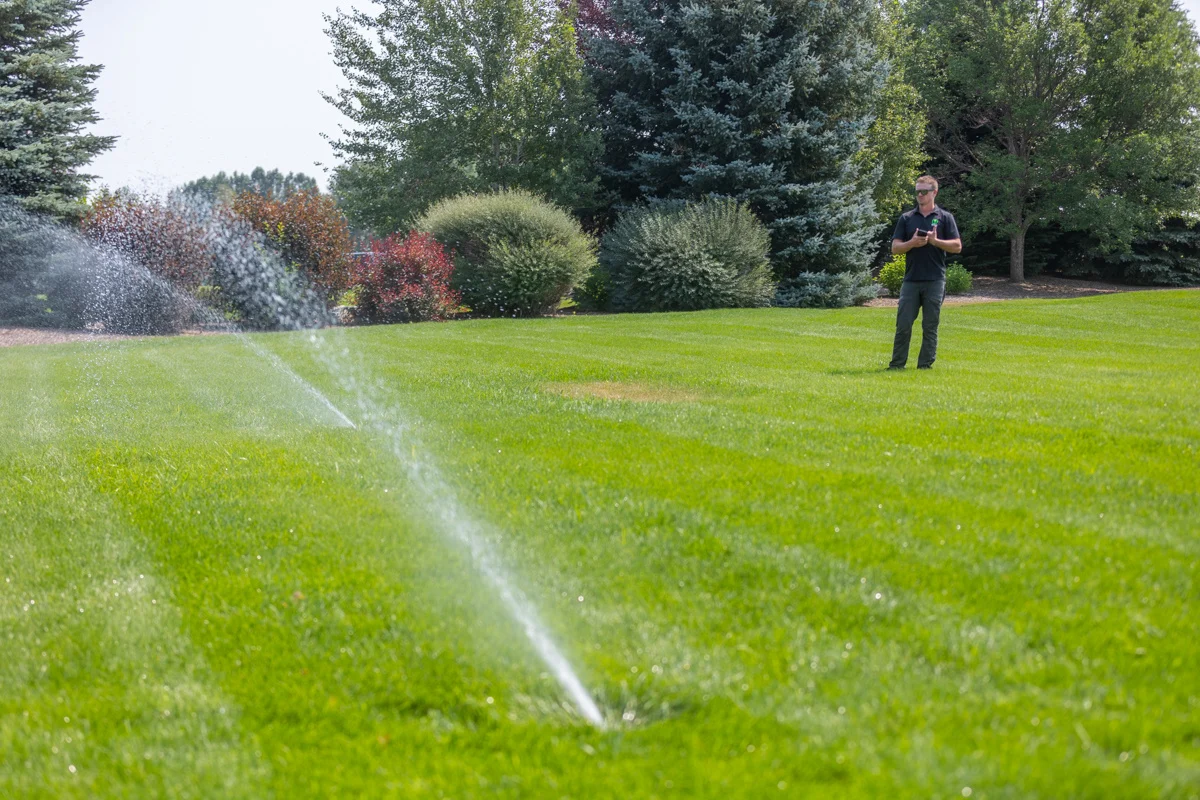
The irrigation system that supports a hydroseeding establishment is not a detail that can be figured out after the application. It is the infrastructure that determines whether the establishment period watering happens correctly or whether gaps in coverage timing and function produce the germination failures that an adequate system would have prevented.
The homeowner who verifies irrigation readiness before the application arrives at establishment day with the confidence that the most critical management requirement of the next four weeks is handled. The homeowner who discovers irrigation problems after the application spends the germination window managing workarounds for problems that pre-application verification would have prevented.
This guide covers everything about irrigation system readiness for hydroseeding — what the system needs to provide how to verify it provides that before the application and what to do when problems are identified.
What the establishment period requires from an irrigation system
The establishment period watering requirement for a hydroseeded lawn in Texas conditions is specific enough that understanding it before evaluating system readiness produces a better assessment than checking general system function without the specific standard to measure against.
During the germination window — the first fourteen days — the system needs to deliver two to three complete zone cycles per day at session durations that wet the mulch surface thoroughly without generating runoff. For Texas summer conditions this means three complete cycles per day — early morning midday and early evening. For spring and fall conditions two cycles per day are typically adequate given the lower evapotranspiration rates of moderate temperatures.
Each cycle needs to deliver enough water to wet the mulch surface consistently across the full application area without the runoff that overly long sessions create on North Texas clay. The cycle-and-soak approach — shorter sessions with absorption breaks between cycles — is more effective on clay than single long sessions that generate runoff before adequate penetration.
After the germination window the system needs to deliver the progressively deepening sessions of the root development phase — fewer cycles per day but longer session duration that penetrates to increasing depths as root development advances through the first growing season.
These requirements define the standard against which the irrigation system should be evaluated before the application.
Zone coverage verification — the most important pre-application check
The most consequential pre-application irrigation check is confirming that every zone covering the hydroseeded area delivers consistent coverage across its full intended area — including the edges corners and sections farthest from the heads.
Run each zone individually and walk the full area it is supposed to cover while it is running. Watch specifically for the sections that receive less coverage than surrounding areas — heads that are not rotating at full arc heads with reduced flow from partial clogs or pressure issues sections between head positions that fall in the overlap gap between adjacent heads.
Mark any coverage gaps you identify during the walkthrough — spray paint flags or even chalk marks indicate the specific locations that need attention before the application. The gap that receives ten percent of the water its surrounding areas receive is the section that will show germination failure while surrounding areas establish normally — not because the seed or the application was different in that section but because the watering was.
Coverage gaps are more common on existing irrigation systems than most homeowners realize because the gradual degradation of head performance — wear sediment buildup pressure changes — happens slowly and the lawn that was established when the system was newer established before the gaps developed. A lawn renovation through hydroseeding is often exposing coverage inadequacies that the existing establishment compensated for with root depth that the new establishment has not yet developed.
Head condition evaluation
Run each zone and evaluate the condition of every head in the coverage area. The specific head problems that create coverage gaps are identifiable during the zone run.
Non-rotating heads on rotor-type sprinklers — heads that pop up but do not rotate — deliver their full output in a single direction rather than distributing across their intended coverage arc. This produces saturation immediately in front of the non-rotating head and zero coverage in the rest of the arc. The section directly in front of the stuck head may be waterlogged while the rest of the arc is dry.
Heads that do not pop up at all — those that remain flush with the ground during zone operation — are delivering zero coverage to their intended area. These are typically either stuck closed from sediment or mechanical failure or operating at reduced pressure that is insufficient to extend the pop-up mechanism.
Heads with reduced output — those that pop up but deliver noticeably less water volume than adjacent heads — often have partial clogs from sediment accumulation. These create the coverage gradient where the area close to the head receives less than intended and the outer edge receives almost nothing.
Heads with broken nozzles or damaged bodies deliver water in incorrect patterns — sometimes spraying straight up rather than at the intended arc and sometimes spraying in erratic patterns that create wet spots adjacent to dry spots rather than consistent coverage.
All of these head problems are repairable — head replacement is typically a straightforward irrigation contractor task that takes minutes per head. Identifying all problem heads before the application and scheduling repair before the application day rather than discovering them during the germination window when correction requires working in a freshly hydroseeded area.
Pressure and distribution uniformity assessment
Beyond individual head function the overall pressure and distribution uniformity of the system affects how consistently water is delivered across the full coverage area.
Low system pressure — from a pressure regulator set below the head operating range from a supply line restriction or from a municipal pressure reduction during peak demand periods — reduces the effective coverage radius of every head simultaneously. A system that provides adequate coverage at normal pressure may leave peripheral coverage gaps when pressure is reduced.
High system pressure — above the head operating design range — creates misting from spray heads that reduces effective penetration and produces the wind-susceptible fine water particle that evaporates before reaching the soil surface in Texas summer conditions.
Distribution uniformity — the consistency of water application across the coverage area — can be tested by placing catch cups at multiple locations across a zone during operation and comparing the volumes caught at different positions. Significant variation between catch cup volumes indicates distribution uniformity problems that pressure adjustment head repositioning or nozzle size changes can address.
For most standard residential irrigation systems in the DFW area the visual zone walk that identifies non-functioning and reduced-function heads is sufficient to catch the coverage problems that matter most for hydroseeding establishment. The catch cup distribution test is more appropriate for commercial or large-scale applications where distribution uniformity has significant cost implications.
Programming the establishment schedule before application day
The irrigation controller programming for the hydroseeding establishment schedule should be completed before the application — not on the afternoon of application day and certainly not after the application when the germination window has already started.
Most modern irrigation controllers can be programmed to run multiple cycles per day — the multiple-start-time feature that is standard on most residential controllers allows three separate start times per zone per day which is the Texas summer germination schedule requirement.
Programming verification involves running the program manually after setting it and walking each zone while it runs on the new establishment schedule to confirm that the programmed cycles are operating correctly. Controller programming errors — incorrect zone numbering wrong runtime duration — are best caught during the pre-application test run rather than discovered when the first scheduled cycle runs after the application is in place.
For smart controllers that use weather-based adjustment — ET-based or rain sensor based — the establishment mode settings that override the weather adjustments during the germination window need to be confirmed before the application. Smart controller weather adjustment that reduces watering during a hot dry period because it calculates the lawn does not need water based on mature lawn parameters is the opposite of what the establishment period requires — the smart features that serve maintenance need to be overridden for the establishment protocol.
What to do when irrigation system problems are identified
When the pre-application zone walk reveals coverage gaps non-functioning heads or other system problems the timeline for addressing them is before the application rather than after.
Schedule an irrigation contractor to evaluate and repair identified problems as soon as the issues are confirmed. For standard head replacement and pressure adjustment most irrigation contractors can complete residential repairs within a day or two with reasonable notice — the pre-application window of a few weeks provides adequate time for repairs when the walk is done far enough in advance.
If the pre-application walk reveals that the existing system has coverage gaps that head replacement and minor adjustment cannot address — zones that simply do not cover sections of the planned application area — the options are expanding the irrigation system to cover the gaps or planning manual supplemental watering for the uncovered sections during the establishment period.
Manual supplemental watering for uncovered sections is feasible for small gaps — a section near a fence corner that a hose and sprinkler can reach for the two-week germination window. It is less feasible for large uncovered areas where the manual management burden across fourteen days of three-times-daily watering becomes impractical for most homeowners.
For properties without any permanent irrigation system the establishment period watering is either managed entirely through manual hose and sprinkler coverage — feasible for motivated homeowners with schedules that accommodate three daily watering sessions — or through temporary irrigation infrastructure purchased or rented for the establishment period.
The irrigation check specific to new construction properties
New construction properties have specific irrigation considerations that established residential lots do not face in the same way.
Irrigation systems on new construction lots may be newly installed and not yet fully commissioned — heads may be set incorrectly arcs may not be adjusted for the final grade and pressure testing may not have been completed in the context of the finished landscape layout. A system that was installed but not yet run through a full verification cycle before the hydroseeding application is an unknown quantity rather than a confirmed performing system.
The pre-application verification walk on a new construction lot should be the first complete operational test of the system — the walk that confirms every head is performing correctly in the context of the finished grading and that the coverage that the system was designed to provide is actually being delivered.
Irrigation systems that were installed with coverage designed around a particular grade or landscape plan that subsequently changed may have coverage gaps in sections that the plan did not anticipate. The post-construction grading changes that are common on new build lots sometimes move the grade away from the position the irrigation head was installed for — creating elevation differences between the head and the surrounding grade that affect coverage patterns.
The bottom line on irrigation readiness for hydroseeding
Irrigation system readiness is not a post-application management problem — it is a pre-application preparation investment that determines whether the establishment period watering happens correctly across the full application area. The zone walk that identifies coverage gaps the head repairs that restore full coverage the controller programming that ensures the establishment schedule runs correctly — all of these steps are more efficiently and more effectively completed before the application than worked around after it.
The homeowner who walks every zone watches every head confirms every coverage gap and addresses every problem before the application day arrives at the establishment period with the most critical infrastructure fully prepared. The one that arrives at application day without doing this arrives at establishment day management challenges that the walk would have prevented.

Want to make sure your irrigation system is ready to support a hydroseeding establishment before the application begins?
Fox Hydroseeding LLC reviews irrigation coverage during every property walkthrough and identifies potential establishment period watering challenges before the application is scheduled. We make sure the infrastructure is in place before the seed goes down.
Get Your Free Estimate → foxhydroseeding.com/contact
Bring Your Property to Life With Expert Hydroseeding
Find Us On


Email address

Phone Number

