


Hydroseeding questions answered — everything you were afraid to ask
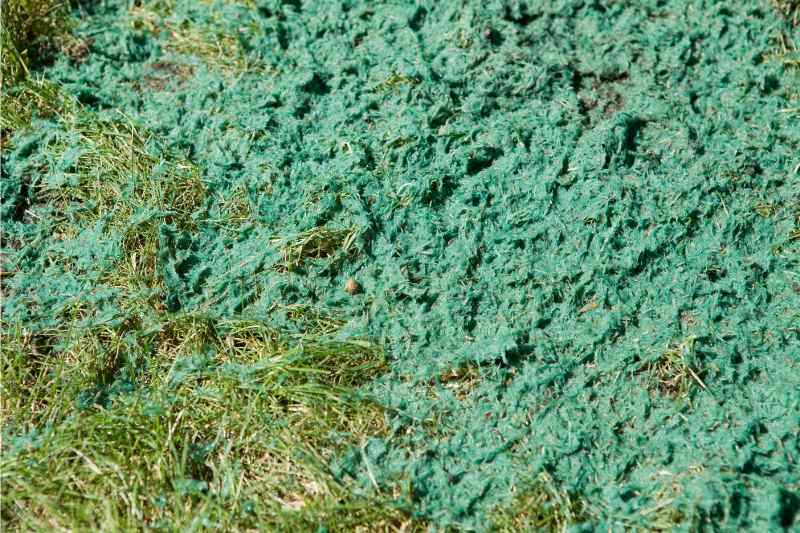
If you are new to hydroseeding you probably have more questions than the basic how-it-works description answers. The general explanation — seed mulch fertilizer water sprayed onto soil — raises a dozen follow-up questions that most guides do not get to. What happens if it rains the next day. Can I walk on it at all. What does normal germination actually look like. Does the green color wash off. How do I know if something went wrong. What if my dog gets into it.
This guide answers all of those questions directly and honestly — the ones that feel too basic to ask and the ones that come up at three in the morning when you are staring at your day-two mulch mat and wondering if it is supposed to look like that.
Does the green color wash off my sidewalk or driveway
Yes. The green dye in hydroseeding slurry is water-soluble and washes off hard surfaces like concrete sidewalks and driveways with rain or irrigation within days to a week or two. It does not permanently stain concrete or pavers under normal circumstances.
If you are concerned about staining on specific surfaces near the application area mention it to your contractor before the application — they can adjust the application technique near those edges to minimize overspray. Some contractors also carry a hose for a quick rinse of hard surfaces immediately after the application if overspray occurred.
On wood decks or composite decking the dye may require more active rinsing to prevent any temporary discoloration from sitting in the grain of the material. A quick rinse with a garden hose on the day of application addresses this before the dye has time to set.
Is the hydroseeding application safe for kids and pets
The components of a standard hydroseeding slurry — grass seed fiber mulch starter fertilizer tackifier and water — are generally low-risk for brief contact but are not intended to be ingested in any amount. The fertilizer component carries the highest concern for dogs that might lick or eat the fresh slurry — gastrointestinal upset from fertilizer ingestion is possible if significant quantities are consumed directly from a fresh application.
Keep pets off the freshly applied area for the first few days while the slurry is wet and most concentrated at the surface. After the slurry has dried and the establishment is underway the risk from contact is reduced though the access restriction during the establishment period continues for the lawn protection reasons discussed throughout this guide.
For children the same general guidance applies — keep them off the fresh application for safety and off the establishing lawn for the full four weeks to protect the germination.
What if it does not rain for the whole first week after my application
No rain for the first week is actually a common and manageable scenario — your irrigation system or manual watering is covering the moisture need that rain would provide. The hydroseeding slurry does not depend on rain to succeed. It depends on consistent moisture maintenance which your watering schedule provides.
The concern is not absence of rain — it is absence of adequate moisture from any source. If your watering schedule is maintaining consistent surface moisture through the germination window the absence of natural rainfall during that period is not a problem.
Rain during the first week is helpful when it arrives as moderate even moisture — it reduces the irrigation burden and provides natural establishment support. But it is not required for successful germination and its absence is not an indication of a problem.
What if there is a lot of rain right after the application
This question has a different answer depending on when the rain arrives and how heavy it is.
Rain in the first 24 to 48 hours before the mulch has fully bonded to the soil surface creates displacement risk on slopes — the slurry can wash downhill before it has adhered to the soil. On flat surfaces the same rain may pool in low spots and concentrate seed in those areas while leaving higher sections underseeded.
Rain after 48 hours once the mulch has bonded to the soil surface is generally beneficial. Moderate rainfall at this point provides natural irrigation that supplements your watering schedule without the displacement risk of pre-bond rain.
Walk the yard after any significant rain during the first week and look for the characteristic signs of displacement — bare channels on slopes where slurry washed away accumulation of mulch in low spots or at drainage outlets. If you see these contact your contractor promptly — a touchup application on displaced areas is most effective when done within the same establishment window.
Can I walk on any part of the lawn at all during establishment
The restriction is on the hydroseeded area specifically. If you have sections of the yard that were not hydroseeded — existing hardscape a patio a side yard with established grass — those are fine. The restriction applies only to the freshly hydroseeded surface.
Within the hydroseeded area the restriction is as complete as practical for the full four weeks. A single careful step to retrieve something is different from regular traffic patterns — the cumulative impact of repeated paths through the same area is what creates the visible bare zones. If you must access the area for any reason step carefully in a different location each time rather than establishing a repeated route.
How do I know if my germination is on track or behind
Normal germination at each stage looks like this — no visible sprouts for the first four to five days then scattered individual sprouts in the best-light best-contact areas from day five to seven then spreading germination across most of the surface from day seven to fourteen then solid developing coverage from day fourteen onward.
Behind schedule looks like this — no sprouts at all by day ten to twelve in areas that have had consistent watering and appropriate soil temperatures. Zero germination in a large section of the yard while adjacent sections have normal germination. Sprouts that appeared in the first week and then seemed to stop without spreading or thickening.
On track with apparent delay looks like this — germination visible but less even than you hoped at day ten. Some sections clearly ahead of others. The overall picture less impressive than you imagined at this stage. This is usually normal — the sections that look behind at day ten are almost always catching up by day twenty-one.
If you are past day fourteen with no germination anywhere on a section that was watered consistently contact your contractor. That is the threshold where something genuinely wrong is more likely than just slow normal progress.
Why are some sections germinating faster than others
Uneven early germination is one of the most universally normal and universally alarming experiences of new hydroseeding customers. The explanation is real variation in conditions across the yard surface — soil temperature varies by a few degrees between sun and shade sections. Seed-to-soil contact quality varies slightly even in a quality application. Moisture retention varies between sections with slightly different drainage characteristics.
All of these variations affect germination timing by days — the faster sections are not doing something the slower sections will not also do. The slower sections are simply behind by the days that their specific conditions require relative to the faster sections. By the end of week three most yards that showed dramatic early germination variability have largely evened out.
Can I mow just the tall sections while leaving the short ones
This is a very common question and the answer is that a partial mow — cutting the tall sections of a newly establishing lawn while leaving the short ones — is not recommended during the establishment period.
The reason is that the root systems of the entire lawn are still developing through the establishment window. Mowing the tall sections before the short sections have reached mow height stresses the tall sections before the lawn is uniformly ready and creates an uneven situation where some sections are being managed as an established lawn while others are still in the fragile establishment phase.
Wait for the majority of the lawn to reach three to four inches before the first mow. Sections that lag slightly behind will catch up faster when the mowing stress of the first cut applies uniformly rather than when those sections are still in the pre-mow establishment phase.
Does hydroseeding work if I have a sprinkler system that only runs twice a week
This depends on the season and the soil conditions of the application. A twice-weekly sprinkler schedule that delivers adequate water per session may be sufficient in spring or fall when cooler temperatures and lower evaporation reduce the seed surface drying between sessions. The same schedule is almost certainly insufficient in a Texas summer when the seed surface can dry completely within hours of a watering session.
If your irrigation system is restricted to twice weekly operation the most practical adjustment is timing the hydroseeding application for a spring or fall window when twice-weekly watering is more likely to maintain adequate germination moisture between sessions.
If the twice-weekly restriction is a municipal watering restriction rather than a system limitation check whether your municipality has a variance process for newly seeded lawn areas — many DFW municipalities provide establishment-period exceptions to the standard restriction schedule that would allow you to water more frequently during the two-week germination window.
What does the mulch do after the grass comes in — does it hurt the grass
The mulch in a hydroseeding application is designed to biodegrade after the grass establishes. The fiber material breaks down naturally over four to eight weeks through the action of water soil microorganisms and the mechanical activity of the establishing grass pushing through it. By the time the first mow is appropriate the mulch has largely or completely disappeared — incorporated into the surface soil layer as organic matter rather than remaining as a visible covering.
The biodegrading mulch does not hurt the establishing grass. The breakdown process adds organic matter to the soil surface and the disappearance of the mulch layer as it biodegrades actually improves the light and air access at the soil surface — the germination-phase protection gives way to the mature growing conditions the established lawn needs.
What is the difference between a good hydroseeding application and a cheap one
The differences that matter most are invisible at application time and visible at germination time and beyond.
Seed quality affects germination rate. Premium certified seed with high germination rate specifications produces more reliable germination across the application area than commodity seed with lower or unspecified germination rates. Both look the same in the slurry.
Mulch fiber content affects moisture retention. Higher fiber content mulch maintains seed surface moisture longer between watering sessions — a meaningful difference during Texas summer conditions when the interval between sessions determines whether the seed dries out. Both mulch products look green when they go down.
Application rate affects coverage quality. More product per square foot provides more protection more moisture retention and better seed distribution than a thin application rate. Both look like complete coverage immediately after application.
Tackifier quantity affects mulch bonding. Adequate tackifier ensures the mulch bonds securely to the soil surface and resists displacement from wind and rain. Reduced tackifier in a low-cost application produces a mulch layer that is more vulnerable to displacement before the establishment window closes.
Ask your contractor specifically about seed germination rate specifications mulch fiber content percentage and application rate before accepting any quote. The answers reveal the quality differences that the application price suggests but does not guarantee.
The bottom line on everything you wanted to know
Hydroseeding has a learning curve for first-time customers — not because the process is complicated but because it looks different from what most people picture and progresses through stages that feel alarming if you do not know they are normal. The questions in this guide are the ones that most often produce the late-night internet searches and the anxious calls to contractors in week two of an establishment that was actually proceeding normally all along.
Knowing the answers before the application starts is the preparation that costs nothing and prevents the anxiety that leads to the interventions that cause the most avoidable establishment problems.

Have a question about hydroseeding that is not answered here?
Fox Hydroseeding LLC is owner-operated and personally available to answer any question before during or after a hydroseeding project. We welcome every question — no question is too basic and no concern is too small.
Get Your Free Estimate → foxhydroseeding.com/contact
Bring Your Property to Life With Expert Hydroseeding
Find Us On


Email address

Phone Number

