


Hydroseeding on a budget — where to spend where to save and how to get the best results
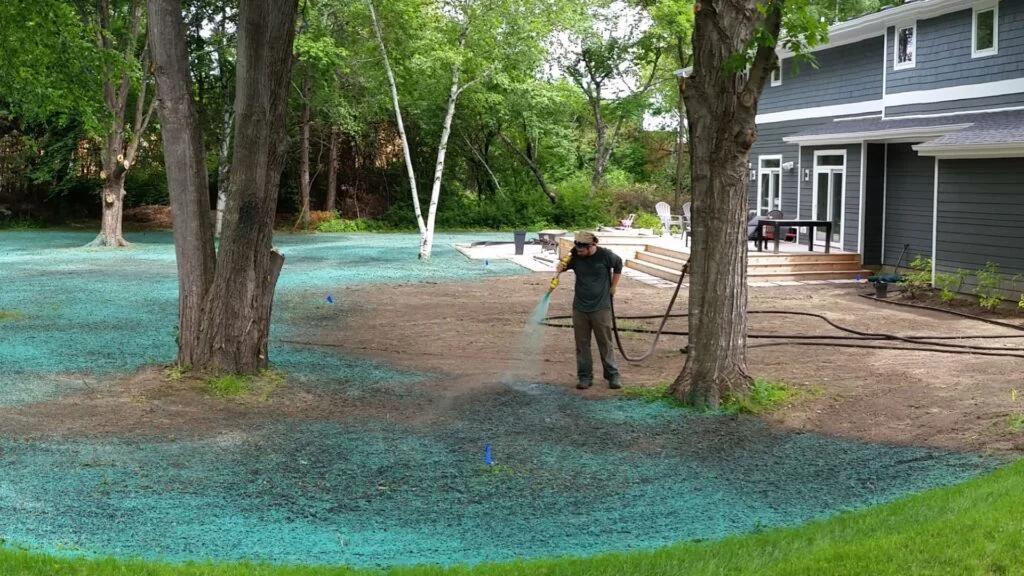
Hydroseeding a lawn involves real money and for most homeowners the budget is a real constraint. The question is not whether to spend money — it is how to allocate what is available in a way that produces the best possible result. Spending in the wrong places produces an expensive disappointing outcome. Spending in the right places even on a limited budget produces a lawn that delivers value for years.
This guide covers the honest hierarchy of where your hydroseeding budget has the most impact where savings are reasonable and where cutting costs consistently produces the expensive re-do that makes cheap the most expensive option of all.
The foundational budget principle: preparation is worth more than application upgrades
Before getting into specific spend and save decisions the most important budget principle for any hydroseeding project is this — a dollar spent on preparation produces more return than a dollar spent on application upgrades on inadequately prepared soil.
A premium seed variety on compacted subsoil with poor drainage produces a marginal result. The same standard seed variety on properly prepared soil with compaction relief and corrected drainage produces a significantly better result. Preparation quality determines the ceiling of what the application can achieve. Application quality within a well-prepared surface determines how close to that ceiling the result actually gets.
This means that when budget is limited the preparation investment should be protected before any application upgrade is considered. Spending less on preparation to afford premium seed is almost always the wrong trade-off. Spending on adequate preparation with standard-quality seed produces better outcomes than the reverse.
Where your budget has the most impact
Compaction relief is the highest-return preparation investment for most DFW properties. On new construction lots and significantly compacted existing yards the investment in mechanical soil loosening — core aeration for moderate compaction skid steer or tilling for severe compaction — directly changes the root environment that the lawn will grow in for years. This investment produces better results than any amount of premium seed on unrelieved compaction.
If budget forces a choice between proper compaction relief with standard seed and no compaction relief with premium seed choose the compaction relief every time.
Topsoil quality on properties where the surface soil is stripped or genuinely poor is the second highest-return preparation investment. Two to three inches of quality screened topsoil blended into a loosened surface creates a germination medium with organic matter and structure that compacted subsoil lacks. The improvement in germination quality and root development from quality topsoil on a depleted surface is visible in the first growing season and compounds through subsequent seasons.
Site drainage correction on properties with identifiable drainage problems is worth the investment before any seeding approach because the drainage problem will limit every seeding attempt until it is corrected. The money spent on grade correction or drainage infrastructure that fixes a chronic problem is spent once — the money spent on repeated reseeding of a drainage problem section is spent every season the problem persists.
Irrigation system function and coverage is an investment that directly protects the application investment during the most critical establishment window. A malfunctioning head or a coverage gap discovered during the establishment period means a section of the yard goes through the germination window without adequate moisture — producing a bare section that is far more expensive to address with a touchup application than the irrigation repair would have been.
Where reasonable savings are available
Seed type selection offers budget flexibility for homeowners whose conditions are not particularly demanding. Standard Bermudagrass seed is significantly less expensive than improved turf-type varieties and produces excellent results on properly prepared surfaces under appropriate timing and management. The performance difference between standard Bermuda and premium improved varieties is real but modest for most residential applications — the improved varieties offer advantages in specific performance characteristics that matter more in high-performance settings than in a well-managed residential lawn.
On a limited budget standard quality Bermudagrass seed is a reasonable place to find savings without the kind of quality reduction that affects germination reliability or establishment quality.
Mulch product selection offers modest budget flexibility on flat residential lots with minimal erosion risk. Standard wood fiber hydromulch is the appropriate product for most flat residential applications and costs less than BFM. The savings from standard mulch over BFM on a flat residential lot are real and the performance is equivalent in conditions where BFM is not required. On sloped sections or erosion-prone areas this savings is not reasonable — the right product for the conditions is the appropriate specification regardless of cost.
Application scale and project phasing offer budget flexibility for large properties. If the full yard cannot be done at once prioritize the most visible sections for the first phase and plan subsequent phases as budget allows. Front yard curb appeal sections first. High-use backyard areas second. Lower-priority side yards or back sections third. Phased establishment over two to three seasons is more achievable on a constrained budget than attempting the full property at once and compromising every phase to fit the budget.
Homeowner-completed preparation tasks represent genuine savings compared to contractor-completed equivalents for work that you can reasonably do yourself. Debris removal that you complete before the contractor arrives removes a potential additional charge from the scope. Minor grade correction on flat residential lots can sometimes be done with hand tools and homeowner effort rather than equipment and contractor labor. Vegetation killing with off-the-shelf non-selective herbicide applied two to three weeks before the application is homeowner-completable without contractor involvement.
Where cutting costs reliably produces expensive results
Low-quality seed is the preparation trade-off that most consistently produces the re-do cost that makes it the most expensive option. Commodity seed with low or unspecified germination rate specifications produces the patchy unreliable germination that sends homeowners back to reseed. The cost of a touchup application or a full reapplication on a poor-germination result exceeds the cost difference between standard quality seed and commodity seed in most cases.
Accepting a phone quote without a site visit to save time or avoid the estimate visit inconvenience skips the assessment that identifies preparation needs. The preparation that is not identified is the preparation that is not done. The preparation that is not done produces the establishment failure that costs more to remedy than the preparation would have cost.
Skipping compaction relief on a clearly compacted surface to reduce preparation cost produces the shallow-rooted lawn that struggles through its first summer and requires renovation in year two. The renovation cost in year two typically exceeds the compaction relief cost that would have prevented it.
Accepting inadequate establishment period watering because three sessions per day feels excessive produces the patchy germination that requires touchup application. The touchup application cost combined with the cost of the original application exceeds what committed watering management during the germination window would have prevented.
The budget allocation that produces the best outcomes
For a homeowner with a constrained budget the allocation that produces the best outcomes consistently prioritizes in this order.
First priority: adequate preparation. Compaction relief topsoil addition where needed drainage correction and debris removal. This is the investment that determines the ceiling of what is achievable. Protect this budget before allocating to anything else.
Second priority: quality irrigation coverage. Repairing any system deficiencies and verifying full coverage before the application. The establishment period watering is the most critical management input and the irrigation system that delivers it automatically and reliably protects every other investment in the project.
Third priority: quality seed within the application. Standard quality certified seed rather than commodity — the minimum seed quality that reliable germination requires. Not premium improved varieties unless the application conditions specifically benefit from them.
Fourth priority: appropriate mulch product. Standard wood fiber for flat residential applications. BFM only where slopes or erosion conditions require it. Not upgraded from standard to BFM on flat residential lots to spend available budget.
Fifth priority: any remaining upgrades. Improved seed varieties compost topdressing post-application aeration — these are the upgrades that improve on an already-adequate foundation and produce incremental improvement over the baseline. They are worth investing in when the foundational priorities are fully funded.
Practical budget tips that most guides do not mention
Timing the project for the optimal seasonal window rather than forcing a suboptimal window reduces re-do risk and associated cost. A spring Bermuda application that establishes reliably on the first attempt costs less in total than a forced fall Bermuda application that fails and requires spring reapplication.
Getting multiple written on-site estimates from contractors who walked the property creates the price comparison that reveals whether the quotes are for equivalent work. Comparing equivalent specifications — same seed same mulch same preparation scope — identifies genuine contractor cost differences from scope differences that look like price differences.
Asking contractors about phased project options explicitly may reveal project structuring that fits a constrained budget better than the full-scope single-application quote. Some contractors will quote Phase 1 priority areas and Phase 2 remaining areas in a way that distributes the cost across multiple budget cycles without compromising the quality of each phase.
Completing homeowner-manageable preparation tasks rather than paying contractor rates for work you can do yourself — debris removal minor grade work vegetation killing — is the most direct way to reduce the total project cost without compromising any of the quality variables that determine the outcome.
The honest bottom line on hydroseeding on a budget
A constrained budget for a hydroseeding project is a real constraint that requires real trade-offs. The trade-offs that produce good outcomes on constrained budgets protect the preparation investment and the seed quality while finding savings in premium upgrades that improve on an already-adequate foundation. The trade-offs that produce poor outcomes on constrained budgets cut the preparation to fund premium application components on a surface that the preparation would have made those components far more effective.
The cheapest hydroseeding project that produces a lasting lawn is not the one with the lowest upfront cost. It is the one where the budget was allocated to the variables that determine whether the application succeeds — and that allocation is the information this guide provides.

Working with a specific budget and want honest guidance on how to allocate it for the best possible result?
Fox Hydroseeding LLC gives every homeowner straightforward advice about where preparation investment matters most and where the budget can be managed without compromising the outcome. Every estimate is handled personally by the owner.
Get Your Free Estimate → foxhydroseeding.com/contact
Bring Your Property to Life With Expert Hydroseeding
Find Us On


Email address

Phone Number

