


Hydroseeding for sports fields and athletic areas — what facility managers and property owners need to know
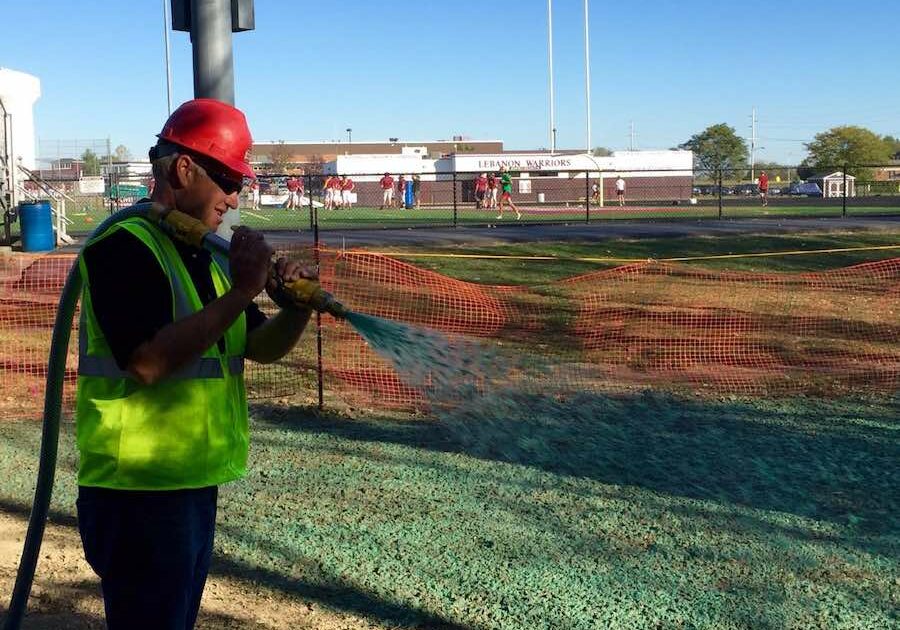
Sports fields and athletic areas present a lawn establishment challenge that is unlike any residential project. The scale is larger the use level is more demanding the timeline pressures are often tied to seasons and schedules and the consequences of a poorly established playing surface go beyond aesthetics to player safety and facility reputation. Whether you are managing a school athletic field a municipal park a residential community sports area or a private facility getting the grass right on a high-use athletic surface requires a different approach than establishing a standard residential lawn.
Hydroseeding is the method most facility managers and institutional property owners in Texas use for athletic turf establishment and renovation and for good reason. This guide covers what makes athletic area hydroseeding different from residential work what the right approach looks like for high-use turf and what facility managers and property owners need to know before starting a sports field establishment project.
What makes athletic area turf different from residential lawn
The grass on a sports field or athletic area experiences demands that residential lawns rarely face. High-intensity foot traffic from athletic activity — running cutting turning and the ground impact of sports-specific movements — creates physical stress on the turf plant and compaction in the soil that residential use does not approach in intensity. The concentrated traffic patterns of athletic use — heavy use along the sidelines at the goal areas and in the center of the field — create localized wear zones that experience conditions closer to what a severely abused residential area sees than what most of the yard sees.
Recovery rate becomes critical in athletic applications in a way that is less important for residential lawns. A residential lawn with a worn bare spot is an aesthetic problem. A bare spot on an athletic field is a safety hazard — uneven footing inconsistent ball roll and the exposure of hard compacted soil in wear areas creates injury risk that facility managers take seriously. The ability of the grass to recover from athletic use — to fill bare wear areas and restore uniform coverage between uses — is one of the most important performance characteristics of athletic turf.
Establishment timeline is often dictated by the athletic schedule rather than by agronomic optimum. A school athletic field needs to be ready for fall sports by August. A community soccer complex needs to be playable for spring leagues by April. These fixed deadlines sometimes require establishment approaches that prioritize timeline adherence over ideal growing season alignment — creating additional complexity for the contractor and the facility manager.
Soil compaction on athletic fields is more severe and more progressive than on residential lawns. The repetitive impact and traffic of athletic use compacts soil faster than residential foot traffic and the compaction-related consequences — reduced root penetration reduced water infiltration and reduced turf recovery capacity — affect athletic field performance directly and visibly.
Why hydroseeding works for athletic turf establishment
Hydroseeding provides the combination of cost efficiency scalability and establishment reliability that athletic turf applications require across most field types and sizes.
Cost efficiency at athletic field scale is significant. A full-size soccer field runs approximately 50,000 to 80,000 square feet of turf area. Sodding an area of that size involves material labor and logistics costs that most institutional budgets find challenging to justify when hydroseeding produces comparable long-term performance at a fraction of the cost. For municipal parks school districts and community facility operators managing multiple athletic areas on fixed budgets hydroseeding is often the only practical approach to establishing or renovating large turf areas within available funding.
Consistent coverage across large irregular areas is an advantage of hydroseeding that is particularly valuable on athletic fields where uniform turf conditions across the full playing surface matter for both aesthetics and safety. Equipment-based application delivers even seed and mulch distribution across the full field area including the edge zones sideline areas and goal mouth sections that may have different access characteristics from the center of the field.
Fast germination in appropriate seasonal conditions produces the establishment timeline that athletic schedules often require. A field that needs to be playable by a specific date benefits from hydroseeding's reliable germination timeline — five to ten days to first sprouts three to four weeks to solid coverage — more than from broadcast seeding whose germination timing is less predictable on large bare surfaces.
Renovation efficiency is a practical advantage for athletic fields that require regular partial renovation of wear-damaged areas. Annual overseeding or hydroseeding of worn goal areas sideline zones and high-traffic sections is a standard maintenance practice for well-managed athletic turf. Hydroseeding wear area renovation produces more reliable germination in the disturbed bare soil of worn athletic areas than broadcast overseeding on the same surfaces.
Grass selection for athletic turf in Texas
The grass type for an athletic field in Texas should be selected based on the sport the use intensity the sun conditions and the timeline requirements of the specific application — not simply defaulting to the same grass used for residential lawns.
Bermudagrass is the most widely used athletic turf grass in Texas and across the southern United States for good reason. Its aggressive lateral spread through stolons and rhizomes produces the fastest recovery from wear damage of any commonly available grass type — worn bare areas fill in from surrounding grass through lateral growth rather than requiring reseeding. Its deep root system provides the soil stability and drought tolerance that athletic surfaces need through a Texas summer. Its high traffic tolerance compared to other grass types makes it the appropriate choice for most high-use athletic applications in the DFW area.
Improved turf-type Bermuda varieties developed specifically for athletic applications offer performance advantages over common Bermuda in density wear tolerance and recovery rate — characteristics that matter more on an athletic field than on a residential lawn. The seed cost for improved turf-type varieties is higher than for common Bermuda but the performance difference on a high-use athletic surface justifies the premium.
For athletic areas used primarily in the cooler months — fall and winter sports on school campuses or facilities where spring and summer use is minimal — cool-season grass options or winter overseeding of Bermuda with Ryegrass may be appropriate depending on the use schedule. Ryegrass overseeding of dormant Bermuda in fall provides green playable surface conditions through winter for facilities where winter sports activity is a priority.
For shaded athletic areas — under stadium canopies covered sideline zones or facilities with significant tree coverage — shade-tolerant options need to be considered. Bermuda will thin progressively in areas that receive less than the minimum direct sun it requires and the high-use conditions of athletic activity accelerate that thinning. Shade-tolerant options for athletic areas in Texas are limited compared to residential lawn choices but the situation is worth discussing with a contractor experienced in athletic turf.
Site preparation for athletic field hydroseeding
Athletic field site preparation is more extensive and more critical than residential preparation because the performance requirements of the established turf are higher and the compaction conditions are often more severe.
Soil compaction is the primary preparation challenge on existing athletic fields. Years of athletic use compact the soil to depths that affect root penetration and water infiltration significantly. Core aeration — often done more aggressively and more frequently than on residential lawns using larger diameter tines at higher densities — relieves compaction opens pore space and creates the channels that root systems need to penetrate to the depth that supports recovery and drought tolerance.
For severely compacted fields deep-tine aeration or soil injection methods may be appropriate before hydroseeding to break compaction at depths that standard core aeration does not reach. The investment in thorough pre-renovation compaction relief produces an established turf with better root depth and better recovery capacity than renovation without compaction correction — affecting field performance for the full life of the renovation.
Grade correction for drainage is critical on athletic fields where standing water after rain events makes the field unplayable and creates the waterlogged conditions that damage roots and increase disease pressure. Athletic fields should be graded to drain positive in all sections — no low spots where water collects and stands. Correcting drainage problems before hydroseeding prevents them from recurring after establishment when they are more difficult and disruptive to fix.
Topsoil and soil amendment on fields where the existing soil profile is significantly degraded improves the growing medium that the new turf establishes into. Sand-based topdressing mixed into the upper profile improves drainage on heavy clay athletic fields and improves the surface consistency that affects play quality. The timing and approach of soil amendment for athletic fields is a more specialized conversation than for residential lawns and benefits from contractor experience with athletic turf applications specifically.
Establishment timeline management for athletic schedules
The fixed deadline reality of athletic field establishment is one of the most significant management challenges in sports turf hydroseeding. Unlike residential projects where the timeline is flexible enough to wait for ideal seasonal conditions athletic field renovation must fit within the athletic calendar — producing an established playable surface by a specific date regardless of whether the timing is agronomically optimal.
Working backward from the required playability date to determine the latest acceptable hydroseeding application date is the foundational planning step for any athletic field renovation. A field that needs to be playable by August 15 for fall sports preseason needs to be hydroseeded no later than mid-July under normal DFW summer conditions — allowing four to six weeks for full establishment before heavy use begins.
Buffer time between establishment completion and first heavy use is one of the most important and most frequently underestimated factors in athletic turf renovation success. A lawn that has reached the visual milestone of first mow at weeks four to five has not yet developed the root depth and density that makes it resistant to athletic use damage. Heavy use that starts immediately after the mow milestone produces setback that would not have occurred with two additional weeks of establishment time before activity began.
Where timeline and agronomic optimum conflict the right approach is to communicate clearly with facility stakeholders about the establishment constraints — the trade-offs between starting athletic use at a specific date and the risk of surface damage from premature use — rather than attempting to establish turf in conditions or timelines that do not allow proper development.
Renovation versus full establishment for existing athletic fields
The decision between full field establishment — stripping or killing the existing surface and hydroseeding the full area — and targeted renovation of specific worn sections depends on the condition of the existing field and the specific goals of the project.
Full field establishment is appropriate when the existing turf coverage has declined to the point where the majority of the surface is bare or significantly worn when a different grass variety is being introduced to replace the existing species or when soil work — grading topsoil amendment or significant compaction correction — requires disruption of the full surface anyway.
Targeted renovation of specific wear areas — goal mouths sideline zones high-traffic routes — is appropriate when the majority of the field surface is in acceptable condition and the renovation goal is restoring coverage in the specific zones that athletic use damages most intensively. Targeted renovation is more economical than full field renovation and produces results faster in the treated zones while the undisturbed sections of the field maintain continuity.
Hydroseeding targeted renovation areas produces more reliable germination in the disturbed bare soil of worn athletic zones than broadcast overseeding on the same surfaces — particularly where the wear damage includes soil disturbance and compaction that creates the difficult germination conditions that hydroseeding's protective slurry addresses better than bare seed placement.
The bottom line on athletic area and sports field hydroseeding
Sports fields and athletic areas require the same fundamental approach as any successful hydroseeding project — appropriate grass selection for the conditions and use requirements thorough soil preparation that addresses compaction and drainage realistic timeline management that aligns establishment requirements with use schedules and a contractor with experience in athletic turf applications specifically.
The scale and performance requirements of athletic turf exceed what residential lawn experience alone prepares a contractor for. Facility managers and institutional property owners benefit from working with contractors who understand the specific demands of high-use turf — recovery rate requirements schedule constraints soil preparation standards and the compaction management that keeps athletic surfaces performing over years of intensive use.

Managing an athletic field or recreational area that needs grass established or renovated?
Fox Hydroseeding LLC handles commercial and institutional hydroseeding projects across the DFW area and works directly with facility managers and property owners to meet the specific requirements of high-use turf applications. Every project starts with a personal site assessment.
Get Your Free Estimate → foxhydroseeding.com/contact
Bring Your Property to Life With Expert Hydroseeding
Find Us On


Email address

Phone Number

