


Hydroseeding for erosion control — how to stop soil loss on your property for good
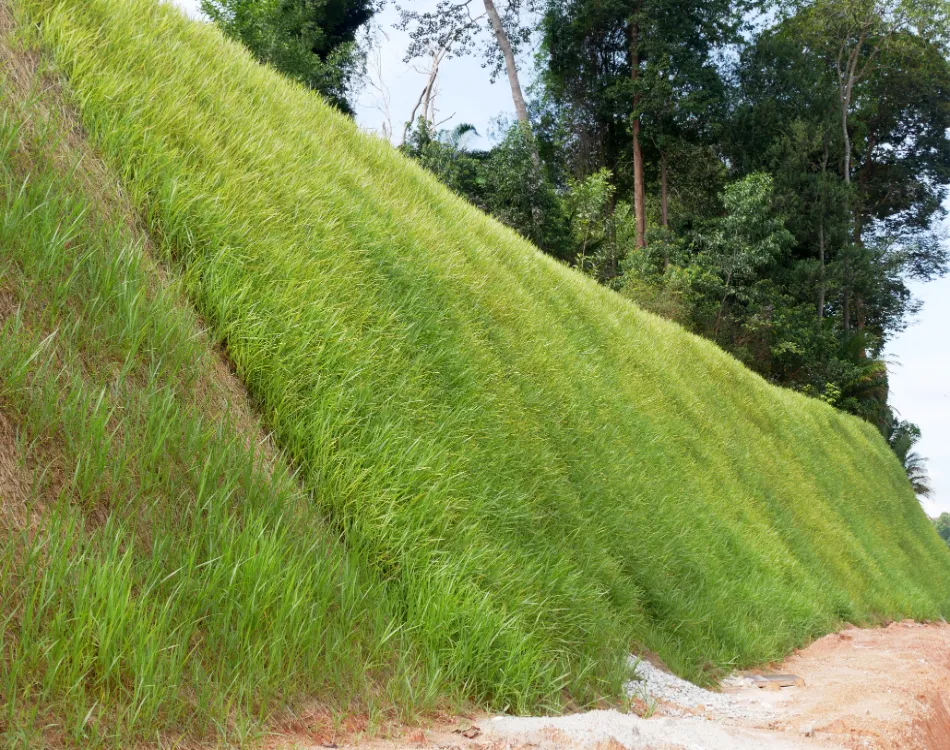
Erosion is one of those property problems that starts small and gets worse fast. A bare slope that loses a little topsoil after every rain becomes a gully. A graded area that looked fine after construction becomes a washout after the first significant storm. A creek bank or retention pond edge that was stable for years starts slumping after a dry summer followed by a wet fall. By the time most property owners take action the problem is larger and more expensive to address than it would have been at the first sign of trouble.
Hydroseeding is one of the most effective and cost-efficient tools available for erosion control on residential and commercial properties in Texas. This guide explains how it works why it outperforms most erosion control alternatives and what property owners in the DFW area need to know before starting an erosion control project.
Why erosion happens and why it matters
Erosion is the process of soil being displaced by water wind or both. On bare or sparsely vegetated surfaces there is nothing holding the soil in place when water runs across it or wind moves over it. The faster the water moves and the steeper the slope the more soil it carries with it.
In the DFW area erosion is a particularly active problem for several reasons. North Texas clay soil is highly vulnerable to erosion when it is bare or disturbed. The rainfall patterns of the region — dry stretches broken by intense storm events — create exactly the conditions where erosion damage is greatest. Heavy rain on dry cracked clay produces rapid runoff with high sediment load rather than the gentle absorption that slowly falling rain allows.
Construction activity makes the problem worse. Grading strips the vegetative cover and surface organic matter that hold soil in place and leaves large areas of bare exposed subsoil vulnerable to the first significant rainfall. New construction sites in the DFW area can lose significant topsoil in a single storm event if erosion control measures are not in place.
The consequences of erosion go beyond the aesthetic damage of gullies and washouts. Lost topsoil cannot be easily replaced and it represents the most productive layer of soil on the property. Sediment that washes off a property during erosion events ends up in drainage channels retention ponds and waterways where it creates regulatory compliance issues and environmental damage. Slope instability from long-term erosion can undermine structures fences and retaining walls over time.
Addressing erosion is not just a cosmetic decision — it is a property protection and in many cases a regulatory compliance decision.
How hydroseeding stops erosion
Hydroseeding addresses erosion through two mechanisms that work together to provide both immediate and permanent protection.
The first mechanism is the mulch layer applied with the slurry. From the moment the hydroseeding application is complete the fiber mulch covers the soil surface and absorbs the impact of raindrops that would otherwise dislodge soil particles. It slows the velocity of water moving across the surface reducing the erosive force of runoff. And it physically holds soil particles in place against wind displacement. This immediate protection begins working before a single seed germinates — the mulch layer is doing erosion control work from day one regardless of where the germination process stands.
The second mechanism is the root system that develops as the grass establishes. This is the permanent erosion control solution. Grass roots penetrate the soil binding it together at the particle level in a way that no surface covering can replicate. A fully established stand of grass on a slope or embankment is dramatically more erosion resistant than any temporary measure because the protection is structural and three-dimensional rather than surface level.
The combination of immediate mulch layer protection during the establishment window and permanent root system protection after establishment is what makes hydroseeding the most durable erosion control solution available for most property types in the DFW area.
Standard hydromulch versus bonded fiber matrix for erosion control
Not all hydroseeding mulch products provide the same level of erosion control and understanding the difference is important when your project involves significant slopes or high erosion risk.
Standard wood fiber or paper fiber hydromulch provides meaningful erosion protection on flat to moderately sloped surfaces. The fiber layer slows runoff velocity reduces splash erosion and holds surface moisture to support germination. On a residential lawn with a gentle grade standard hydromulch is the appropriate and cost-effective product for both lawn establishment and the incidental erosion protection that comes with it.
On steeper slopes highly disturbed soils and areas adjacent to drainage channels and waterways standard hydromulch has a limitation — it does not form a cohesive mat. Under significant rainfall events the individual fibers can shift wash and fail to maintain continuous coverage in the areas where erosion risk is highest. When the mulch fails before the grass establishes the erosion protection gap is exposed at exactly the moment it is most needed.
Bonded fiber matrix addresses this limitation. The bonding agents in BFM cause the fibers to interlock after application forming a continuous mat over the soil surface that stays in place through significant rainfall events. On slopes where standard mulch would wash BFM maintains coverage. On disturbed construction sites where soil cohesion is low BFM provides the structural protection the surface needs through the full establishment window.
The practical guideline for choosing between standard hydromulch and BFM on an erosion control project is straightforward. For moderate slopes and general residential erosion concerns standard hydromulch is adequate. For slopes steeper than approximately 3 to 1 highly disturbed soils drainage-adjacent areas and permitted construction sites where specific product performance is required BFM is the appropriate product. Your contractor should assess your specific site conditions and make a clear recommendation rather than defaulting to one product or the other without evaluating the site.
Erosion control on residential properties
Residential erosion problems in the DFW area take several common forms each of which hydroseeding addresses effectively.
Bare slopes in the backyard are the most common residential erosion concern. A slope that loses topsoil after every significant rain eventually becomes a gully that is both unsightly and increasingly difficult to stabilize the longer it progresses. Hydroseeding a bare residential slope — with standard mulch on moderate grades and BFM on steeper ones — stops the active erosion and establishes permanent vegetation that prevents recurrence.
New construction lots where the builder left bare graded soil across the entire yard are among the most erosion-vulnerable residential properties in the DFW area. Significant rainfall in the months between construction completion and lawn establishment can carry substantial topsoil off a bare lot. Hydroseeding immediately after construction is complete — rather than waiting until spring or some other convenient window — protects the topsoil that represents the foundation of the future lawn.
Creek banks drainage swales and areas adjacent to retention ponds on residential properties are high-erosion zones where standard lawn establishment methods are often inadequate. The concentrated water flow and velocity in these areas during storm events demands the higher-performance protection of BFM applications and erosion-control seed mixes designed for these conditions.
Fill areas where soil was added to grade a property are particularly vulnerable because the fill material lacks the compaction and structure of undisturbed soil. Hydroseeding over fresh fill with appropriate mulch and seed establishes vegetation before the fill has a chance to erode.
Erosion control on commercial and construction sites
Commercial and construction site erosion control in the DFW area involves specific requirements that go beyond what most residential projects need.
Permitted construction sites in Texas are required to implement erosion and sediment control measures as part of their stormwater pollution prevention plan. These requirements specify the types of products and methods that qualify as acceptable erosion control — and BFM hydroseeding is one of the most commonly specified methods for permanent vegetative stabilization on permitted sites.
General contractors and developers who are managing permitted construction sites in the DFW area need a hydroseeding contractor who understands these requirements can provide the documentation needed for compliance and uses the right products to pass stormwater inspections. A contractor who shows up with standard hydromulch on a BFM-specified site either has not read the plans or is cutting corners — either way it creates compliance risk for the project.
Large commercial sites — highway embankments retention pond banks utility corridors and large development sites — have erosion control scales and terrain challenges that residential projects do not. Equipment capacity coordination with other site work and experience with the specific products and documentation requirements of commercial erosion control projects are all capabilities that matter when selecting a contractor for commercial-scale work.
Seed selection for erosion control applications
The right seed mix for an erosion control hydroseeding project depends on the goal — fast temporary stabilization permanent lawn establishment or naturalized permanent vegetation — and the specific conditions of the site.
For residential slopes where the goal is permanent lawn grass coverage warm-season mixes appropriate to the sun exposure and soil type are used with the same considerations as any residential hydroseeding project. Bermudagrass is the most common choice for full-sun slopes in the DFW area — it establishes aggressively and produces dense coverage that holds soil effectively once established.
For large disturbed areas on commercial and civil projects where the goal is permanent vegetative stabilization rather than traditional lawn turf native grass mixes are often specified. Species like Bermudagrass for initial establishment combined with native grasses like Buffalograss Sideoats Grama and Little Bluestem for long-term permanent cover provide both fast initial protection and the deep-rooted permanent stabilization that engineered slopes and embankments require.
For areas where immediate fast establishment is the priority over specific grass type fast-germinating cover crops or annual grasses are sometimes included in the mix to provide rapid surface stabilization while slower-establishing permanent species develop.
The seed selection for an erosion control project should be driven by the specific site conditions the intended use of the area after establishment and any regulatory or engineering specifications that apply to the project. A contractor experienced with erosion control work — not just residential lawn establishment — will understand these distinctions and make recommendations accordingly.
Timing erosion control hydroseeding
Erosion control applications operate on a different timing calculus than standard lawn establishment. The urgency of addressing active erosion often means that the ideal agronomic timing for germination has to be balanced against the need to get protective mulch on the ground before the next significant rainfall event.
The mulch layer provides immediate erosion protection regardless of germination timing. Getting BFM or quality hydromulch on a bare slope before a forecasted storm event reduces erosion damage from that event even if the seed does not germinate for another week or two. This is a meaningful advantage of hydroseeding over waiting for perfect germination conditions — the erosion protection starts immediately even when germination conditions are less than ideal.
For projects where both timing flexibility and germination quality matter late spring and fall are the best windows for erosion control hydroseeding in the DFW area — the same seasonal windows that favor general lawn establishment. But when active erosion is occurring or a significant rainfall event is approaching getting the application done takes priority over waiting for the optimal germination window.
What to do about active erosion before hydroseeding
If your property has active erosion — ongoing gully formation soil loss or slope slumping — there may be additional steps needed before hydroseeding can address the problem effectively.
Significant gullies or rills that have already formed need to be filled and graded before the hydroseed application. Hydroseeding into a gully addresses the surface but does not fill the channel — subsequent rainfall will re-form the erosion path through the new vegetation if the underlying grade problem is not corrected first.
Very steep slopes with active undercutting or instability may need structural stabilization measures — retaining walls erosion control blankets or other engineering solutions — before vegetation can be effectively established. Hydroseeding is a vegetative solution that works best when the structural conditions allow vegetation to establish and persist. On highly unstable slopes it is one component of a broader erosion management approach rather than the complete solution.
Drainage problems that are directing concentrated water flow onto a slope or bare area need to be addressed at the source. Redirecting drainage away from erosion-vulnerable areas or managing it through properly designed channels before hydroseeding produces better long-term results than hydroseeding over the same concentrated water flow that caused the erosion in the first place.
The bottom line on hydroseeding for erosion control
Hydroseeding is the most practical and cost-effective method for establishing vegetation on erosion-prone surfaces in the DFW area. The immediate mulch layer protection and permanent root system stabilization that hydroseeding provides address both the short-term and long-term aspects of erosion control more effectively than most alternatives at a cost that makes it accessible for residential and commercial properties alike.
The key decisions are the right mulch product for the slope conditions — standard hydromulch for moderate grades BFM for steeper and higher-risk applications — the right seed mix for the site conditions and end use and a contractor who has real experience with erosion control applications rather than just residential lawn establishment.

Dealing with erosion on a slope bare yard or construction site?
Fox Hydroseeding LLC handles erosion control applications across the DFW area — from standard residential slope work to BFM applications on commercial and permitted sites. Every project starts with a personal site assessment so you get the right product recommendation for your specific conditions.
Get Your Free Estimate → foxhydroseeding.com/contac
Bring Your Property to Life With Expert Hydroseeding
Find Us On


Email address

Phone Number

