


Hydroseeding for erosion control — how to stop soil loss and stabilize slopes for good
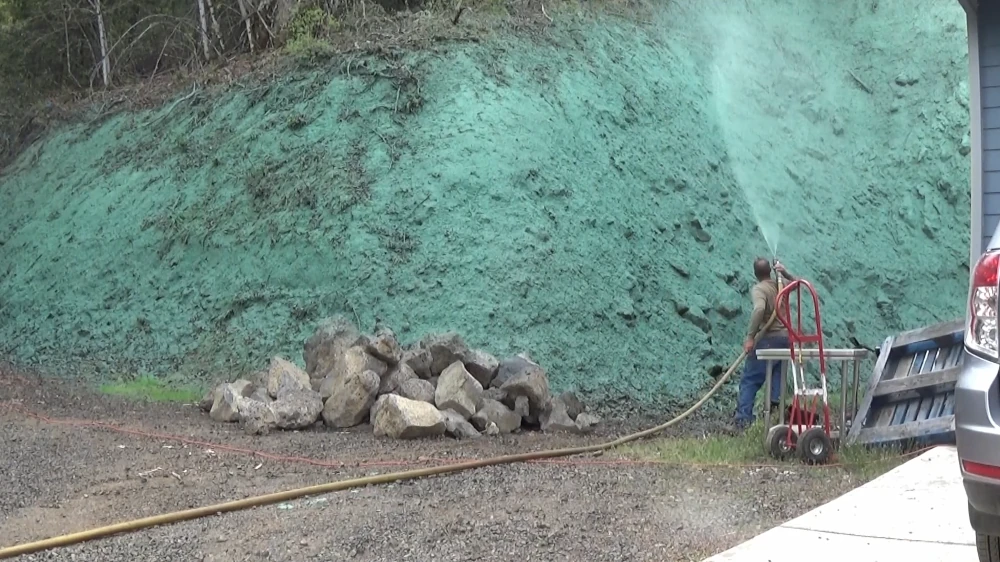
Slopes that erode with every rain event are one of the most frustrating ongoing property problems in the DFW area. The bare soil on a steep grade loses material downhill with every significant rainfall — carrying topsoil into drainage areas creating the rills and channels that deepen with each storm and leaving the slope progressively more bare and more vulnerable to the next event. Standard seeding approaches that work on flat ground fail on slopes for predictable reasons and the homeowner or contractor who has watched seed wash away from the same slope multiple times has usually discovered that the flat-ground seeding approach does not transfer to sloped terrain without modification.
Hydroseeding for erosion control is not the same as hydroseeding for lawn establishment — and understanding the differences between them is what determines whether the application actually stops the erosion or becomes one more attempt that the first storm undoes.
Why slopes erode and what stops them
Slope erosion occurs because rainfall hitting bare or sparsely vegetated sloped ground generates runoff that has both the volume and the velocity to transport soil particles downhill. The steeper the grade the faster the runoff velocity. The longer the slope the greater the volume of water concentrated at the base. The more bare the surface the less interception of rainfall energy and the less resistance to runoff movement.
Vegetation stops erosion through two mechanisms that work together. The above-ground canopy intercepts rainfall energy — the leaves and stems of established grass break the force of falling raindrops before they hit the soil surface reducing the detachment of soil particles that drop impact creates. The below-ground root system binds the soil physically — the network of roots anchors soil particles together preventing the transport that runoff would otherwise accomplish.
Both mechanisms require vegetation that is established — not just germinated. A seedling that has been in the ground for three days has neither adequate canopy to intercept rainfall energy nor adequate root development to bind soil against runoff. This is why the establishment period on an erosion-vulnerable slope is the most critical and most challenging phase — the application needs to hold against the rainfall events that arrive during the establishment window before the vegetation has developed the maturity to resist erosion on its own.
Why standard hydromulch fails on erosion-critical slopes
Standard hydromulch — the wood fiber mulch product used in most residential lawn hydroseeding applications — is designed to protect seed during the germination window and provide the moisture retention that establishment requires. It is not designed as an erosion control product and it does not have the physical properties that erosion control on significant slopes requires.
When a significant rain event arrives within the 48-hour bonding window of a standard hydromulch application on a steep slope the runoff velocity generated by the grade exceeds the bond strength of the partially cured mulch layer. The slurry that was applied to the slope washes to the base leaving the upper slope sections bare and concentrating seed and mulch material at the drainage point below.
Even after the bonding window has passed standard hydromulch on a steep slope has limited physical resistance to the runoff that heavy rainfall generates. The fiber layer provides some surface roughness that slows runoff velocity but it does not form the continuous mat structure that provides genuine erosion resistance across the full slope surface.
This is why the same slopes that appear to accept a standard hydromulch application wash out with the first significant storm — the product was not designed for the erosion control application it was being asked to perform.
Bonded fiber matrix: the product designed for erosion-critical applications
Bonded fiber matrix is the hydroseeding product designed specifically for applications where erosion control is the primary requirement — slopes steep grades disturbed embankments pond banks drainage channels and any application where the combination of grade and rainfall intensity creates erosion risk that standard hydromulch cannot address.
The physical difference between BFM and standard hydromulch is in what the product does as it dries. Standard hydromulch dries into a fiber layer that provides surface coverage but remains essentially a collection of individual fibers with limited structural integrity against runoff movement. BFM dries into a continuous mat structure — the fibers bond together and to the soil surface creating a physically coherent layer that acts like a blanket over the slope surface. This mat structure resists the physical forces of rainfall impact and runoff velocity that standard mulch cannot withstand on steep grades.
BFM applications on appropriate slopes maintain their integrity through significant rainfall events — including the intense spring storm events that the DFW area regularly produces — because the mat structure provides erosion resistance as a continuous physical layer rather than as a collection of loose fibers that the water can move around.
The trade-off for this performance is cost. BFM is significantly more expensive per application than standard hydromulch — the material cost is higher the application rate is greater and the mixing and application process requires more time. On flat residential lots where erosion is not a meaningful concern BFM is not worth the additional cost. On slopes and erosion-critical areas it is the product that produces the outcome standard hydromulch cannot.
What slope angle actually requires BFM versus standard hydromulch
The practical question for any hydroseeding project with sloped sections is which areas require BFM and which can be addressed with standard hydromulch at lower cost.
Slopes of three to one — three feet of horizontal distance for every one foot of vertical rise — or steeper are generally considered the threshold where BFM is warranted for erosion control applications in the DFW area. At this grade and steeper the combination of runoff velocity and volume creates erosion risk that standard hydromulch does not adequately address.
Slopes shallower than three to one — more gradual grades where runoff velocity is lower — can typically be addressed with standard hydromulch with appropriate tackifier specification. The gentler grade means lower runoff velocity and less physical force against the mulch layer allowing the standard product bond strength to be adequate.
Many properties have sections with different slope angles — a steep embankment near the drainage easement a gradual slope through the main lawn area and flat sections near the structure. Differentiating the product specification by section — BFM on the steeper sections standard hydromulch on the gentler sections — produces the appropriate erosion control on each area at the most cost-efficient overall specification.
Grass selection for erosion control applications
The grass selection for erosion control applications is driven by different priorities than residential lawn establishment — with establishment speed erosion resistance of the developing root system and tolerance for the challenging conditions of disturbed slopes weighted more heavily than appearance preferences.
Bermudagrass is one of the best choices for erosion control on full-sun slopes in the DFW area because of the combination of fast germination aggressive lateral growth and deep root development that characterizes established Bermuda. The roots that Bermuda develops in properly prepared soil bind slope soil effectively within a single growing season providing the physical stabilization that erosion control requires on a permanent basis.
For erosion control on slopes that are not primarily managed as lawn areas native grass mixes — Bermuda Buffalograss Sideoats Grama and other regionally appropriate species — provide establishment from multiple grass types simultaneously creating redundancy in the establishment process and producing the diverse root system that permanently stabilizes slopes more robustly than monoculture seeding.
For permitted commercial or development sites where stormwater management plans specify particular seed mixes for disturbed area stabilization the seed specification in the stormwater plan governs the selection regardless of what would otherwise be recommended for a standard lawn application.
Preparation for slope erosion control hydroseeding
The preparation for erosion control hydroseeding on a slope addresses both the immediate establishment conditions and the slope geometry that determines how runoff flows across the application area.
Grade roughening on very smooth slopes improves the initial adhesion of the BFM application by creating surface texture that the product can bond to more effectively than a perfectly smooth compacted clay surface. On slopes that have been graded smooth by equipment a light scarification or roughening of the surface before application improves bond strength.
Drainage diversion above the slope — the area upslope from the application area that generates runoff flowing onto the established area — can be addressed through temporary sediment control measures during the establishment period. If the slope receives significant runoff from an upslope area during heavy rain events that volume adds to the erosion challenge during establishment. Diverting that upslope water around rather than across the newly seeded slope during the establishment period reduces the erosion risk while the BFM is curing and the vegetation is developing.
Check dams or wattles placed across the slope at intervals appropriate to the grade slow runoff velocity across long slopes — breaking the flow length that allows runoff to accelerate to erosion-effective velocities. These erosion control structures are standard practice on steeper slopes and longer slope lengths where the BFM alone is not sufficient to resist the combined effect of volume and velocity that long steep slopes generate.
The establishment period on erosion-critical slopes
The establishment period management for erosion control applications differs from standard lawn establishment in the monitoring focus and the post-storm response that slope-specific risks require.
After every significant rain event during the establishment period walk the full slope application area and assess the BFM condition. Intact uniform BFM coverage across the slope surface after a significant storm is the confirmation that the product is performing as specified. Visible channels rills or areas where the BFM has been displaced indicate either that the storm intensity exceeded the product specification for the grade or that the application had bonding deficiencies in the affected sections.
Contact the contractor promptly if significant displacement is visible — the same urgency applies to slope erosion control applications as to any displacement event. The window for addressing displaced areas within the same establishment cycle is limited and early touchup produces germination in the same timeframe as the surrounding application. Waiting weeks to address confirmed displacement loses the timing advantage.
When to expect permanent stabilization
Permanent slope stabilization through hydroseeding is a first-season achievement for applications that establish correctly — but the definition of permanent stabilization is worth being specific about.
The BFM layer that provides immediate physical erosion resistance during the establishment period is a temporary component — it biodegrades over the course of the establishment period as the vegetation develops. By weeks eight to twelve after a well-managed application the BFM has largely biodegraded and the permanent erosion resistance is being provided by the grass root system that developed through the establishment period.
A Bermuda lawn or native grass mix that has completed its first growing season on a slope has developed the root system that permanently stabilizes the slope against the rainfall events that erosion previously made routine. The slope that was losing soil with every storm is stable — not because the BFM is still present but because the permanent vegetation it enabled is now providing the erosion resistance that the slope required.
The bottom line on hydroseeding for erosion control
Hydroseeding for erosion control works when the right product — BFM rather than standard hydromulch — is specified for the slope angles that require it the right grass is selected for fast establishment and permanent root stabilization and the establishment period is managed with the monitoring attention that erosion-critical applications require.
The slope that has been washing away with every storm is not going to hold with standard hydromulch and wishful thinking. It is going to hold when BFM provides the establishment protection that the grade requires and established vegetation provides the permanent stabilization that roots anchored in the slope soil deliver.

Have a slope that keeps eroding and need a solution that actually holds?
Fox Hydroseeding LLC handles erosion control applications across the DFW area using BFM specifications appropriate for the specific grade and conditions of each slope. Every project starts with a personal site assessment by the owner.
Get Your Free Estimate → foxhydroseeding.com/contact
Bring Your Property to Life With Expert Hydroseeding
Find Us On


Email address

Phone Number

