


Hydroseeding for drought recovery — how to restore a lawn that did not survive the summer
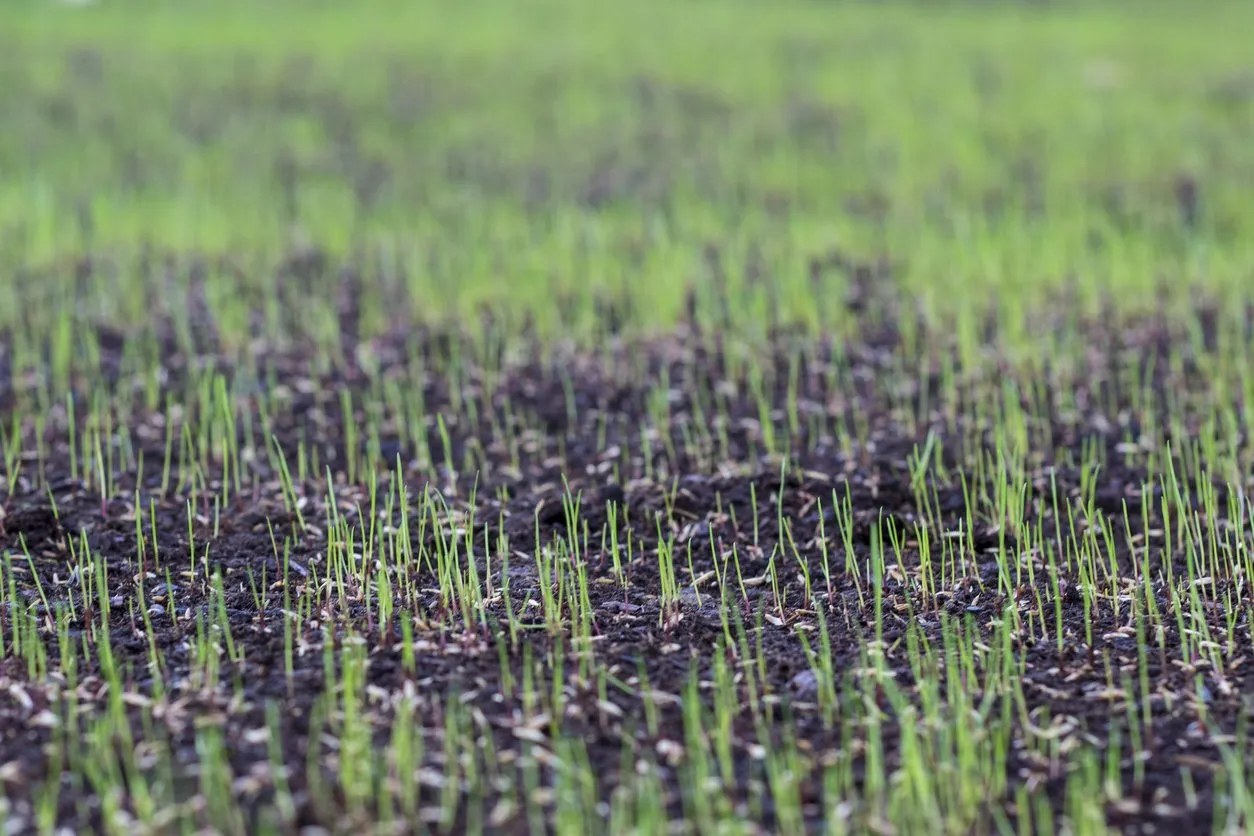
Texas summers are hard on lawns. The combination of extreme heat low humidity and the dry stretches that arrive between the intense rainfall events of spring and fall tests every lawn in the DFW area — and not every lawn passes that test. By September some yards look nothing like they did in May. Bermuda that was green and dense in April is thin brown and patchy after a brutal July and August. Areas that were marginal going into summer did not make it through. And now with temperatures finally moderating the question is what to do about it.
This guide covers how to assess drought damage honestly determine what is recoverable versus what needs to be replaced and use hydroseeding to restore a drought-damaged lawn before winter arrives or in the following spring for lawns where the fall window has closed.
First: understanding what drought actually did to your lawn
Before deciding on a restoration approach it is worth understanding what drought damage actually looks like and what it means for recovery potential. Not all lawns that look bad after summer drought are in the same situation and the distinction between dormant stressed and dead changes the recovery approach significantly.
Bermudagrass that went dormant under summer drought stress is not dead. Dormancy is the survival mechanism Bermuda uses when moisture is insufficient to support active growth — the above-ground blades stop growing turn brown and appear dead while the crown and root system remain alive underground. A dormant Bermuda lawn that receives adequate moisture — either from rain or from resumed irrigation — greens back up within one to two weeks. If your Bermuda lawn started recovering green coverage within two weeks of receiving consistent water after a dry period the lawn was dormant not dead and recovery is underway naturally.
Bermudagrass that experienced crown death from severe prolonged drought is genuinely dead in those sections. Crown death occurs when the drought is severe enough and prolonged enough that the crown tissue — the growing point of the plant located just at or below the soil surface — desiccates past the point of recovery. These sections do not green up when water returns. Two to three weeks of consistent watering after drought with no recovery in specific sections is a reliable indicator of crown death rather than continued dormancy.
The difference between dormant Bermuda and dead Bermuda determines whether those sections need to be waited out or replaced. Dormant sections recover naturally and do not need reseeding. Dead sections require reseeding to restore coverage.
Assessing drought damage: which sections are dormant versus dead
Walking the yard two to three weeks after resuming consistent irrigation following the drought period gives you the most reliable assessment of which sections are recovering and which are not.
Sections that are showing green coverage — either fully green or showing green at the base of the blade with brown tips from the stressed period — are recovering from dormancy. These sections do not need to be reseeded. They need continued appropriate irrigation and fertilization to support the recovery and fill-in that will complete through the fall growing period.
Sections that are completely brown with no sign of green at the base after two to three weeks of consistent watering are candidates for crown death assessment. Pull a handful of the brown grass and examine the crown area just below the surface. Living crowns are white or cream colored and firm. Dead crowns are brown black or grey and may have a rotted or dried texture. The crown color assessment is more reliable than the above-ground color as an indicator of true death versus dormancy.
Large sections of confirmed crown death need to be reseeded. Small isolated patches of crown death surrounded by recovering grass may fill in naturally from the lateral spread of the surrounding Bermuda — giving those patches a few weeks after confirming the surrounding sections are actively spreading before deciding to reseed is reasonable for small areas.
Timing drought recovery hydroseeding: fall versus spring
The timing of drought recovery hydroseeding depends on when you assess the damage and what grass type you are working with.
For Bermudagrass drought recovery the timing options depend on the specific date in fall when the assessment is complete. Bermudagrass needs soil temperatures consistently above 65 degrees Fahrenheit for reliable germination — a threshold that closes in the DFW area sometime between late October and mid-November depending on the year.
Drought damage identified and assessed in September allows for a fall Bermudagrass hydroseeding recovery application in early to mid-October under most DFW conditions. Applications in this window — before soil temperatures drop below the germination threshold — can establish adequately before dormancy arrives if executed promptly and watered consistently.
Drought damage assessed in late October or November in most years does not have a viable Bermudagrass fall recovery window. Soil temperatures are already at or below the Bermuda germination threshold and a late fall application produces poor or no germination before cold weather closes the establishment window entirely. For these situations the right approach is to wait for the following spring — accepting that the yard will remain bare or sparse through winter and positioning the spring application to be done at the optimal timing in late March or April.
For mixed-grass yards where shaded sections need Tall Fescue fall is actually the optimal timing for Fescue establishment regardless of whether summer drought was the reason for the renovation. Drought-damaged shaded sections can be hydroseeded with Fescue in October for ideal establishment — turning a drought recovery necessity into an optimally timed cool-season application.
Preparing drought-damaged lawn for hydroseeding
Drought-damaged areas require specific preparation steps before hydroseeding produces the best results — preparation that addresses both the physical condition of the soil after the drought stress and the removal of dead material that would prevent seed-to-soil contact.
Remove dead material before application. Dead Bermuda grass that did not recover from drought forms a mat of brown fibrous material at the soil surface. This dead mat prevents hydroseeding slurry from making adequate contact with the soil — producing the same poor seed-to-soil contact that thick thatch creates in overseeding scenarios. Rake or dethatch the dead material from drought-killed sections to expose bare soil before the application.
Assess compaction in drought-affected areas. Severe drought followed by the shrink-swell cycle of North Texas clay as it dries and rewets creates surface compaction in affected sections. If the soil in drought-damaged areas is noticeably harder than surrounding recovered sections aeration or light mechanical loosening before hydroseeding improves root penetration in the replacement grass.
Address soil moisture before application. Severely dried North Texas clay can become hydrophobic — repelling water initially rather than absorbing it — after extended drought. Pre-irrigating drought-damaged sections for one to two days before the hydroseeding application begins the rewetting process that improves slurry-to-soil adhesion and initial moisture availability for germination. Applying slurry to extremely dry hydrophobic soil produces poorer mulch bonding and initial moisture retention than the same application on adequately pre-moistened soil.
Check soil quality in the most severely affected sections. Extended severe drought can accelerate the depletion of organic matter and biological activity in the upper soil layer — particularly in areas that were already marginal before the drought. If drought-damaged sections have visibly poor soil quality adding a thin layer of quality topsoil or compost before hydroseeding improves the establishment environment for the replacement grass.
What grass type to use for drought recovery hydroseeding
The grass type for drought recovery hydroseeding should match the conditions of the damaged sections and the lessons the drought damage revealed about what worked and what did not in your specific yard.
For full-sun sections where Bermuda performed adequately before the drought event and the damage was from unusual drought severity rather than fundamental grass-condition mismatch Bermuda recovery hydroseeding restores the grass that is appropriate for those conditions.
For sections where Bermuda was already thin and struggling before the drought arrived and the summer drought simply finished what was already an underperforming area the drought recovery is an opportunity to reassess the underlying cause — compaction shade mismatch poor soil quality — and address it before reseeding with the same grass that was already struggling.
For sections that are in partial or full shade where Bermuda was thinning progressively before the drought accelerated the decline the recovery approach should include switching to Tall Fescue for shaded zones rather than reestablishing Bermuda that will thin again through the next summer.
Drought-tolerant grass varieties offer a forward-looking option for homeowners whose drought experience revealed that standard Bermuda requires more irrigation than their property or their commitment level reliably provides. Improved drought-tolerant Bermuda varieties or Buffalograss hydroseeding in drought-vulnerable sections produces a lawn more resistant to the next drought event than repeating the same standard Bermuda establishment.
Recovery irrigation management: what drought-damaged lawns need
Reestablishing irrigation after a drought period on both recovering and dead sections of the lawn requires care to avoid creating new problems while addressing the drought damage.
For recovering dormant sections resume normal irrigation at a deep infrequent schedule — the same mature lawn schedule appropriate for the season and grass type. The recovering Bermuda does not need the intensive establishment schedule of newly seeded grass — it needs the consistent deep watering that supports the lateral spread and growth that will fill in the thin sections over the fall growing period.
For newly hydroseeded drought recovery sections follow the standard hydroseeding establishment schedule — two to three sessions per day during the germination window transitioning to deeper less frequent sessions as establishment progresses. The adjacent recovering Bermuda sections are receiving a different irrigation schedule from the newly seeded sections — which can be managed either by timing supplemental irrigation for the seeded sections separately from the automatic schedule for the recovering sections or by setting the automatic system to the establishment schedule for all zones covering the renovation area and accepting that the recovering sections receive slightly more frequent irrigation than they strictly need during the establishment period.
Fall fertilization after drought recovery
The nutrient status of a lawn that experienced significant summer drought stress is often depleted — the stress response the partial dormancy and the reduced biological activity of drought-stressed soil all affect nutrient availability and uptake through the summer period.
For recovering Bermuda sections an appropriately timed and appropriately dosed fall fertilization supports the active fall growth period that helps fill in thin sections before dormancy arrives. Fall nitrogen application on Bermuda should be completed early enough in the season that the growth it promotes has time to harden before cold weather arrives — generally no later than six weeks before the expected first freeze in the DFW area.
For newly hydroseeded drought recovery sections the starter fertilizer in the slurry provides the nutrition the new seedlings need through the first four to six weeks. After that period a light application of starter or balanced fertilizer supports continued establishment and fill-in before the grass goes dormant.
Avoid heavy nitrogen applications on drought-stressed lawns in fall. The temptation to push aggressive growth to compensate for the summer's damage produces soft lush growth that is more vulnerable to early freeze damage than the moderate firm growth that appropriate fall fertilization produces.
What to expect from drought recovery hydroseeding
The timeline for drought recovery hydroseeding follows the same general pattern as any hydroseeding application — first sprouts in five to ten days solid coverage developing through weeks two to four first mow at weeks four to five. The recovered sections may show the visual transition from drought-damaged brown to new green growth more dramatically than a fresh new construction establishment because the surrounding context of recovering Bermuda provides a contrast that makes the new growth particularly visible.
For fall drought recovery applications the establishment window before dormancy is a real constraint. A Bermuda drought recovery application in mid-October in the DFW area has four to six weeks of growing conditions before frost events become a regular risk. The new grass may not reach full maturity before dormancy — but germination and initial establishment within the available window positions the sections for strong spring growth from a surface that has seed already germinated and partially rooted rather than bare dead material that would need reseeding in spring anyway.
The bottom line on hydroseeding for drought recovery
Summer drought damage is recoverable in most cases and the recovery approach — dormant sections resuming naturally with appropriate irrigation newly hydroseeded sections replacing the genuinely dead areas — addresses both the immediate visual problem and the opportunity to improve the lawn's resilience to the next drought through better grass selection and soil preparation.
The timing of the recovery assessment and the decision about whether to execute a fall application or wait for spring are the most consequential decisions in drought recovery. Making those decisions based on accurate assessment of which sections are dormant versus dead and honest evaluation of the available seasonal window produces the right recovery plan rather than the reactive one that impatience or anxiety would suggest.

Did summer drought damage your lawn and not sure what can be saved and what needs to be replaced?
Fox Hydroseeding LLC assesses every drought-damaged property personally and gives you an honest evaluation of what is dormant what is dead and what the right recovery approach looks like for your specific situation and timeline.
Get Your Free Estimate → foxhydroseeding.com/contact
Bring Your Property to Life With Expert Hydroseeding
Find Us On


Email address

Phone Number

