


Hydroseeding for a new Texas home — everything you need to know in the first year
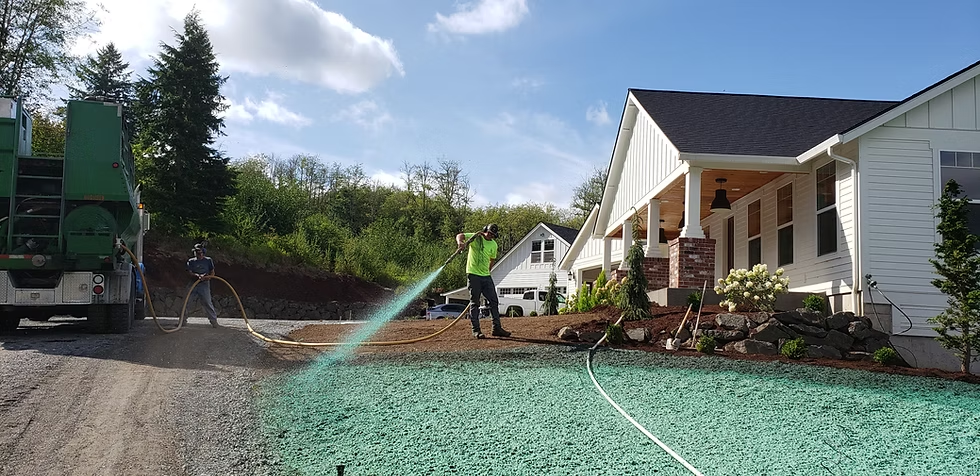
The first year of owning a home in Texas comes with a lawn decision that most new homeowners are underprepared for. The builder handed over the keys to a house on a lot that looks nothing like the established neighborhoods around it — bare dirt compacted clay and the evidence of months of construction activity where a lawn should be. The desire to fix it is immediate. The knowledge of how to fix it correctly is often lacking.
This guide is the complete first-year resource for new Texas homeowners establishing their first lawn. It covers every decision from assessing the builder-delivered lot through the end of the first growing season — in the sequence those decisions need to be made so nothing is missed and nothing has to be redone.
Understanding what the builder left you
The starting point for virtually every new Texas home lawn is more challenging than it appears. The yard that looks like it just needs grass planted on it has specific conditions that determine whether grass planted on it succeeds or fails — and understanding those conditions before making any decisions is the first step in the first-year process.
Construction activity creates compaction. Every piece of equipment that ran across the lot — excavators concrete trucks lumber deliveries framing crews — compressed the clay soil progressively through months of activity. The result is a surface density that grass roots cannot penetrate without mechanical intervention. This compaction is invisible from above and universally underestimated by first-time homeowners who see bare dirt and assume that planting something on it is the obvious next step.
Construction activity strips or buries topsoil. The organic-rich upper soil layer that supports healthy grass root development was stripped during foundation excavation and grading. What remains at the surface is subsoil — dense clay with minimal organic matter poor biological activity and limited capacity to support the root development that makes a lawn durable. Adding quality topsoil before any seeding approach addresses this condition directly.
Construction activity leaves debris. Rocks concrete chunks wire nails and miscellaneous building material end up mixed into the surface soil layer during construction and are not fully removed during grading. This debris creates bare spots in germination patterns and damages mowing equipment after establishment.
Understanding this starting point positions the first-year decisions correctly — the preparation investment before hydroseeding is not optional on a new Texas construction lot it is what makes the establishment succeed rather than fail.
The decision sequence that matters
The first year of lawn establishment on a new Texas home involves decisions that need to be made in a specific sequence — each one informing the next and the whole sequence determining the quality of the result.
Decision one: grass type. The grass that performs best in the specific conditions of your specific lot — primarily determined by sun exposure. Full sun across the yard means Bermudagrass for the warm-season growing season. Significant shade under trees or along north-facing fence lines means Tall Fescue for those sections. Mixed conditions often mean both grass types in their respective appropriate zones.
Decision two: timing. Bermuda requires soil temperatures consistently above 65 degrees Fahrenheit — available from late March through August in the DFW area with late spring being optimal. Fescue requires soil temperatures between 50 and 65 degrees — available in fall from early October through mid-November. The timing decision determines when the project can realistically proceed and which grass type makes sense for the available window.
Decision three: preparation scope. What does the specific lot need before any application will succeed. Compaction relief for the severely compressed clay. Topsoil addition for the stripped surface. Drainage correction for any low spots or grade problems. Debris removal for the construction material mixed into the surface. The preparation scope is determined by honest assessment of the specific conditions of the specific lot.
Decision four: contractor selection. Who will walk the lot assess the conditions make the preparation recommendations and execute the application. The contractor who walks the property identifies the preparation needs and provides a written estimate with specific product details is the contractor whose result will match the investment.
Making these four decisions in this sequence — grass type timing preparation contractor — with accurate information for each produces the first-year lawn establishment that succeeds rather than the one that requires reseeding.
The preparation investment that determines everything
For a new Texas home the preparation investment before hydroseeding is the most important financial decision in the entire first-year lawn process. Not the seed type not the mulch product not the application quality — the preparation of the surface those inputs land on.
The preparation investment on a typical new DFW construction lot involves compaction relief through skid steer work tilling or deep aeration quality topsoil addition blended into the loosened surface and thorough debris removal. These three preparation elements together create the growing conditions that grass roots need to develop the depth that makes the first summer manageable.
The homeowner who skips preparation to save money and applies hydroseeding directly to the builder-delivered surface gets the result that inadequate preparation always produces on a new construction lot — thin shallow-rooted grass that looks promising in April and struggles visibly by July because the roots never penetrated past the compaction layer. The renovation cost of addressing the failure exceeds the preparation cost that would have prevented it.
The homeowner who makes the preparation investment gets the result that proper preparation enables — a first-year lawn with root depth adequate to handle the first Texas summer without the crisis-level intervention that a shallow-rooted lawn requires.
The establishment period: four weeks that determine the first-year trajectory
The four to six weeks from the hydroseeding application through the first mow are when the investment in preparation and application quality is either protected or undermined by the management of the establishment period.
Watering consistency is the most critical variable. Two to three sessions per day for the first fourteen days in Texas conditions — maintaining the surface moisture that germination requires against the evaporation demands that Texas heat and wind impose. The automatic irrigation system programmed before the application and verified to cover the full seeded area handles this requirement reliably. Manual watering management for the same schedule introduces the gaps that produce patchy germination.
Foot traffic restriction for four full weeks protects the germinating and establishing grass from the physical damage that disrupts root development during the most fragile phase of the lawn's life. The restriction is the most commonly underestimated establishment management requirement — the grass that looks established at week two has root systems that are not yet developed enough to handle traffic without setback.
First mow timing at three to four inches with a sharp blade at high setting marks the transition from establishment to growing season management. The first mow done correctly — at the right height on the right surface with the right equipment — is a milestone that moves the lawn forward. The first mow done incorrectly is a setback that costs weeks of recovery.
The first growing season: building the foundation
The first growing season from establishment through the first dormancy is when the quality of the preparation and establishment investment either compounds into the lawn the homeowner envisioned or reveals the limitations that inadequate preparation and management will sustain through subsequent seasons.
Deep consistent watering through the first growing season is the practice that builds the root depth the lawn will draw on through every summer that follows. Each watering session that penetrates deeper than the previous week's — progressive deepening through April May and June — trains roots to develop into the cooler drier soil below the surface heat zone. The root depth achieved by the time July arrives is the primary determinant of how the lawn handles its first Texas summer.
First-season aeration in late spring begins the annual soil structure improvement cycle that keeps the North Texas clay soil from re-compacting progressively through subsequent seasons. The investment in first-season aeration starts the compounding improvement that makes each subsequent growing season easier than the last.
Appropriate seasonal fertilization during active growth supports the density development that makes the first-year lawn look like an investment worth making. Not aggressive over-fertilization — appropriate nitrogen at appropriate timing that supports vigorous growth without pushing excessive top growth at the expense of root development.
Fall dormancy preparation — reducing irrigation and fertilization as Bermuda approaches dormancy identifying any sections that need spring renovation attention and scheduling the spring contractor appointment before the peak season calendar fills — positions the lawn for the best possible second-year start.
The outcome of year one done right
A first-year Texas home lawn established through quality hydroseeding on properly prepared soil and managed correctly through the establishment period and the first growing season arrives at its first fall dormancy as a genuinely established lawn — not perfect in every section but fundamentally sound.
The root depth built through the first growing season means year two summer management requires less intervention than year one. The soil structure improvement from first-season aeration means year two root development continues compounding on year one's foundation. The turf density that developed through first-year management means year two weed pressure is lower than year one because the competitive cover is denser.
The lawn improves from this foundation through year two and year three — becoming progressively easier to maintain and progressively more impressive to look at as the root system matures the soil ecosystem develops and the turf density compounds toward the premium result that was the goal from the beginning.
That trajectory starts with the first-year decisions made correctly — grass type matched to conditions timing aligned with biology preparation investment appropriate for the lot conditions contractor selected based on site assessment quality establishment management committed through the critical window and first growing season management focused on root depth development.
The first year is the year that sets the trajectory. Done right it sets a trajectory that improves through every subsequent season.

Just moved into a new Texas home and ready to get your first lawn started the right way?
Fox Hydroseeding LLC works with new home owners across the DFW area and personally walks every property before making a preparation and application recommendation. Every estimate is handled by the owner.
Get Your Free Estimate → foxhydroseeding.com/contact
Bring Your Property to Life With Expert Hydroseeding
Find Us On


Email address

Phone Number

