


Hydroseeding for a new neighborhood — what every subdivision homeowner needs to know before starting
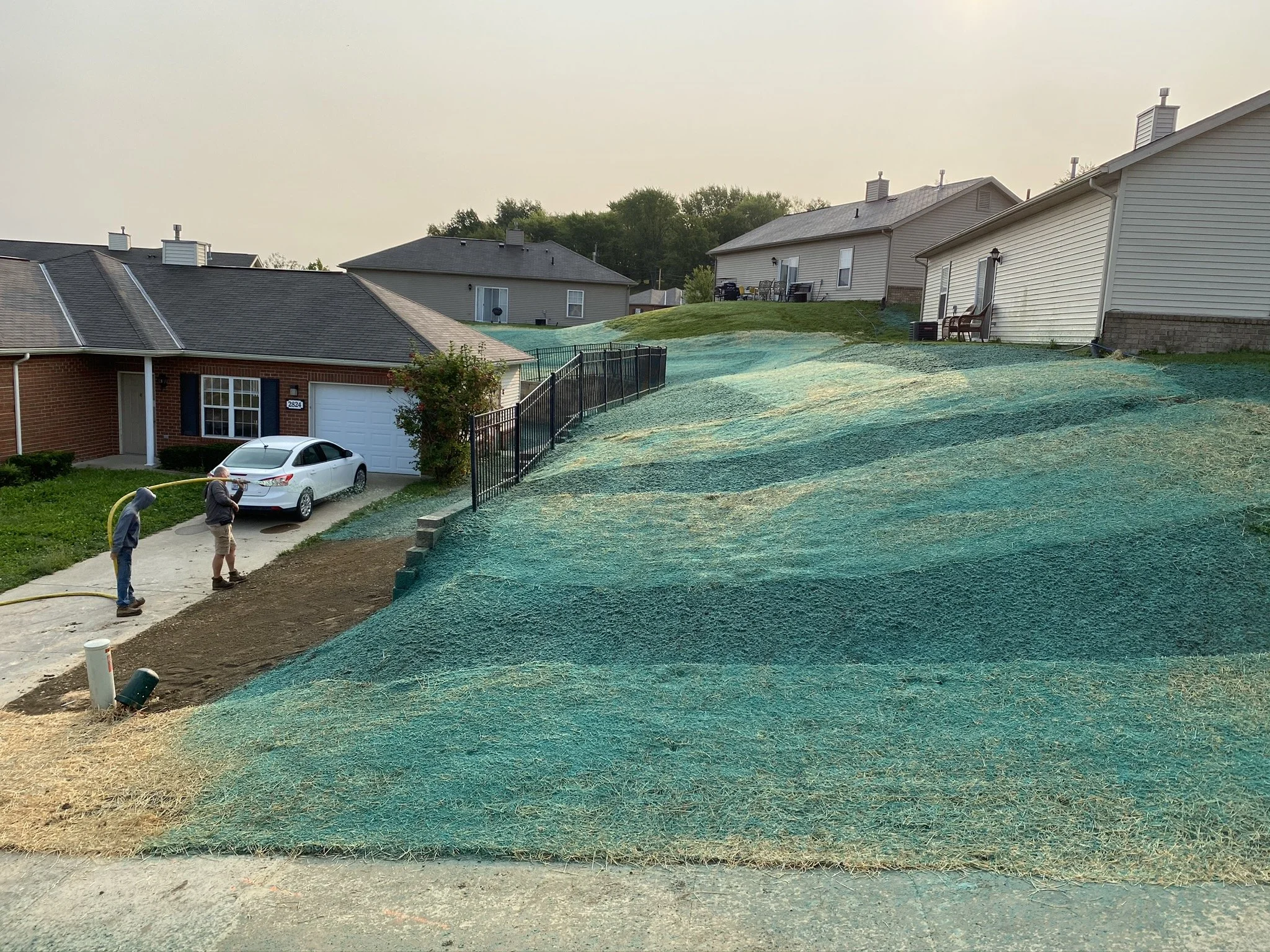
Moving into a new subdivision means starting a lawn from scratch — and doing it in a context that adds specific considerations that individual homeowners on established lots do not face. Your neighbors are making the same decisions at the same time. HOA standards may apply to front lawn appearance on a timeline that affects your scheduling decisions. The builder left the yards in a condition that ranges from barely graded to genuinely challenging for any establishment method. And the social visibility of every yard in a new neighborhood means the lawn decisions you make in year one are visible to every neighbor who drives past your house for the next decade.
This guide covers everything subdivision homeowners in the DFW area need to know about hydroseeding in a new neighborhood context — from the builder handoff conditions to the HOA compliance considerations to the community timing dynamics that affect how and when to proceed.
What the builder left you: the honest starting condition
New subdivision homes in the DFW area are delivered with yards in a condition that most homeowners do not fully understand until they have been through the lawn establishment process once. The builder's obligation typically ends at rough grade — a roughly leveled surface that is neither optimized for lawn establishment nor is it the challenging preparation problem that homeowners discover it to be until they try to grow grass on it.
The surface that builders leave is almost universally compacted. Heavy equipment traffic through the construction period — excavation equipment concrete trucks lumber deliveries framing crews and all the vehicles that service a construction project — runs repeatedly across every square foot of the lot. The clay soil that is already the most compaction-prone common soil type in the DFW area gets compressed by months of this traffic to a density that prevents meaningful root penetration without mechanical intervention.
The topsoil that was present before construction was almost certainly stripped or buried during foundation excavation and grading. What is left at the surface in most cases is the subsoil layer — dense poorly structured clay with minimal organic matter and limited capacity to support healthy grass root development regardless of what is applied to the surface.
Construction debris is mixed into the top layer of essentially every new construction lot at delivery. Rocks concrete chips wire nails and miscellaneous building material end up in the surface soil during construction activity and are not fully removed during grading. This debris creates bare spots in germination patterns and problems for mowing equipment after establishment.
Understanding that this is the standard starting condition — not an unusual problem specific to your lot — positions you to approach the preparation correctly rather than trying to explain why your yard seems so difficult when your neighbor's apparently similar yard is struggling just as much.
The preparation investment that determines everything
Given the starting condition described above preparation is the most important investment a new subdivision homeowner makes before any lawn establishment approach. This is true for hydroseeding specifically and for any establishment method — the preparation determines what the method can produce on your specific lot.
The preparation that most new subdivision lots in the DFW area need before hydroseeding are mechanical compaction relief topsoil quality improvement and thorough debris removal. Some lots additionally need drainage correction to address the grade changes that construction left behind.
Mechanical compaction relief — skid steer work tilling or deep aeration — breaks up the compressed subsoil layer and creates the root penetration pathways that the new lawn needs to develop the depth that makes it survive the first Texas summer. Skipping compaction relief on a new construction lot and applying directly to the compacted surface produces shallow-rooted grass that looks established in April and struggles significantly by July because the roots never developed past the surface compaction layer.
Quality topsoil addition — two to three inches of screened organic-rich topsoil blended into the loosened surface — creates the germination medium that the stripped subsoil cannot provide. The difference in first-year establishment quality between grass growing in quality topsoil on loosened clay and grass growing directly in compacted subsoil is visible and significant. The topsoil investment produces better germination more consistent coverage and faster root development than the same application without it.
Debris removal requires more effort than most homeowners expect. Two thorough walkthrough passes with careful surface raking — not just picking up visible surface items but disturbing the top inch or two to expose what is below — removes the material that would otherwise create bare spots in the germination pattern and damage mowing equipment after the lawn is established.
HOA requirements and timeline considerations
Most new subdivisions in the DFW area have HOA structures that include front lawn appearance standards with compliance timelines. These requirements affect when you need to start the establishment process and what the front lawn needs to look like by specific dates.
Common HOA lawn requirements that affect new subdivision homeowners include timeline requirements for lawn establishment after occupancy — typically specifying that the front yard grass must be established within a certain period of taking possession. Grass variety requirements that may specify approved grass types for the neighborhood — most commonly Bermudagrass for warm-season residential lawns in full-sun DFW conditions. Coverage standards that specify minimum acceptable coverage percentages for established lawns.
Understand your specific HOA requirements before scheduling anything. The establishment timeline of a quality hydroseeding application on a properly prepared surface — four to six weeks from application to established lawn — needs to fit within the HOA compliance window. For homeowners with tight HOA deadlines starting the preparation process immediately after closing and scheduling the hydroseeding application as early as the seasonal window allows produces the maximum timeline buffer between establishment and compliance deadline.
If your HOA timeline is genuinely too short to accommodate the hydroseeding establishment period — a closing in March with a thirty-day establishment requirement — the options are sod for the front yard to meet the immediate visibility standard while hydroseeding the backyard on the more relaxed timeline or a conversation with HOA management about a variance for an active establishment project.
The community timing dynamics that affect your decision
One of the specific dynamics of new subdivision lawn establishment that homeowners do not encounter on established properties is the community timing dynamic — the reality that your neighbors are all making the same decisions around the same time and that the decisions they make affect your context.
Contractors in high-demand seasons — particularly spring in the DFW area — fill their calendars quickly with subdivision homeowners who are all ready to establish their lawns at the same time. The homeowner who calls in late April hoping to schedule a spring application finds that the best contractors are booked for weeks — pushing the application into May when the optimal spring window is already narrowing.
The practical subdivision timing advice is to start the process earlier than you think you need to. Contact contractors in late February or early March. Get the estimate scheduled and the preparation plan in place while the spring calendar is still open. Be one of the first in the neighborhood to have your application done in optimal timing rather than one of the last who had to accept whatever date was still available.
The other community timing dynamic is social — watching neighbors establish their lawns and feeling the pressure of a bare yard in a neighborhood where every other yard is greening up. This social pressure sometimes drives homeowners to rush the preparation or skip steps to accelerate the timeline. The neighbor whose lawn went down with inadequate preparation and is looking thin by June is the cautionary example of letting social timing pressure produce the wrong trade-off. The four to six weeks of a properly prepared and properly executed spring application produces the lawn that will look better than the rushed installations for the next decade.
Choosing the right grass for your subdivision lot
Grass selection for a new subdivision lot follows the same principles as any residential project — matching the grass type to the actual light conditions of the specific lot — but with the added context of what your neighbors are likely planting and whether HOA requirements specify a grass type.
For most new subdivision lots in full-sun conditions in the DFW area Bermudagrass is the appropriate choice. It is what the majority of new DFW subdivision lawns are established with for good reason — it is well-adapted to the conditions handles the heat of North Texas summers and produces the dense attractive lawn that most homeowners and most HOAs are expecting.
For lots with significant shade from preserved mature trees or from the orientation of the house structure shaded sections may need a different approach than the Bermuda-only specification. Shaded sections of a subdivision lawn established with Bermuda will thin progressively through the seasons and require renovation with shade-appropriate Fescue eventually. Getting the grass selection right by zone from the beginning produces better long-term results than a uniform Bermuda application that performs well in sunny sections and requires repeated renovation in shaded ones.
Managing establishment in an active neighborhood
The establishment period — four weeks of restricted foot traffic and twice to three-times daily watering — is more complex to manage in a new subdivision context than on an established property for a specific reason. In a new neighborhood with active construction and foot traffic from neighbors contractors and delivery personnel happening constantly the restricted lawn area is more exposed to inadvertent access than a fenced backyard on an established property.
Temporary signage at the street edge of the front yard — clearly indicating that lawn establishment is in progress and requesting that foot traffic stay off the area — handles most casual pedestrian crossing that would otherwise occur. Delivery personnel service providers and neighbors who see the sign will almost universally respect it. The sign removes ambiguity about whether it is acceptable to cut across the lawn and eliminates most casual traffic without requiring active enforcement.
For the backyard where the family primarily uses the outdoor space during the establishment period the foot traffic restriction is the same as any hydroseeding establishment — complete restriction for four weeks with the planning for pet management and household access alternatives done before the application rather than after.
Year one in the subdivision: building the foundation that compounds
The first growing season in a new subdivision establishes the trajectory of your lawn's long-term performance. The decisions made in year one — deep watering that builds root depth first-season aeration that keeps the soil structure open appropriate fertilization that supports density development — compound forward into year two and year three in ways that establish the gap between the best-looking lawn in the neighborhood and the average one.
Most of your neighbors will manage their year-one lawns reactively — watering when it looks like it needs water fertilizing when the lawn looks pale mowing when it gets tall. The homeowner who manages year one proactively — with the deep watering progression the first-season aeration and the appropriate seasonal fertilization — arrives at year two with measurably deeper roots denser turf and a lawn that handles summer with less intensive management than the reactive-management neighbors who are still building the foundation you built in year one.
The new subdivision is the equalizer — every lawn starts from the same builder-delivered condition at roughly the same time. The lawns that look dramatically different from each other after five years started from the same place. The preparation investment the establishment quality and the first-year management are what created the gap.
The bottom line for new subdivision homeowners
Moving into a new subdivision is the ideal moment to establish a lawn correctly from the beginning — with the preparation the grass selection the application quality and the first-year management that produces the foundation the lawn will perform from for as long as you own the home.
The builder-delivered conditions are challenging but entirely addressable. The HOA timeline is manageable with early scheduling. The community timing dynamics favor the homeowner who starts the process early rather than waiting for the neighborhood to lead. And the first-year management decisions that most of your neighbors will make casually are the decisions that produce the lawn the neighborhood eventually notices — if you make them intentionally rather than reactively.

Just moved into a new subdivision and ready to get your lawn started the right way?
Fox Hydroseeding LLC works with new subdivision homeowners across the DFW area and personally walks every property before making a preparation and application recommendation. Call early — the spring calendar fills fast in new neighborhood seasons.
Get Your Free Estimate → foxhydroseeding.com/contact
Bring Your Property to Life With Expert Hydroseeding
Find Us On


Email address

Phone Number

