


Hydroseeding for a new build home — the first-time homeowner's complete lawn guide
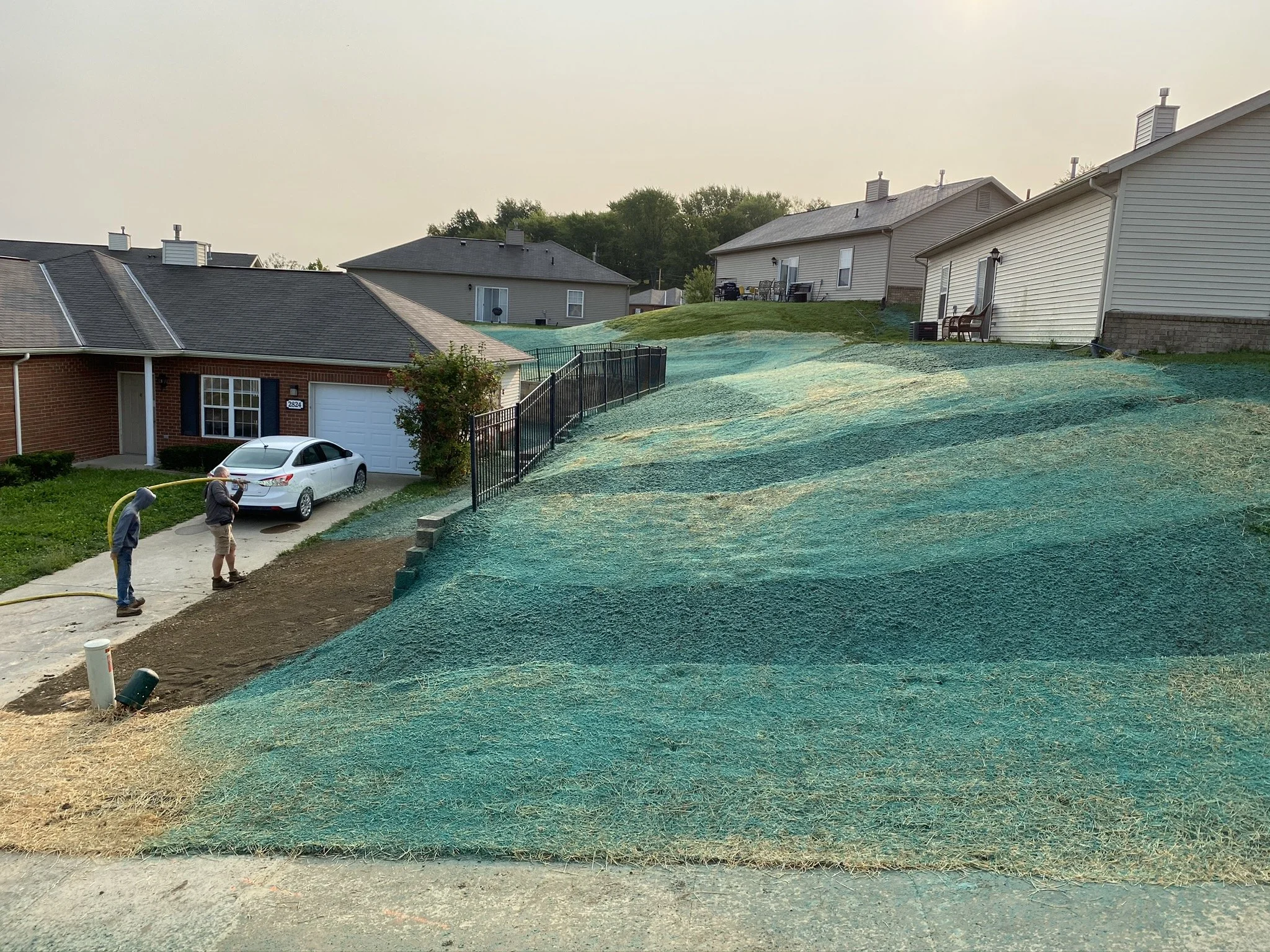
You just moved into your new build home and the yard is bare dirt. Maybe the builder left a rough grade and nothing else. Maybe there is a thin layer of struggling grass in a few spots that is clearly not going to make it. Either way you are looking at a blank canvas and trying to figure out where to start — what to do first how much it is going to cost how long it takes and what you are going to be doing wrong if you just throw seed down and hope for the best.
This guide is written specifically for first-time homeowners in new build properties who are starting their first lawn from scratch. It covers everything in the right order so you know what to expect at every stage and how to make decisions that set your lawn up for long-term success rather than a cycle of frustration and reseeding.
Why new build yards are different from established properties
Before getting into the how it helps to understand why starting a lawn on a new build property is different from and more challenging than renovating an existing lawn on an older home.
When a home is built the yard goes through months of heavy disturbance. Excavation for the foundation compacts and displaces soil across a wide area. Equipment traffic during framing plumbing electrical and finishing work runs repeatedly over the yard surface compressing the soil to a density that grass roots struggle to penetrate. Grading at the end of construction moves large amounts of soil to achieve the final grade — often burying the topsoil layer that was stripped at the start of construction under dense compacted subsoil that has far less nutrient content and far poorer structure for supporting grass growth.
The result of all that activity is a yard surface that in most cases consists of compacted clay subsoil with minimal organic matter limited biological activity and a surface full of construction debris — small rocks concrete chunks wire and other material that got mixed into the top layer during grading.
This is the starting point for most new build lawns in the DFW area. It is not a hopeless situation — lawns establish successfully on new construction lots every day — but it requires a different level of preparation investment and realistic expectation than renovating a lawn that already has established soil structure and organic matter.
Step one: assess your yard before doing anything else
Before calling any contractor or buying any materials spend time actually looking at your yard. Walk the entire area note what you see and answer these basic questions that will frame every decision that follows.
How compacted is the soil. Walk across it and notice how hard the surface feels underfoot. Does it give at all or is it like walking on packed gravel. Very hard compacted surface soil is going to need mechanical loosening before any seeding method produces reliable results.
What is the current grade. Does the yard slope away from the house on all sides which is correct for drainage or does it slope toward the foundation somewhere which is a drainage problem that needs to be corrected before anything else. Are there significant low spots that would collect standing water after rain.
What debris is in the surface. Walk slowly and look for rocks concrete chunks wire and other construction material mixed into the top layer. The debris you can see is the debris you can remove before the contractor arrives. The stuff mixed deeper into the surface is something your contractor will identify during the estimate.
What is the sun exposure across different parts of the yard. Full sun from sunrise to sunset is different from partial shade under a tree canopy or deep shade on the north side of the house. Different areas with different sun conditions may need different grass types for the best long-term result.
How large is the area that needs to be seeded. A rough sense of square footage helps you understand the scale of the project and have an informed conversation during the estimate process.
Step two: understand why hydroseeding is the right starting point for most new build yards
First-time homeowners on new build properties often start the lawn research process by comparing sod and broadcast seeding on the assumption that these are the primary options. Hydroseeding tends to get discovered later in the research process or through a referral and many homeowners do not fully understand why it is a better fit for their specific situation than the alternatives they considered first.
Broadcast seeding — throwing seed across the bare soil — is the cheapest upfront option and the least reliable on a new construction lot. The bare compacted subsoil typical of new build yards in the DFW area is exactly the condition that makes broadcast seeding unreliable. Without a protective layer the seed is exposed to heat wind birds and rain events that displace or destroy it before it establishes. On compacted clay with minimal organic matter the germination rates of bare seed are poor even when watering is consistent. Most first-time homeowners who try broadcast seeding on a new build lot end up reseeding multiple times before getting acceptable coverage — a process that takes the better part of a growing season and ends up costing more than a professional hydroseeding application would have from the start.
Sod delivers instant coverage and eliminates the establishment waiting period entirely. For a new build homeowner who needs to show a finished yard quickly — for a move-in deadline an HOA requirement or just the desire to have something presentable immediately — sod solves the problem on a short timeline. The trade-offs are the significantly higher cost particularly on the large bare lots typical of new construction in the DFW area and the root re-establishment challenge that transplanted sod faces in the heavy clay subsoil common on new build sites.
Hydroseeding gives most new build homeowners the best combination of results speed and cost. The protective slurry addresses the specific conditions that make bare seeding unreliable — the seed is delivered in consistent moisture-retaining contact with a protective mulch layer rather than sitting exposed on bare soil. On a properly prepared new build lot hydroseeding produces reliable germination in five to ten days and full coverage in three to four weeks at a fraction of the cost of sod on lot sizes typical of new construction in the DFW market.
Step three: site preparation — the step that determines everything
Site preparation is the most important investment a new build homeowner can make before hydroseeding and the step that most directly determines whether the result meets expectations. On a new construction lot that means more than a surface rake — it means addressing the specific challenges that construction activity created in the soil.
Grading and leveling should produce a smooth consistent surface across the entire yard. Low spots that would collect standing water need to be filled and shaped to drain correctly. High spots that would dry out faster than the rest need to be brought down. The final grade should slope away from the house foundation on all sides — a drainage requirement that protects the structure and ensures water movement away from the building during rain events and irrigation.
Debris removal needs to be thorough. Walk the yard carefully and remove every piece of construction material you can find before the contractor arrives. Rocks concrete chunks and wire mixed into the surface layer create bare spots in the germination pattern that are predictable and entirely preventable.
Soil loosening is often necessary on new build lots where compaction is severe. Skid steer work tilling or ripping the surface breaks up the compacted layer and creates a seed bed loose enough for root penetration after germination. Hydroseeding onto extremely compacted soil produces shallow-rooted grass that struggles through its first summer regardless of how well the germination went — the root system cannot develop the depth it needs in soil that does not allow penetration.
Topsoil evaluation is worth the conversation before the application. If the surface soil on your new build lot is clearly subsoil — grey dense sticky clay with no organic matter or visible biological activity — adding a layer of quality topsoil before hydroseeding improves germination rates and early establishment significantly. It is an additional cost that is often worth it on lots where subsoil quality is particularly poor.
Step four: choose the right grass for your yard and your timeline
Grass selection for a new build lawn in the DFW area should be driven by three factors — your sun exposure conditions your timeline and the time of year you are starting the project.
For full-sun yards in the DFW area Bermudagrass is the right choice for the vast majority of new build homeowners. It establishes aggressively in warm soil produces dense coverage that handles the foot traffic of a family using the yard and goes dormant in winter rather than dying — meaning the establishment investment is permanent. The timing window for Bermuda hydroseeding in North Texas is late March through August — within that window late spring and early summer applications give you the fastest establishment and the most growing season ahead.
For yards with significant shade — under large trees or on the north side of the house — Tall Fescue is the more appropriate choice and fall is the right timing window for Fescue establishment in the DFW area. Fescue seeded in October establishes through the cool season enters spring well-rooted and handles the following summer better than spring-seeded Fescue that goes straight into heat stress before establishing adequately.
If your yard has a mix of sunny and shaded areas the most practical approach is often different seed types applied to the appropriate zones rather than a single grass applied uniformly across conditions where it will perform well in some areas and struggle in others.
Step five: plan the establishment period before the application happens
The four weeks after your hydroseeding application are when your involvement matters most and planning for them before the contractor arrives produces dramatically better results than figuring it out as you go.
Watering is the most critical variable. Know the schedule before the application day — two to three times per day during the first two weeks transitioning toward deeper less frequent sessions in weeks three and four. If you have an irrigation system verify it is operational and properly covers the entire seeded area before the application. If you do not have a permanent system plan your manual watering approach in detail including how you will cover the full area and how you will handle days when your schedule is disrupted.
Foot traffic management needs to be planned rather than improvised. If there are regular paths across your yard — the route to a back gate a side access a path kids use regularly — plan how those paths will be redirected during the four-week establishment window. Temporary fencing or clear communication with the household keeps the establishment window protected without daily enforcement effort.
Pet management if you have dogs needs a plan before day one. Set up temporary fencing or a supervised access protocol before the application so you are not improvising when there is fresh slurry on the ground.
Step six: understand the realistic timeline
First-time homeowners on new build properties sometimes have timeline expectations that do not match the biology of lawn establishment — driven by the immediacy of the move-in experience and the desire to have a finished yard as soon as possible. Setting realistic expectations before the project starts produces much more satisfaction with the result than discovering the timeline mid-way through.
With hydroseeding on a properly prepared new build lot in the DFW area under appropriate seasonal timing and consistent watering the realistic timeline looks like this. First sprouts visible within five to ten days. Germination spreading across the majority of the yard by days ten to fourteen. Solid coverage developing through weeks two to three. First mow appropriate around weeks four to five. Fully established lawn with mature root depth by weeks six to eight.
That timeline produces a lawn you are proud of by the end of the establishment period. It does not produce a lawn that looks like it has been there for five years on day thirty — but it produces a clearly established genuinely healthy lawn that improves through every subsequent growing season as the root system matures and the density increases.
Step seven: connect with a contractor who understands new construction
Not every hydroseeding contractor has experience with new construction lots and the specific preparation challenges they present. A contractor who primarily does residential renovation work on established yards may not fully assess the compaction topsoil and grading needs of a new build lot during the estimate — setting you up for a result that reflects unprepared site conditions rather than the application quality.
Look for a hydroseeding contractor who specifically mentions new construction experience who walks your lot during the estimate and asks about the construction history who addresses site preparation needs directly in the estimate conversation and who gives you a written quote that breaks down both the application and any site prep requirements.
Owner-operated contractors who handle the estimate personally bring direct accountability to the assessment that is sometimes missing when a salesperson does the estimate and a crew does the work. The person who walks your new build lot and identifies what it needs is the person most invested in the result when they are also the person who has to deliver it.
The bottom line for new build homeowners
Getting your first lawn right on a new build property is an investment that pays dividends for as long as you own the home. The grass established in your first year is the foundation that everything else builds on — the root system that determines drought resilience the density that suppresses weeds and the coverage that makes your yard the space you imagined when you bought the house.
Hydroseeding gives most new build homeowners the most reliable path from bare construction dirt to an established lawn at the best cost point in the market. The keys are proper site preparation realistic timeline expectations and a committed watering approach during the establishment window. Get those three things right on a properly timed application and your first lawn will be exactly what you were hoping for.

Just moved into a new build and ready to get your lawn started?
Fox Hydroseeding LLC works with new build homeowners across the DFW area and personally walks every property before making a recommendation. We handle site prep assessment seed selection timing and application so your first lawn gets done right from the start.
Get Your Free Estimate → foxhydroseeding.com/contact
Bring Your Property to Life With Expert Hydroseeding
Find Us On


Email address

Phone Number

