


Hydroseeding for a healthy soil ecosystem — why what is underground matters more than what you spray on top
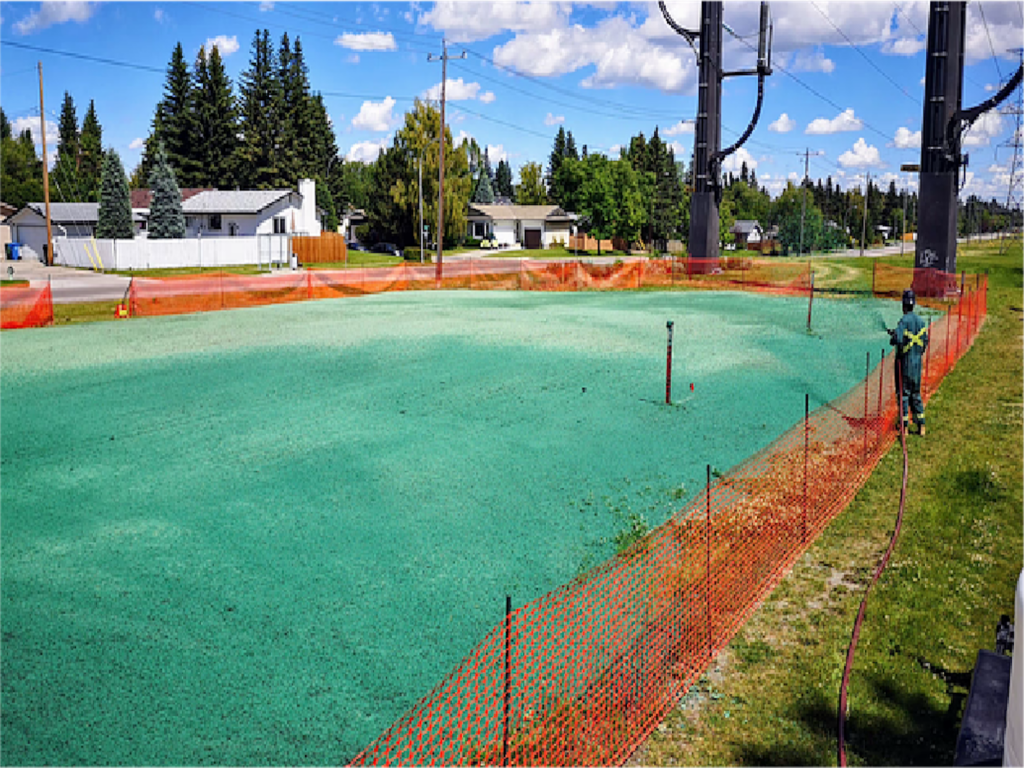
Most lawn care happens above the surface. The seed the fertilizer the herbicide the water — all of it is applied to what is visible. The decisions are made based on what the lawn looks like above the ground and the results are evaluated the same way. But the actual determinants of long-term lawn health — the variables that explain why one yard keeps performing while another keeps struggling despite similar visible management — live entirely below the surface in the soil ecosystem that most lawn care practices never directly address.
Understanding the soil ecosystem that a properly prepared and properly established hydroseeded lawn builds on — and the ongoing management practices that support and improve it — is what separates lawn management that produces compounding returns from lawn management that maintains a marginal status quo.
What the soil ecosystem actually is
Soil is not the inert growing medium that most homeowners picture when they think about what their grass is rooted in. It is a living system — one of the most biologically diverse ecosystems on earth — with a community of organisms that directly determines the fertility structure and water-holding capacity of the growing medium that grass roots inhabit.
A single teaspoon of healthy topsoil contains more microorganisms than there are people on earth. Bacteria fungi protozoa nematodes earthworms and hundreds of other organism types inhabit healthy soil in a community that processes organic matter releases nutrients cycles minerals and creates the physical structure that makes healthy soil so different from dead compacted ground.
The bacteria in healthy soil break down organic material into the plant-available nutrients that grass roots absorb. The mycorrhizal fungi form symbiotic relationships with grass roots — extending the effective reach of the root system through fungal networks that can span entire lawn areas and dramatically increase the root system's ability to access water and nutrients from the surrounding soil. The earthworms and larger soil organisms create the channels and aggregate structures that give healthy soil its characteristic crumbly texture and high water infiltration capacity.
This biological community is what the organic matter in topsoil contains and supports. It is what construction activity destroys when it strips and buries topsoil under compacted subsoil. It is what improves progressively when good lawn management practices add organic matter and maintain the open soil structure that biological activity requires. And it is the primary reason that a lawn on healthy living soil performs so much better with so much less management effort than the same grass on biologically depleted compacted ground.
How construction activity destroys the soil ecosystem
New construction lots in the DFW area represent the most extreme version of soil ecosystem destruction that residential lawn establishment encounters — and understanding what construction does to the soil ecosystem explains why new construction lot establishment is so consistently challenging and why preparation investment before hydroseeding is so critical.
The topsoil layer — the upper six to twelve inches of soil where biological activity organic matter and the most favorable soil structure are concentrated — is stripped or buried during foundation excavation and site grading on virtually every new construction project. The organisms that lived in that topsoil layer are largely destroyed by the disturbance and the altered burial conditions. The organic matter that supported them is separated from the surface where it would decompose and support new biological growth.
What is left at the surface is subsoil — the mineral clay layer below the productive topsoil that has minimal organic matter minimal biological activity and poor physical structure. This is the material that grass seed is asked to establish in on most new DFW construction lots. And this is why the preparation investment that adds quality topsoil and organic matter before hydroseeding produces such dramatically better first-year results than applications without it — the topsoil is not just adding depth it is adding the biological community and organic matter that make the growing medium functional rather than hostile.
Equipment compaction compounds the biological destruction by eliminating the pore space that soil organisms need for respiration and movement. A severely compacted clay subsoil has virtually no biological activity — not because the organisms were specifically destroyed but because the physical conditions of the compacted soil do not support the oxygen levels moisture distribution and physical space that soil biology requires.
What hydroseeding on properly prepared soil contributes to soil ecosystem development
A properly executed hydroseeding application on properly prepared soil does not just put grass on the surface — it initiates a soil ecosystem development process that improves the growing medium progressively through the life of the lawn.
The starter fertilizer in the hydroseeding slurry provides the initial nutrients that germinating seeds need — but it also provides the first nutrient inputs to the soil biological community that will develop in the prepared growing medium. The bacterial populations that begin colonizing quality topsoil immediately after it is applied need the same nutrients that grass needs and the starter fertilizer in the slurry supports both communities simultaneously.
The grass roots that develop after germination produce root exudates — sugars organic acids and other compounds that are released into the surrounding soil as metabolic byproducts. These exudates are the primary food source for the bacterial communities in the rhizosphere — the zone of soil immediately surrounding active roots. Healthy active roots feed a healthy bacterial community which in turn processes organic matter into the plant-available nutrients that support continued healthy root development. This reciprocal relationship is the foundation of the self-reinforcing soil ecosystem that makes established lawns increasingly easy to maintain.
The decomposing mulch fiber from the hydroseeding application contributes organic matter to the soil surface as it biodegrades through the first weeks after application. This surface organic matter contribution supports the soil biology at the interface between the grass canopy and the soil — the zone where leaf litter decomposition normally contributes organic matter in established natural systems but where a new lawn is just beginning to establish that contribution cycle.
The management practices that build the soil ecosystem over time
The soil ecosystem that a properly prepared hydroseeded lawn starts building from establishment day one can be actively improved through specific ongoing management practices — or it can be degraded through practices that treat the soil as inert growing medium rather than a living system.
Annual core aeration is the most impactful ongoing management practice for soil ecosystem development in North Texas clay lawns. The channels created by core aeration restore the pore space that clay's compaction tendency progressively eliminates — providing the oxygen infiltration and physical space that soil biological activity requires. Without annual aeration the soil biological community shrinks progressively as compaction reasserts itself and the growing conditions for soil organisms deteriorate. With annual aeration the community is supported through the compaction cycle and the benefits of the aeration — better water infiltration deeper root penetration and improved nutrient cycling — reflect the biological activity that the maintained pore space supports.
Compost topdressing after aeration adds organic matter and biological inoculation to the soil profile at depth — not just on the surface where it would need to work its way down slowly but directly into the aeration channels where it contacts the root zone immediately. Quality compost contains active biological communities that inoculate the soil with the organisms that healthy soil needs. Each annual compost application builds on the previous one — the soil ecosystem developing progressively richer biological communities and higher organic matter content through compounding annual inputs.
Mulch mowing — returning clippings to the lawn surface rather than bagging them — provides continuous organic matter contribution throughout the growing season. The decomposing clippings feed the soil biology maintain the surface organic matter content and contribute to the nutrient cycling that reduces the fertilizer inputs needed to maintain healthy turf color and growth. The lawn that is mulch mowed consistently over several seasons develops measurably better soil biology than one where clippings are removed — because the organic matter that supports that biology is being continuously returned rather than being hauled away.
Minimizing synthetic chemical inputs that harm soil biology is a management practice that most homeowners do not think about in soil ecosystem terms but that has real cumulative effects on the biological community. Broad-spectrum fungicide applications kill beneficial fungi along with pathogenic ones. Some synthetic fertilizer formulations at excessive rates create salt conditions that are harmful to soil bacterial communities. Pesticide applications have varying effects on soil biology depending on the specific product and rate. None of this means avoiding all chemical inputs — it means being thoughtful about what is applied at what rate and whether the biological impact is accounted for in the management decision.
Deep infrequent irrigation that allows the soil to dry partially between sessions supports better soil biology than constant moisture saturation. Most soil organisms require both water and oxygen — soil that is consistently saturated becomes anaerobic and the oxygen-dependent biological community that produces healthy soil function is replaced by the anaerobic community that produces the poor soil conditions associated with chronically wet soils. The deep infrequent watering that produces deep root development also produces the wet-dry cycles that support diverse soil biological communities.
What improving soil biology produces in the lawn you can see
The return on soil ecosystem investment shows in the visible lawn performance through specific characteristics that directly reflect the underground health that produced them.
Reduced fertilizer requirement is one of the most practical returns on soil biology investment. A lawn on biologically active soil with high organic matter content requires less synthetic fertilizer to maintain healthy color and growth than a lawn on biologically depleted soil — because the nutrient cycling that healthy soil biology performs continuously makes plant-available nutrients from organic matter that would otherwise require synthetic replacement. The homeowner who invests in annual compost topdressing for five years often finds that their fertilizer application rates can be reduced while maintaining or improving turf appearance — because the soil biology is performing the nutrient cycling function that fertilizer was compensating for.
Improved drought resilience is another measurable return. Biologically active soil with high organic matter content retains moisture more effectively than depleted soil — the organic matter and fungal networks that healthy soil biology creates hold water in plant-available form rather than allowing it to drain past the root zone quickly. The lawn on healthy soil needs less irrigation to maintain performance through dry periods than the same grass on biologically depleted soil because the water retention characteristics of the soil itself are supporting the grass between irrigation sessions.
Better recovery from stress events — drought damage winter injury pest activity — reflects the root system supported by healthy soil biology. Larger more extensive root systems develop in biologically active soil because the mycorrhizal networks and bacterial communities that support root development are present and functioning. Larger root systems have more recovery reserve — the stored carbohydrates and physical infrastructure that support regrowth after damage — and recover faster and more completely from the stress events that damage lawns every season.
The bottom line on soil ecosystem and hydroseeding
The lawn that looks effortless in year five is growing on soil that has been improving since year one — not because of expensive ongoing inputs but because of the establishment investment that created living growing conditions and the annual practices that have built on that foundation progressively.
Hydroseeding on properly prepared soil with quality topsoil creates the starting conditions for that progression. The annual aeration compost topdressing and mulch mowing practices maintain and accelerate the biological development that started on establishment day. And the visible lawn performance that improves with each growing season is the direct expression of the invisible soil ecosystem developing healthfully below the surface.
Managing the underground first is what makes the above-ground easy.

Want to establish a lawn on the right foundation — soil that is actually prepared to support the grass long term?
Fox Hydroseeding LLC personally assesses every property including soil condition before making preparation recommendations. We understand that the preparation investment is an investment in the soil ecosystem that the lawn will grow in for years.
Get Your Free Estimate → foxhydroseeding.com/contact
Bring Your Property to Life With Expert Hydroseeding
Find Us On


Email address

Phone Number

