


Hydroseeding for a better yard — the targeted changes that make the biggest visible difference
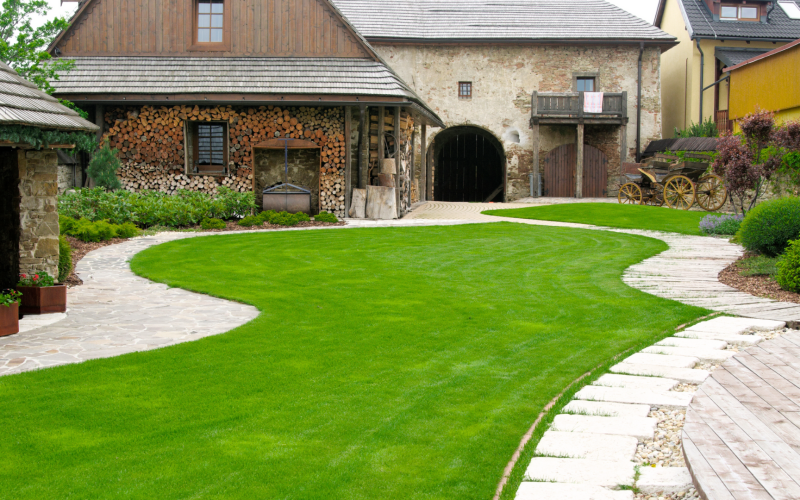
Not every yard needs a complete overhaul. Some yards have solid bones — decent existing coverage in the main areas reasonable soil condition adequate irrigation — but they fall short of what they could be in specific ways that make the whole yard look worse than the underlying quality warrants. A persistent bare section along the fence. A thin strip under the tree canopy that has never fully established. A front section that never recovered from the drought two summers ago.
For these yards the path to a noticeably better result is not starting over — it is identifying the specific changes that would produce the biggest visible improvement and making those changes in the right sequence with the right approach. Hydroseeding is often part of that plan but it is one tool within a targeted improvement strategy rather than the whole solution.
This guide covers the targeted changes that produce the most visible improvement for the most common yard situations — what to prioritize how to sequence the work and where hydroseeding fits into the improvement plan.
Change one: fix the bare sections that make everything else look worse
The most visible improvement most yards can make is addressing persistent bare sections that draw the eye and undermine the overall appearance of an otherwise reasonable lawn. A yard that is eighty percent covered with decent Bermuda but has two prominent bare sections looks like a neglected yard. The same yard with those sections filled in looks like a maintained one — even though nothing else changed.
The mistake most homeowners make with persistent bare sections is reseeding them without understanding why they are bare. A section that has been reseeded twice without lasting improvement has an underlying cause that reseeding does not address. The section is bare for a reason that broadcast seed applied repeatedly confirms rather than resolves.
Diagnose before you treat. Shade that the planted grass cannot perform in. Compaction that prevents root development. Drainage that creates chronic wet or dry conditions. Urine burn from a dog that uses that specific spot consistently. Each cause has a specific correction that changes the conditions rather than repeating the approach that has not worked.
Once the cause is addressed hydroseeding the corrected section produces the fill-in that makes the biggest single visible improvement to yards where persistent bare sections are the primary aesthetic problem. The protective slurry produces more reliable germination in the disturbed corrected soil than broadcast seeding on the same surface — giving the corrected conditions the best possible seed delivery for the renovation application.
Change two: correct the shade mismatch that produces progressive thinning
Many yards have sections that are visibly thinner than surrounding areas in a pattern that follows the shade cast by trees structures or fence lines. The thinning in these sections is not random — it is the predictable result of Bermuda being planted in conditions where it cannot maintain the density its growth habit produces in full sun.
Every overseeding attempt that applies more Bermuda to these sections produces temporary improvement followed by progressive re-thinning because the underlying cause — inadequate light for the grass type — has not changed. The section looks better for a season and then returns to the same thin struggling appearance because the Bermuda is doing exactly what Bermuda does in inadequate light.
The targeted change that produces lasting improvement in these sections is a grass type change — fall hydroseeding with Tall Fescue in the sections where the light conditions do not support Bermuda. Fescue established in October in the shaded sections produces coverage that holds through winter and into the following growing season without the progressive thinning that makes the same sections a perpetual renovation project with Bermuda.
For yards with a mix of full-sun sections with solid Bermuda and shaded sections with thin struggling Bermuda this single targeted change — fall Fescue hydroseeding in the shade zones — produces more visible improvement than any amount of Bermuda overseeding in those same zones has or ever will.
Change three: address the compaction that limits the whole lawn
Compaction is the improvement that most homeowners skip because it is invisible — there is no compelling before-and-after photo of core aeration the way there is of a bare section filled in. But compaction relief in a significantly compacted yard produces measurable improvement in lawn performance that shows up across the full lawn through better water penetration deeper root development and improved recovery from stress events.
For lawns on North Texas clay that have never been aerated or that have not been aerated recently the compaction that has accumulated through mowing traffic and seasonal shrink-swell cycles is limiting root depth across the whole lawn — not just in specific sections. The lawn that looks adequate but thins under summer stress that recovers slowly from drought periods and that requires more frequent irrigation than neighboring lawns to maintain the same appearance is often a lawn with compaction-limited root depth across the board.
Spring core aeration followed by compost topdressing is the targeted change that produces the most durable whole-lawn improvement for compacted DFW yards. It does not produce instant visible results — the improvement shows through the growing season as better water penetration supports deeper root development and better root depth translates to better summer performance. But the improvement is real and it compounds with each subsequent annual aeration.
For yards where targeted section renovation through hydroseeding is also planned combining the aeration with the renovation produces better results in the renovated sections than hydroseeding alone on compacted soil — the aeration creates the root penetration pathways that the new grass needs to develop the depth that prevents the renovation sections from repeating the same performance limitations the original grass showed.
Change four: fix the irrigation coverage gaps that produce consistent thin sections
Irrigation coverage gaps are one of the most common causes of consistently thin sections in established yards and one of the least frequently diagnosed because the homeowner knows the irrigation runs without knowing that specific sections are not receiving adequate coverage.
The evidence of a coverage gap is a section of the yard that is consistently thinner than adjacent sections despite the same apparent management — watering mowing fertilizing — applied to all sections equally. The thin section is thin because it is receiving less water than the sections that look adequate not because of different soil conditions or grass health in that location.
Walking every irrigation zone while the system runs and watching specifically for sections that no active head is reaching consistently is the diagnostic that identifies coverage gaps before renovation work begins. Addressing the coverage gap before hydroseeding a thin section that resulted from it produces a renovation that holds — the replacement grass receives the irrigation it needs through the establishment period and through subsequent growing seasons rather than repeating the moisture deficit that thinned the original grass.
The targeted change sequence for irrigation gap sections is irrigation repair first renovation hydroseeding second. Reversing this sequence — hydroseeding first then discovering the coverage gap when the renovation section fails to establish — wastes the renovation investment on a section that did not have adequate water support.
Change five: improve the edges that make the whole lawn look maintained
Edge definition is a targeted change that costs nothing in materials and minimal time in execution but produces a visible improvement in lawn appearance that is disproportionate to the effort invested. Clean crisp edges where the lawn meets the driveway the sidewalk the planting beds and any other hardscape are one of the clearest visual signals that a lawn is actively maintained rather than just existing.
Ragged edges where the grass has crept onto hardscape or pulled back unevenly from hardscape boundaries undermine the appearance of the lawn in ways that draw the eye immediately — even when the grass itself is in decent condition. Crisp edges frame the lawn and make what is within the frame look intentional and cared for.
String trimming along all hardscape edges immediately after mowing and edging the defined boundaries with a rotary edger two to four times per season produces the edge definition that makes a significant difference in overall yard appearance. For yards where edge definition has not been maintained consistently the initial investment in re-establishing clean edges — cutting back the grass overgrowth and creating a defined clean line — is a one-time effort that ongoing string trimming maintains.
Change six: address the front yard appearance that determines first impressions
For homeowners where the primary motivation for improving the yard is curb appeal and exterior appearance the front yard is the highest-leverage improvement target. Improving the front lawn specifically — addressing bare sections correcting shade mismatch establishing coverage where it has been absent — produces more visible curb appeal improvement than equivalent improvements to the backyard because the front yard is what the neighborhood sees.
For front yards with specific bare or thin sections hydroseeding those sections in the appropriate seasonal window with the correct grass type for the light conditions is the targeted change that most directly improves the curb appeal appearance. For front yards with widespread coverage failure the decision between targeted renovation and full restoration described earlier applies — but in the front yard context the HOA compliance and property value considerations give the improvement more urgency and more financial justification than a backyard renovation of equivalent scope.
Sequencing the targeted changes for maximum impact
When multiple targeted changes are warranted the sequence in which they are made affects both the efficiency of the overall improvement and the quality of the individual results.
The general sequence that produces the best outcomes is infrastructure and drainage first — irrigation repair coverage gap correction drainage correction. Then soil preparation — aeration topsoil addition in depleted sections. Then vegetation management — killing or clearing sections being renovated. Then renovation application — hydroseeding the prepared corrected sections in the appropriate seasonal window.
This sequence ensures that each subsequent change is made in conditions that support its effectiveness. Hydroseeding after irrigation repair ensures the new grass has adequate water support. Hydroseeding after drainage correction ensures the new grass is not establishing in conditions that will produce the same failure. Hydroseeding after soil preparation ensures the new grass has the growing medium that root development requires.
The realistic timeline for visible improvement
The targeted approach to yard improvement produces visible results on a timeline that reflects the changes being made — faster for some improvements slower for others but consistently faster than the whole-yard-overhaul approach for yards where the primary issues are specific rather than systemic.
Edge definition and irrigation repair produce visible improvement almost immediately — within the first mowing cycle after the changes are made. Hydroseeded section renovation produces germination in five to seven days and solid coverage in three to four weeks. Compaction relief through aeration produces the gradual improvement through the growing season that becomes fully visible in the summer performance comparison between the aerated and un-aerated lawn.
The homeowner who makes targeted changes in the right sequence in the appropriate seasonal windows arrives at the end of the growing season with a yard that is measurably better than the one that started the spring — not through a complete overhaul but through the specific improvements that addressed the specific limitations that were producing the specific problems.
The bottom line on targeted improvement
The yard that needs targeted improvements is not the same as the yard that needs a complete overhaul — and treating it as one when the other is appropriate wastes both the investment and the opportunity to produce the improvement the yard is capable of with the right targeted approach.
Identify the specific changes that would produce the biggest visible improvement for your specific yard. Sequence them in the order that makes each subsequent change most effective. Execute them in the appropriate seasonal windows for each type of work. And let the targeted approach produce the noticeably better yard that the specific improvements were designed to deliver.

Want help identifying the targeted changes that would make the biggest difference for your specific yard?
Fox Hydroseeding LLC personally walks every property and gives you an honest assessment of what specific improvements would produce the most visible results for your specific situation. Every estimate is handled by the owner.
Get Your Free Estimate → foxhydroseeding.com/contact
Bring Your Property to Life With Expert Hydroseeding
Find Us On


Email address

Phone Number

