


Hydroseeding Bermudagrass — everything Texas homeowners need to know to get it right
Bermudagrass is the most widely planted lawn grass in Texas and for most DFW homeowners it is the default answer to the question of what grass to grow. It handles Texas heat better than almost any alternative, produces dense attractive coverage through the spring summer and fall growing season, and comes back every year from dormancy without reseeding. When it is established correctly a Bermuda lawn is one of the most durable and low-maintenance options available for a North Texas yard.
Hydroseeding is one of the most effective and cost-efficient methods for establishing Bermudagrass from seed. This guide covers everything you need to know about the process — from timing and soil preparation through the germination window and into a fully established Bermuda lawn — so you can approach the project with accurate expectations and the best chance of a successful outcome.
Why Bermudagrass is the right choice for most Texas homeowners
Bermudagrass thrives in the conditions that define North Texas summers — high heat, intense sun, and stretches of dry weather that stress less adapted grass types. Its deep aggressive root system allows it to access soil moisture well below the surface during dry periods and recover from drought stress that would permanently damage cool-season alternatives.
Beyond heat and drought tolerance Bermudagrass produces a dense fine-textured turf that handles foot traffic better than most grass types available in the DFW market. Families with kids and pets athletic use and general heavy residential use are all situations where Bermuda's durability makes it the practical choice over more delicate alternatives.
Bermudagrass is also a warm-season grass that goes dormant in winter rather than dying — meaning the investment in establishment is permanent. It comes back from dormancy every spring without reseeding produces green coverage from late March through November in most North Texas years and requires no annual replanting.
The one significant limitation of Bermudagrass is shade tolerance. It needs a minimum of six to eight hours of direct sunlight per day to perform well. In shaded areas under tree canopies or on the north-facing side of structures Bermuda thins out progressively and eventually fails. For shaded portions of a yard a different grass type is needed — but for full-sun residential lawns in the DFW area Bermuda is the right answer for the vast majority of homeowners.
The best time to hydroseed Bermudagrass in Texas
Timing is one of the most important decisions in a Bermudagrass hydroseeding project and getting it wrong is one of the most common reasons Bermuda establishments underperform or fail. Bermudagrass germinates on soil temperature not air temperature and the distinction matters more than most homeowners realize.
Bermudagrass requires soil temperatures consistently above 65 degrees Fahrenheit for reliable germination. In the DFW area soil temperatures typically reach and hold above that threshold from late March through April depending on the year. Air temperatures may feel warm weeks before soil temperatures catch up — homeowners who seed Bermuda in late February or early March based on mild air temperatures often find germination slow and uneven because the soil is still too cool.
The best window for Bermudagrass hydroseeding in North Texas is late March through May. Applications during this window benefit from rising soil temperatures that accelerate germination, moderate air temperatures that reduce evaporation demands during establishment, natural spring rainfall that supports consistent seed bed moisture, and a full growing season ahead for root development before the first fall dormancy.
Summer applications — June through August — are viable and regularly done in the DFW area. Soil temperatures are well above the germination threshold and Bermuda jumps out of the ground quickly in summer heat when watered correctly. The trade-off is the more intensive watering commitment that Texas summer heat requires during the establishment window.
Fall is not the recommended window for Bermudagrass hydroseeding in North Texas. As soil temperatures drop below 65 degrees in October and November Bermuda germination slows and the grass that does establish does not have adequate time to develop root depth before cold weather induces dormancy. Bermuda seeded in late October or November in the DFW area typically produces disappointing results and may not survive winter adequately.
Soil preparation for Bermudagrass hydroseeding
Bermudagrass is more forgiving of imperfect soil conditions than some grass types but it is not immune to soil problems that limit germination and root development. Proper preparation before a Bermuda hydroseeding application improves both the speed and consistency of establishment.
The primary soil preparation goal for Bermudagrass is creating a loose workable seed bed with good surface contact and no significant compaction in the top few inches. Bermuda seed is small and benefits from a fine loose surface that allows the slurry to bond closely to the soil rather than sitting on top of a hard compacted crust.
On new construction lots in the DFW area where equipment traffic has compacted subsoil and topsoil has been stripped or buried mechanical loosening through ripping tilling or skid steer work before hydroseeding is often necessary. Hydroseeding Bermuda onto undisturbed compacted construction site subsoil produces patchy germination and shallow-rooted grass that struggles through its first summer — even when everything else about the application is done correctly.
On established yards being renovated aeration of compacted areas before hydroseeding improves seed-to-soil contact and root penetration. Dethatching if significant thatch buildup is present removes the physical barrier between the slurry and the soil surface.
If your soil is known to be significantly alkaline — common in parts of North Texas — discussing soil pH with your contractor before the application is worth the conversation. Bermudagrass grows best in soil with a pH between 6.0 and 7.0. Soil that is significantly above that range limits nutrient availability even when starter fertilizer is included in the slurry.
What a Bermudagrass hydroseeding application looks like
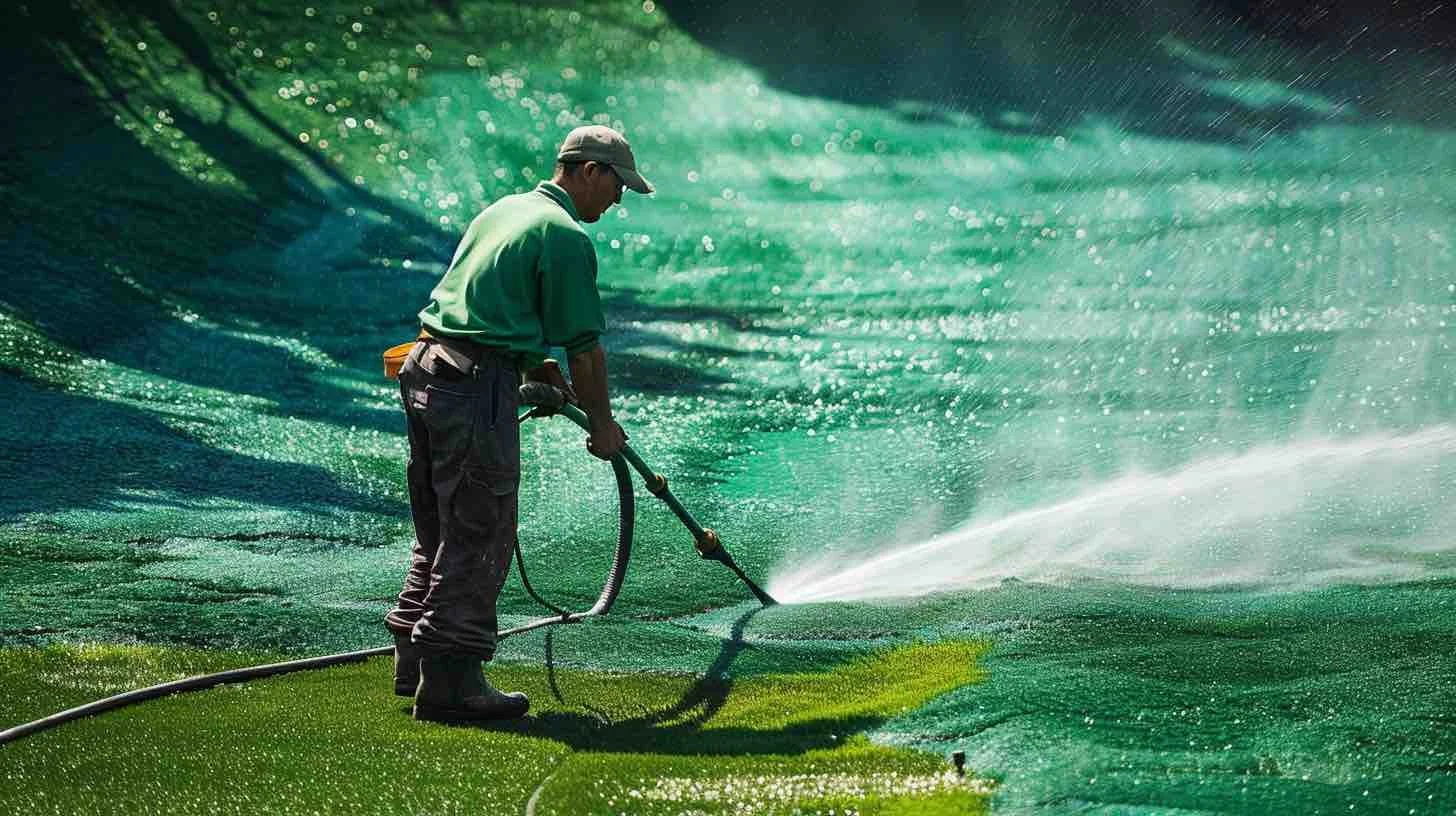
On application day your yard is covered with the hydroseed slurry — a mix of Bermuda seed fiber mulch starter fertilizer tackifier and water. The application has a characteristic green color from the mulch dye and the entire surface should be uniformly covered when the contractor finishes.
The mulch layer is doing immediate work from the moment it hits the ground — retaining moisture around each Bermuda seed moderating soil surface temperature and protecting against the heat and wind that would rapidly dry out bare seed on the soil surface. This is why hydroseeding produces more reliable Bermuda germination than broadcast seeding in Texas conditions — the protective environment around the seed addresses the specific challenges of establishing a small-seeded warm-season grass in an environment that punishes exposed seed quickly.
The application itself is completed in a few hours for most standard residential lots in the DFW area. Larger lots or properties with complex layouts take longer. The yard is ready to water immediately after the contractor finishes — the first watering session should happen within a few hours of application.
The Bermudagrass germination window — what to expect
Bermudagrass germination timing depends on soil temperature watering consistency and seed quality. Under ideal conditions — soil temperatures above 70 degrees Fahrenheit consistent moisture and quality seed — Bermuda can show first sprouts in five to seven days. Under cooler conditions or with less consistent moisture the same seed may take ten to fourteen days to show visible germination.
In the DFW area during spring applications with soil temperatures in the 65 to 75 degree range expect first sprouts somewhere between days seven and ten. During summer applications with soil temperatures above 80 degrees germination can be faster — five to seven days is common when watering is on schedule.
Early germination is almost always uneven. The first sprouts appear in scattered patches across the yard — thicker in areas with better sun exposure and soil contact faster in areas where soil temperatures are slightly warmer. This uneven early germination is normal and not a sign of a problem. Germination spreads across the full surface over the following days as conditions and timing align for each individual seed.
Consistent watering is the single most important variable during the Bermuda germination window. The small size of Bermuda seed means it has limited energy reserves — it depends on external moisture to support germination rather than drawing on stored resources the way larger seeds can. Letting the seed bed dry out even briefly during the germination window is significantly more damaging to Bermuda than to larger-seeded grasses.
Watering Bermudagrass after hydroseeding
The watering schedule for a Bermudagrass hydroseeding application follows the same progression as other hydroseeding projects but with specifics tied to the small seed size and the typical Texas conditions during the establishment window.
During the first fourteen days water two to three times per day with light even sessions that maintain consistent surface moisture. In spring conditions two sessions per day is typically adequate. In summer peak heat three sessions per day is often necessary to prevent the seed bed from drying out between waterings. Each session should wet the surface and the top inch or two of soil — not saturate the ground.
Around day fourteen begin transitioning toward deeper less frequent watering. Bermudagrass has an aggressive deep-growing root system when conditions allow it to develop that way. Transitioning to deeper watering sessions during weeks two through four actively encourages the root development that makes Bermuda the durable drought-tolerant lawn it is known for.
By week four transition to a mature lawn watering schedule — one to two deep sessions per week during the growing season adjusted for weather and soil conditions. An established Bermuda lawn in North Texas is significantly more drought-tolerant than the young lawn during establishment and requires much less irrigation attention once it has developed mature root depth.
Fertilizing Bermudagrass established through hydroseeding
The starter fertilizer included in a professional hydroseeding application provides the nutrition Bermuda seedlings need through the first four to six weeks of establishment. After that point a seasonal fertilization program supports healthy ongoing growth and the dense color most homeowners want from a Bermuda lawn.
For Bermudagrass lawns in North Texas a nitrogen-focused fertilization program during the active growing season — typically starting four to six weeks after establishment and running through late summer — produces the dense green turf Bermuda is capable of. Apply fertilizer when the grass is actively growing and always water it in after application to move nutrients into the root zone.
Avoid fertilizing Bermuda during dormancy. Nitrogen applied to a dormant lawn does not benefit the grass and can promote weed growth in bare areas during winter months.
Common Bermudagrass hydroseeding mistakes to avoid
Seeding too early in spring before soil temperatures are consistently above 65 degrees is one of the most common Bermuda establishment mistakes in the DFW area. Check soil temperature rather than relying on air temperature or calendar date before scheduling your application.
Inconsistent watering during the germination window is the most common cause of patchy Bermuda establishment. The small seed size makes Bermuda particularly unforgiving of watering gaps during the first two weeks. Commit to the schedule before the application not after.
Mowing too early or too short on the first mow stresses young Bermuda before the root system is ready to support recovery. Wait for three to four inches of growth mow at two and a half to three inches minimum and use a sharp blade.
Expecting performance in shaded areas where Bermuda cannot thrive. If your yard has significant shade accept that Bermuda will not perform in those sections and plan for a different grass type rather than continuing to invest in Bermuda establishment in conditions that will never work.
What a mature Bermudagrass lawn looks like
A Bermudagrass lawn that was established correctly through hydroseeding and maintained well through its first growing season enters year two as a significantly more resilient and lower-maintenance lawn than it was in year one. The root system has developed depth and the grass has the established density to compete with weeds withstand moderate drought and recover from traffic and use.
By year two and three a well-established Bermuda lawn in North Texas has the deep root system and mature density that makes it one of the most durable turfgrass options in the region. The watering requirements moderate significantly from establishment levels the lawn fills in bare spots on its own through lateral spread and the overall maintenance burden decreases as the lawn matures.
Bermuda lawns established through hydroseeding — with the consistent germination and even coverage the slurry application provides — tend to reach that mature density faster and more uniformly than broadcast-seeded alternatives because the starting coverage is more consistent. That head start in establishment translates directly into a faster path to a low-maintenance mature lawn.
The bottom line on Bermudagrass hydroseeding
Bermudagrass hydroseeding in Texas is one of the most reliable ways to establish the lawn that performs best in North Texas conditions. The process works when the timing is right the soil is properly prepared the watering commitment during germination is consistent and the seed and mulch quality in the application are appropriate for the job.
Get those elements right and the result is a lawn that handles Texas summers thrives through the growing season goes dormant gracefully through winter and comes back stronger every spring — exactly what a Texas homeowner should expect from the grass that is most naturally suited to this climate.

Ready to establish a Bermudagrass lawn the right way?
Fox Hydroseeding LLC specializes in Bermudagrass hydroseeding across the DFW area and personally walks every property before recommending a seed mix timing and approach. Every estimate is handled by the owner so you get an honest assessment and a clear written quote.
Get Your Free Estimate → foxhydroseeding.com/contact
Bring Your Property to Life With Expert Hydroseeding
Find Us On


Email address

Phone Number

