

Hydroseeding a commercial property — what business owners and property managers need to know
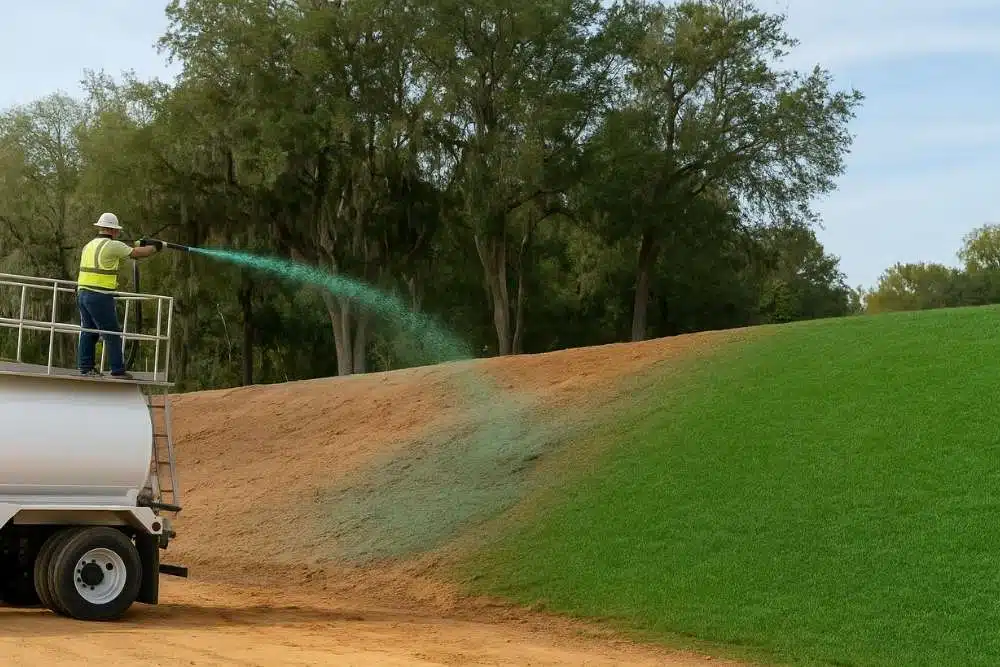
Commercial property lawn establishment and maintenance decisions involve different priorities than residential lawn projects. The scale is larger the timeline pressures are tied to business operations tenant expectations and lease requirements and the appearance of the property communicates directly to customers clients and tenants in ways that a residential lawn does not.
For business owners property managers and commercial real estate professionals evaluating hydroseeding as a solution for commercial property lawn needs this guide covers what makes commercial hydroseeding different from residential work what to look for in a commercial contractor and how to integrate hydroseeding into a commercial property management plan that serves the business goals the property needs to support.
Why commercial property lawn appearance matters differently than residential
The lawn at a commercial property is not primarily for the enjoyment of the person who owns it — it is part of the professional image the property projects to everyone who encounters it. Customers approaching a retail location drive through a parking lot flanked by lawn areas before they walk in the door. Tenants deciding whether to renew a lease evaluate the grounds maintenance of the property as part of their overall experience. Prospective tenants comparing properties assign real value to curb appeal that includes well-maintained grounds.
The commercial lawn appearance also has maintenance cost implications that residential properties do not face in the same way. A poorly established commercial lawn that requires repeated renovation intervention consumes maintenance budget without producing the professional appearance the property needs. A properly established lawn on a commercial property that holds its coverage through multiple seasons without major renovation reduces the ongoing grounds maintenance cost in ways that appear directly in the property operating budget.
These business motivations for getting commercial lawn establishment right — appearance that serves tenant and customer expectations and maintenance efficiency that controls operating costs — create a different value calculus than residential lawn investment. The right approach to commercial hydroseeding is not just about a nice-looking lawn. It is about a business asset managed to serve business objectives.
What makes commercial hydroseeding different from residential work
The scale complexity and coordination requirements of commercial hydroseeding projects create meaningful differences from standard residential work that affect contractor selection project planning and execution expectations.
Scale affects equipment requirements in ways that residential work does not. A commercial property with significant lawn areas — office park grounds retail center landscaping industrial facility perimeter areas or commercial development common areas — requires hydroseeding equipment sized for commercial scale work. A contractor whose primary equipment is sized for residential lots will struggle to maintain the coverage consistency and schedule efficiency that commercial projects require on larger areas. Tank capacity daily coverage capacity and equipment reliability at commercial scale are legitimate evaluation criteria for commercial contractor selection that matter less for residential projects.
Coordination requirements at commercial properties involve multiple stakeholders that residential projects do not. Property management companies owners tenants landscape architects general contractors and municipal inspectors may all have legitimate interests in the outcome timing or compliance requirements of a commercial hydroseeding project. A contractor experienced with commercial work understands how to navigate these stakeholder environments — providing the documentation communication and compliance support that commercial projects require beyond the straightforward homeowner-contractor relationship of residential work.
Timeline coordination in commercial contexts is more demanding than in residential contexts because the lawn establishment period affects the operations of a functioning business rather than just the household convenience of a homeowner. A commercial property that is closed for business during establishment is a different situation than one that remains fully operational with customer and employee traffic throughout the establishment period. Planning establishment periods around operational requirements — scheduling applications during lower-traffic periods managing access restrictions without disrupting business operations communicating establishment timelines to tenants or customers — requires the project management orientation that commercial experience develops.
Documentation and compliance requirements come with many commercial hydroseeding projects in ways that residential projects typically do not. Stormwater pollution prevention plans on permitted commercial sites may specify particular products application rates and documentation requirements that the contractor must be prepared to meet. Tenant improvement projects may require documentation for building permits or landlord approvals. Commercial maintenance contracts may require written records of all services performed including lawn establishment work. A contractor without commercial project experience may not be familiar with these documentation requirements and may not be equipped to provide what the commercial context demands.
The commercial property types that hydroseeding serves most effectively
Hydroseeding is the appropriate and cost-effective lawn establishment solution for a wide range of commercial property types in the DFW area — each with specific considerations that affect how the project is approached.
Office parks and corporate campus properties typically involve larger lawn areas surrounding buildings in configurations that include both high-visibility entrance and parking lot perimeter areas and lower-visibility side and rear areas. The entrance and parking lot perimeter sections are the highest-priority curb appeal areas and the ones where coverage quality most directly affects the professional image the property projects. Hydroseeding these sections with quality Bermudagrass in the appropriate spring window produces the established coverage that professional property appearance requires.
Retail commercial properties have the specific consideration that customer foot traffic across lawn areas during the establishment period must be managed without compromising the customer experience or the establishment result. Clear temporary signage at lawn boundaries during the four-week establishment window handles most casual customer foot traffic without requiring active management of every person who approaches the property.
Industrial and warehouse properties often have significant lawn areas in front and side setbacks that are visible from the street and that contribute to the property's appearance in the industrial corridor context. These areas are typically lower-maintenance requirements than office or retail properties but they still need to be established and maintained at a level that does not negatively affect the property's value or its standing in the development context.
Multi-family residential properties — apartment complexes and condominium developments — have lawn establishment needs that combine the scale of commercial work with the resident-facing appearance requirements that make coverage quality important for tenant satisfaction. The pool area the entrance corridor the common lawn areas between buildings — all of these are spaces where residents form daily impressions of the property management quality that affect renewal decisions.
Selecting a commercial hydroseeding contractor in DFW
The contractor selection criteria for commercial hydroseeding projects extend beyond the residential contractor evaluation framework in several specific ways that matter for commercial outcomes.
Commercial project experience is a legitimate requirement rather than a preference for commercial work. A contractor who has successfully completed commercial-scale hydroseeding projects in the DFW area has navigated the coordination documentation and scale requirements that distinguish commercial from residential work. Ask specifically for commercial project references — not just residential reviews — and contact those references to ask specifically about coordination quality documentation accuracy and schedule reliability.
Equipment capacity appropriate for the project scale is a specific evaluation requirement for commercial contractors. Ask about tank capacity daily coverage rate and how the contractor plans to manage the specific scale of your project. A contractor who has thought through the logistics of your project size — how many loads are needed where water supply will be sourced how coverage will be sequenced across the site — is demonstrating the planning orientation that commercial work requires.
Stormwater compliance knowledge is essential for any commercial contractor working on permitted sites in the DFW area. Most commercial properties in the metroplex have stormwater management requirements that affect what products and application methods are acceptable and what documentation is required. A contractor who understands BFM specifications stormwater plan product requirements and the documentation format that inspectors expect is a contractor who can execute your project without creating compliance risk.
Communication standard is a commercial-specific requirement because the multiple stakeholders involved in commercial property management mean that accurate timely communication about project timing changes issues and completion is more important than in the simpler homeowner-contractor relationship. Ask specifically about how the contractor communicates with property managers on active projects — how they notify of scheduling changes how they report on coverage progress and how they document completed work.
Managing commercial hydroseeding establishment
The establishment period management for a commercial property follows the same principles as residential establishment — consistent watering foot traffic restriction germination monitoring and progressive watering transition — but in a context where business operations continue and multiple people interact with the property daily.
Irrigation management for commercial establishment typically involves coordination with the property's automatic irrigation system — or in some cases temporary irrigation infrastructure for areas without permanent system coverage. Confirming that all areas being hydroseeded have adequate irrigation coverage and that the establishment schedule is programmed before the application proceeds is as important for commercial projects as for residential ones — and the consequences of a coverage gap during commercial establishment are proportionally larger because the affected area is typically larger.
Signage and communication for commercial establishment manages foot traffic from customers tenants and employees throughout the establishment period. Professional signage appropriate to the property context — clearly indicating that lawn establishment is in progress and requesting that foot traffic avoid the seeded areas — is more important for commercial properties than for residential ones because of the volume and variety of foot traffic that commercial properties receive.
Tenant communication for multi-tenant commercial properties should inform tenants of the establishment timeline before the application day — giving them the context to manage their own access and to communicate appropriately with their customers or residents about the temporary lawn appearance during establishment. Proactive communication prevents the reactive complaints that unannounced lawn work at an active commercial property generates.
The bottom line for commercial property stakeholders
Commercial property lawn establishment is a business investment that serves specific business objectives — professional appearance tenant satisfaction operating cost efficiency and property value. Hydroseeding serves these objectives effectively at commercial scale when the contractor has the equipment experience documentation capability and coordination orientation that commercial work requires.
The contractor who can demonstrate commercial project experience in the DFW area explain their approach to the scale and coordination requirements of your specific property and provide the documentation that your commercial context requires is the contractor whose hydroseeding investment produces the business outcomes that commercial property management demands.

Managing a commercial property in the DFW area that needs lawn establishment or renovation?
Fox Hydroseeding LLC handles residential and commercial hydroseeding projects across North Texas with the equipment documentation capability and coordination experience that commercial work requires. Every project starts with a direct conversation with the owner.
Get Your Free Estimate → foxhydroseeding.com/contact
Bring Your Property to Life With Expert Hydroseeding
Find Us On


Email address

Phone Number

