


How to water your lawn during a Texas drought — what actually keeps grass alive without wasting water
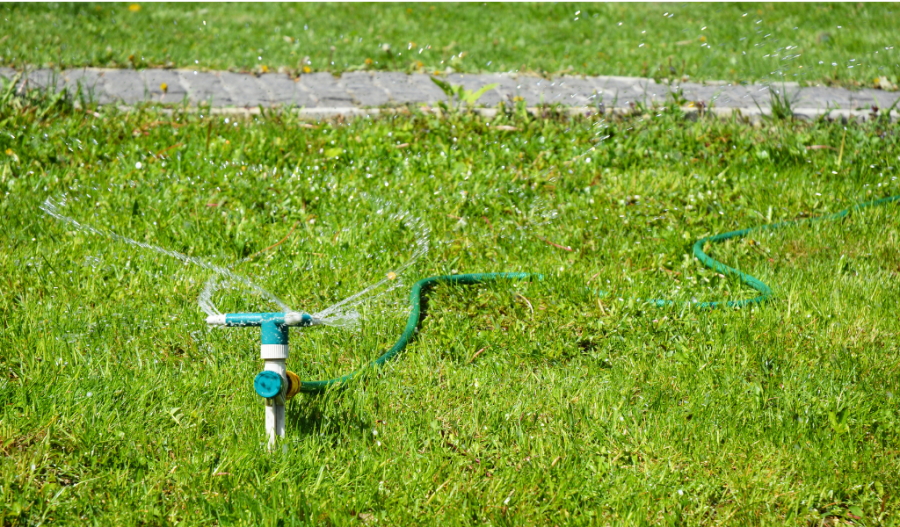
Texas drought is not a hypothetical. For most DFW homeowners it is an annual reality that arrives somewhere between June and September and tests every lawn regardless of how well it was established. Water restrictions tighten water bills climb and the yard that looked great in May starts showing stress by July. Knowing how to manage your lawn through drought conditions — what to do what not to do and when to accept dormancy rather than fight it — is one of the most practical lawn care skills a Texas homeowner can develop.
This guide covers the complete drought watering strategy for established Texas lawns from the first signs of heat stress through recovery when conditions improve.
Understanding how grass responds to drought
Before getting into the how it helps to understand what is actually happening when your lawn shows drought stress. Grass does not die the moment it gets thirsty — it has built-in survival mechanisms that allow it to handle water deficits for extended periods before permanent damage occurs.
Warm-season grasses like Bermudagrass enter dormancy under severe drought stress rather than dying. The above-ground blades stop growing turn brown and appear dead while the crown and root system remain alive underground drawing on stored carbohydrates and whatever moisture remains in the deeper soil profile. A dormant Bermuda lawn that looks completely dead in August will green back up within days of receiving adequate water — either from rain or irrigation.
The threshold between stress and dormancy and between dormancy and death depends on the depth of the root system the duration of the drought and the temperature conditions during the dry period. Deep-rooted established Bermuda lawns in the DFW area can survive extended drought periods that would kill shallow-rooted or poorly established turf. This is why the establishment decisions you make in year one — deep watering that builds root depth — have direct consequences for how your lawn handles the drought years that follow.
Cool-season grasses like Tall Fescue have less drought tolerance than Bermuda and are more vulnerable to permanent damage during extended Texas droughts. Fescue can thin significantly or die in areas under prolonged heat and drought without adequate irrigation — which is why proper establishment and maintained root depth through consistent spring watering is particularly important for Fescue lawns heading into summer.
The most important drought watering principle: deep and infrequent
The single most impactful change most homeowners can make to their drought watering approach is shifting from frequent shallow sessions to deep infrequent ones. This shift matters more than almost any other variable in drought management and it is the approach most homeowners do not naturally arrive at on their own.
Here is why it works. Roots follow water. If you water shallow and frequent the moisture stays near the surface and the roots stay near the surface following it. A lawn with shallow roots reaches the limit of available soil moisture quickly during a dry stretch and goes into stress rapidly. If you water deep and infrequent the moisture penetrates to a greater depth in the soil profile and the roots follow it downward. A lawn with deep roots accesses moisture from a much larger volume of soil and stays productive much longer into a dry period before stress begins.
In practical terms deep and infrequent means long enough sessions to wet the soil six to eight inches deep with enough time between sessions for the surface to dry partially before the next watering. For most established Bermuda lawns in the DFW area during normal summer conditions this translates to two to three long sessions per week rather than short daily or twice-daily sessions.
During drought conditions when you are trying to maximize efficiency with limited water this principle becomes even more important. Concentrating available irrigation into fewer deeper sessions does more for root depth and drought resilience than spreading the same water volume across more frequent shallow applications.
How to tell if your lawn needs water
Watering on a fixed schedule regardless of actual lawn condition wastes water during periods when natural rainfall or cooler temperatures reduce irrigation needs. Learning to read your lawn's signals and water in response to actual stress rather than a calendar produces better results with less water.
The earliest visible sign of drought stress in Bermudagrass is a blue-grey or silver tint to the leaf blades. This color change happens as the grass reduces water content in its cells and the blades take on a slightly dull metallic appearance compared to the bright green of a well-hydrated lawn. It is a subtle signal that is easy to miss if you are not looking for it but it is the earliest warning that water is needed before more significant stress develops.
The footprint test is a reliable drought stress indicator that any homeowner can use. Walk across the lawn and look back at where you stepped. If the grass blades spring back quickly and the footprints are not visible after a minute or two the lawn is adequately hydrated. If the footprints remain visible and the blades stay compressed after you walk away the lawn is under drought stress and needs water.
Blade folding is a more advanced stress signal. Bermudagrass blades fold lengthwise along the midrib as the plant reduces its surface area to conserve moisture. Folded blades across significant portions of the lawn signal that water is needed promptly — the plant is actively conserving rather than just experiencing mild stress.
Color change from green to blue-grey to yellow to brown represents the progression from mild stress through dormancy to potential permanent damage. Acting at the blue-grey stage prevents the more serious consequences of the later stages.
Watering efficiently under water restrictions
Many DFW municipalities implement outdoor watering restrictions during drought conditions — limiting irrigation to specific days times and durations. Managing a lawn through drought within the constraints of a watering restriction requires maximizing the effectiveness of permitted irrigation rather than trying to water more frequently than the restrictions allow.
The most important efficiency adjustment under water restrictions is making sure every permitted watering session penetrates as deeply as possible. Run irrigation zones long enough to wet the soil six to eight inches down during each permitted session rather than running shorter sessions that only penetrate a few inches. The deep penetration from each session extends the time before the next stress signal appears and makes the most of the water window the restriction allows.
Cycle and soak programming on automatic irrigation systems improves penetration efficiency on heavy clay soils. Rather than running a zone for twenty continuous minutes — which often results in surface runoff before adequate penetration on clay — cycle and soak runs the zone for eight to ten minutes allows thirty minutes for initial absorption then runs again for another eight to ten minutes. The two shorter sessions with an absorption break penetrate more deeply and with less runoff than a single long session.
Morning watering within the hours permitted by your restriction minimizes evaporation loss. Irrigation applied in the early morning hours before temperatures rise and wind picks up delivers significantly more water to the root zone per gallon applied than midday or afternoon irrigation in Texas summer heat.
Turn off irrigation after rainfall events. Running irrigation on a schedule that does not account for natural rainfall wastes water and can create overwatering problems that are damaging in their own right. A rain sensor or smart irrigation controller that pauses scheduled irrigation after measurable rainfall is a worthwhile investment for any DFW homeowner managing lawn irrigation through variable summer weather.
When to let your lawn go dormant rather than fighting it
One of the most counterintuitive and most important drought management decisions a Texas homeowner can make is choosing to let warm-season grass go dormant rather than applying enough irrigation to maintain green color through a severe drought.
A dormant Bermuda lawn is not a dead lawn. It is a surviving lawn that has activated its drought-resistance mechanism and will recover when water becomes available. The brown color is alarming to most homeowners but it represents the grass protecting itself not dying.
Maintaining a green Bermuda lawn through a severe Texas drought requires significant irrigation — often more than water restrictions allow and certainly more water than is efficient or cost-effective when drought conditions are severe. Fighting dormancy with inadequate irrigation — enough to keep the lawn stressed but not enough to keep it green — produces the worst possible outcome. The lawn stays partially green and partially brown shows uneven stress patterns and uses more water than either a fully irrigated lawn or a fully dormant one while never looking good during the process.
The better approach when drought conditions are severe and water restrictions are limiting is to make a deliberate choice. Either commit the water necessary to maintain active growth through the drought period or allow the lawn to go fully dormant and water just enough to keep the crowns alive — typically one deep watering session every two to three weeks during dormancy is sufficient to protect the root system without maintaining active top growth.
A fully dormant Bermuda lawn recovers quickly and completely when conditions improve. Rain in August or the moderate temperatures of September are often enough to bring a dormant DFW lawn back to green within a week or two. The recovery is faster and more complete when the crown and root system were maintained through the dormancy period rather than stressed by inadequate partial irrigation.
Protecting newly hydroseeded lawns during drought
Drought conditions create a particular challenge for recently hydroseeded lawns that have not yet developed the root depth of established turf. A lawn that is two months past its hydroseeding application has not yet built the root system that makes drought resilience possible — it is still dependent on more frequent irrigation than an established lawn would need during the same conditions.
If your hydroseeded lawn is in its first growing season and drought conditions hit the priority is protecting the root development that has been building since establishment. Deep watering sessions every two to three days are more appropriate for a first-season lawn during drought than the once or twice weekly schedule that works for fully established turf. The root system is still developing depth and it needs consistent moisture to continue that development even as you reduce frequency from the establishment schedule.
If water restrictions prevent adequate irrigation of a first-season lawn during severe drought conditions contact your contractor to discuss the situation. Some municipalities have provisions for newly established lawns. A partially dormant first-season lawn that was not adequately irrigated during its first summer will likely need touchup hydroseeding in the fall to restore coverage that was lost during the drought — which is a recoverable situation but one worth trying to prevent with appropriate irrigation management.
Soil health and drought resilience
The condition of your soil has a direct impact on how well your lawn handles drought — and improving soil health is one of the most durable long-term drought management investments a Texas homeowner can make.
Soil organic matter improves water retention in clay soils. Clay soil with adequate organic matter holds moisture better and for longer than depleted clay subsoil — which is one reason newly constructed lots with stripped topsoil struggle through drought more than older properties with established soil biology. Annual topdressing with quality compost gradually improves the organic matter content and water retention capacity of your lawn's soil over time.
Aeration reduces compaction that prevents deep water penetration. Compacted clay soil sheds water as runoff rather than allowing it to penetrate to root depth — meaning irrigation that should be reaching six to eight inches is instead running off the surface. Annual aeration improves penetration efficiency so more of your irrigation water reaches the root zone where it matters.
Deep root systems developed through consistent deep watering access moisture from a larger soil volume and are more drought-resilient than shallow systems regardless of grass type. The watering habits of the entire growing season — not just the drought weeks — determine root depth going into the most stressful period.
Recovery watering after drought ends
When drought conditions break and water becomes available again — through rain or lifted restrictions — the transition back to normal watering requires some care to avoid creating new problems after the drought stress is resolved.
Resume irrigation gradually rather than suddenly saturating a lawn that has been drought-stressed or dormant. Dry clay soil in the DFW area can become hydrophobic during extended drought — it repels water initially rather than absorbing it because the surface tension of the dried particles resists rewetting. Heavy sudden irrigation on hydrophobic soil runs off rather than penetrating and can cause ponding and surface erosion before the soil rewets.
Start with moderate session lengths after drought breaks and increase gradually over several days as the soil rewets and absorption improves. Cycle and soak programming is particularly effective during the recovery period for managing the initial absorption challenge on dried clay.
Assess the lawn condition honestly after drought recovery begins. Fully dormant Bermuda that was properly maintained through dormancy typically shows green growth within one to two weeks of consistent moisture. Areas that do not recover within three weeks of adequate water and moderate temperatures may have experienced crown or root death during the drought period and may need hydroseeding touchup in the appropriate seasonal window.
The bottom line on drought watering in Texas
Drought management for Texas lawns comes down to a few core principles applied consistently. Water deep and infrequent to build and maintain root depth. Read your lawn's stress signals and water in response to actual need rather than a fixed calendar. Use permitted irrigation as efficiently as possible through timing programming and soil management. Make a deliberate choice between maintaining active growth and allowing dormancy rather than doing neither effectively. And invest in soil health and root depth through the whole growing season — not just during the drought weeks — because drought resilience is built over time not applied during a crisis.
A lawn managed with these principles handles Texas drought conditions better than one managed reactively. And a lawn established through hydroseeding with the root depth that a quality application and proper post-establishment watering produces is the foundation that makes all of this possible.

Want to establish a lawn that handles Texas drought conditions better from day one?
Fox Hydroseeding LLC helps DFW homeowners establish deeply rooted drought-resilient lawns through quality hydroseeding applications and honest aftercare guidance. Every estimate is handled personally by the owner.
Get Your Free Estimate → foxhydroseeding.com/contact
Bring Your Property to Life With Expert Hydroseeding
Find Us On


Email address

Phone Number

