


How to tell if your hydroseeding contractor did a good job — what to look for right after the application
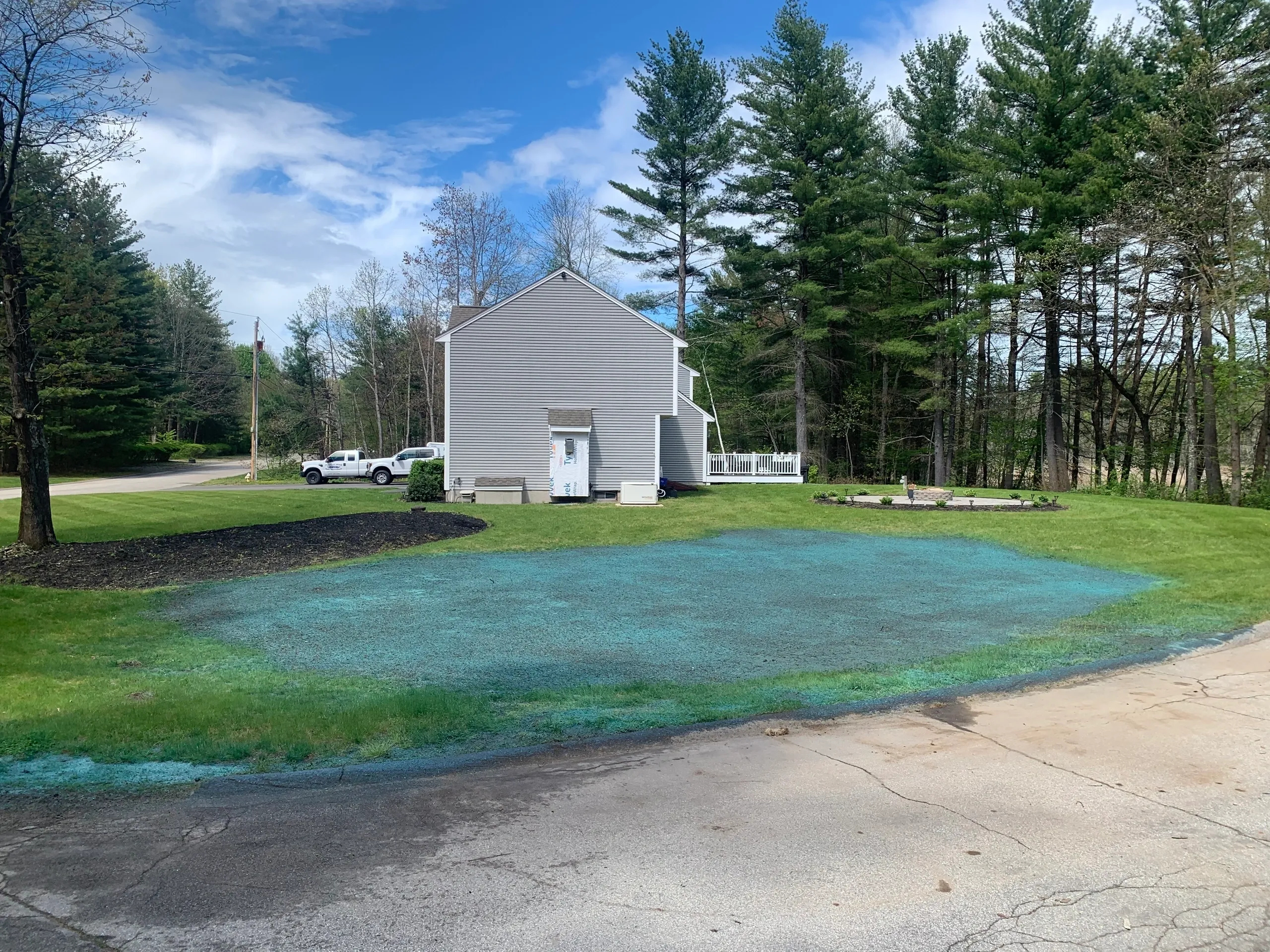
The application is done the contractor has left and the yard is covered in the green mulch layer that signals the beginning of the establishment process. The question most homeowners have at this point — whether they would say it out loud or not — is whether they actually got what they paid for. The application looks like an application but the variables that determine whether it was a quality application or a marginal one are not all visible to the untrained eye.
Knowing what to look for immediately after a hydroseeding application — and in the days and weeks that follow — gives you the specific evaluation framework to assess the job you received rather than waiting for germination quality to reveal what the application quality actually was.
What to evaluate on application day
The first evaluation happens while the contractor is still on site — and specifically before they leave. The conversation that happens before the contractor drives away tells you as much about the job quality as the visual appearance of the application itself.
The most important application day evaluation is whether the contractor initiated the aftercare conversation before leaving. The watering schedule for your specific grass type and current season the germination timeline the foot traffic restriction period and the direct contact number for questions during establishment — these should be communicated specifically and clearly before the contractor leaves. A contractor who drives away without this conversation has left you without the information that protects the investment they just made in your yard. A contractor who takes ten to fifteen minutes to walk you through the specific aftercare for your specific application is demonstrating the professional standard that application quality reflects.
The visual evaluation of the freshly applied application looks for coverage uniformity across the full application area — not just the sections nearest the equipment position but the full yard including the back corners fence lines edges and sections near hardscape. Consistent fiber coverage across every section with no significant bare patches no pooling of material in low spots and no sections where the mulch is dramatically thinner than surrounding areas indicates a quality application. Inconsistent coverage with visible bare sections thin areas or heavy accumulations indicates application execution problems that germination gaps will eventually confirm.
Edge treatment is a specific quality indicator that most homeowners do not evaluate but that distinguishes careful execution from rushed execution. The sections along fence lines near the house foundation adjacent to landscaping beds and along hardscape boundaries require deliberate technique to achieve coverage without excessive overspray onto adjacent surfaces. Clean even coverage to the edges with minimal overspray onto adjacent hardscape indicates the technique attention that quality application requires. Ragged coverage at edges with visible gaps and excessive overspray onto hardscape indicates the rushed application that gets through the center of the yard efficiently and loses quality at the transitions.
What to evaluate in the first 48 hours
The 48 hour evaluation assesses whether the mulch layer has developed the surface bond that protects the application from early rainfall and irrigation displacement.
The palm press test is the specific check for surface bond development. Press your palm gently onto the mulch surface in several locations across the yard after the slurry has dried — typically the morning after application day. Quality application with adequate tackifier produces a mulch layer that stays firmly in place when pressed — it does not shift slide or pull away from the surface. Inadequate tackifier or application bonding problems produce a mulch layer that shifts under gentle pressure rather than staying bonded.
This test takes three minutes and covers the full application area. Consistent bonding across all sections confirms that the tackifier specification was adequate for the conditions. Sections that shift under pressure indicate the inadequate bond strength that rainfall events in the bonding window will reveal through displacement.
The color consistency check confirms that the mulch dye has distributed evenly across the application — consistent green coloration across all sections with no significant color variation that might indicate inconsistent product concentration in different areas of the application.
What to evaluate at days seven through fourteen
The first two weeks produce the germination quality that is the most direct evidence of application execution — the uniformity of germination across the full application area in comparable conditions tells you more about application quality than any evaluation performed on application day.
Germination pattern evaluation looks for whether germination timing and density are relatively consistent across sections with similar conditions — similar sun exposure similar drainage and similar irrigation coverage. Sections in full sun with consistent irrigation coverage should show similar germination development within a day or two of each other. Dramatic germination differences between sections with similar conditions indicate application rate inconsistencies — sections that received more product germinate faster than sections with thinner application.
The presence or absence of coverage gaps in expected germination areas is the specific quality indicator to watch. A section that is in full sun with consistent irrigation coverage and shows no germination at day twelve while surrounding sections are clearly establishing indicates either an application coverage gap or a specific condition problem — drainage pooling irrigation failure or surface contamination — in that specific section. Contacting the contractor at this point with specific documentation of the affected section produces the most accurate assessment of whether a touchup application is warranted and whose scope it falls within.
What to evaluate at the first mow
The first mow at four to five weeks produces the clearest overall picture of application coverage quality — the sections that did not establish are clearly visible against the established surrounding coverage and the uniformity of the overall coverage reveals whether the application produced the even distribution it should have.
Uniform coverage across the full application area at first mow indicates that the application achieved consistent seed distribution and that the establishment management protected the coverage across the full establishment window. Scattered bare sections at first mow indicate either application coverage gaps or establishment management failures — the specific location of bare sections helps distinguish between them. Bare sections that correspond to irrigation coverage gaps indicate management failures. Bare sections scattered without correspondence to any management condition variation indicate application coverage inconsistencies.
The density consistency evaluation at first mow looks for whether some sections are noticeably thinner than others in ways that correspond to the application approach rather than to site condition variations. Thin sections that follow the pattern of the contractor's application passes — thin strips alternating with denser strips for example — indicate application rate inconsistency in the pass overlap rather than site condition driven variation.
What to evaluate at the end of the first growing season
The most comprehensive and definitive quality evaluation of any hydroseeding application is the lawn condition at the end of the first growing season — the accumulated evidence of germination quality establishment management effectiveness and the root development that preparation quality enabled.
A high-quality application on properly prepared soil managed correctly through the establishment period and first growing season produces a lawn at the end of year one that is uniformly established across the full application area has developed the root depth that summer performance required and is heading into fall dormancy with the density that spring green-up will restore to full coverage.
An adequate application produces a lawn with most of these characteristics but with sections that are thinner than the surrounding coverage — sections where application rate was lower establishment management was slightly inconsistent or preparation quality was marginally below what the conditions required.
A poor application produces a lawn with widespread coverage gaps persistent thin sections and the shallow roots that inadequate preparation or inadequate establishment management produces regardless of application day execution quality.
When to escalate concerns to the contractor
The evaluation framework above tells you what to look for. Knowing when to escalate concerns to the contractor — versus continuing with patient establishment period management — is the complementary knowledge that produces the best outcomes from the contractor relationship.
Escalate at day twelve to fourteen if zero germination is visible anywhere across the majority of the application area despite consistent watering and appropriate soil temperatures. This threshold indicates either a seed quality problem an application problem or a site condition problem that the contractor should assess rather than the homeowner continuing to wait.
Escalate within forty-eight hours if visible displacement from rain or irrigation is clear on slope sections — bare channels on slopes mulch concentration in low spots. The timing window for a touchup application that establishes in the same cycle as the surrounding application closes if the escalation is delayed.
Escalate at first mow if significant bare sections — more than scattered small spots — are present across the application area without clear correspondence to identifiable site conditions. The contractor's assessment of whether the bare sections represent application quality issues within their scope or management factors outside it is the information that determines the appropriate resolution path.
The bottom line on evaluating hydroseeding quality
The evaluation framework in this guide gives you specific observable criteria at each stage of the establishment process rather than waiting for the end of year one to determine whether the application was worth the investment. The application day evaluation the 48-hour bond check the germination pattern at weeks one and two and the first mow coverage assessment together produce a progressive quality picture that identifies concerns at the earliest possible point — when contractor response can still address them within the optimal establishment window.
A quality hydroseeding contractor welcomes this evaluation — because the application they delivered holds up to it. A contractor who is uncomfortable with specific quality questions about their work is telling you something about the application quality before the germination does.

Want a contractor whose work holds up to every quality check in this guide?
Fox Hydroseeding LLC personally handles every application and is directly available for quality questions and concerns at any point through the establishment period. We welcome the evaluation because the work reflects the standard it measures against.
Get Your Free Estimate → foxhydroseeding.com/contact
Bring Your Property to Life With Expert Hydroseeding
Find Us On


Email address

Phone Number

