


How to get the most out of your hydroseeding investment — a complete owner's guide
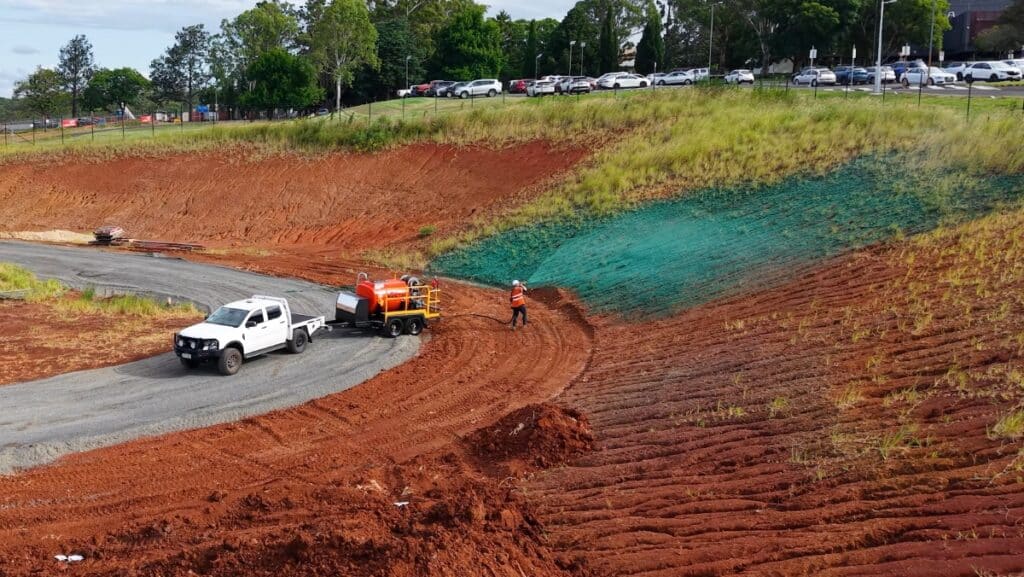
A hydroseeding application is not the end of the lawn project — it is the beginning of a lawn that will perform as well as the decisions made after the application allow it to. The seed the mulch the preparation — all of that creates potential. What happens in the days weeks months and years after the application determines how much of that potential becomes the actual lawn you are living with.
This guide covers everything you need to do to maximize the return on your hydroseeding investment — from the first session after the contractor leaves through the long-term management practices that keep a well-started lawn performing at its best indefinitely.
The first six hours: the most important window most homeowners underestimate
The six hours immediately after a hydroseeding application are more important than most homeowners realize — and the single action required in that window is the first watering session.
The mulch layer applied during hydroseeding starts the bonding process immediately but it requires moisture to complete it. The first watering session within a few hours of the application begins the process of bonding the mulch to the soil surface — the adhesion that makes the protective layer resist the wind and rainfall displacement that would otherwise move seed before germination can anchor it.
If the contractor did not complete a final watering pass at the end of the application — which some do and some do not — the first watering session is your responsibility and the sooner it happens the better. Do not wait until the scheduled irrigation time if the application finished hours before the first scheduled session. Run a manual session or advance the automatic schedule to deliver water to the fresh application within a few hours of completion.
This first session does not need to be long — it needs to be soon. A ten to fifteen minute light session across all zones covering the application area within the first few hours of completion is more valuable than a longer session that happens four hours later when the mulch has been sitting dry.
The first fourteen days: the investment protection window
The first fourteen days after a hydroseeding application are the window where the majority of the investment is either protected or lost. The watering management during this window determines whether the germination rate the application was capable of producing is actually achieved or whether the Texas conditions that defeat bare seeding defeat this application too.
Three sessions per day in Texas summer conditions two sessions in spring and fall. Each session light and even — the goal is consistent surface moisture not saturation. Check the mulch surface between sessions and adjust frequency if the surface is drying faster than the schedule replaces.
No foot traffic during this window. No pets. No delivery personnel cutting across the lawn. No exceptions that become patterns. A single path of foot traffic across a ten-day-old establishment creates visible damage that takes weeks to recover. The four-week restriction exists because the root system is not developed enough to sustain traffic damage until the end of that window — not because the grass looks fragile but because it actually is.
Monitor germination progress without intervening. First sprouts at days five through seven are normal. Uneven early germination is normal. Nothing visible in the first four days is normal. The intervention that most often damages lawns during this window is the response to normal appearance at day five — probing the mulch checking the seed adding more seed — that disrupts the process that was working correctly.
The establishment transition: weeks two through five
Around day fourteen the watering goal shifts from germination support to root development — and making this transition deliberately rather than accidentally is one of the most important management decisions in the full establishment process.
Germination watering maintains surface moisture. Root development watering encourages roots to grow downward by making moisture available at progressively greater depths. Staying on the germination schedule past the germination window keeps moisture at the surface and keeps roots at the surface — missing the window to build the depth that the first summer depends on.
Beginning to transition around day fourteen does not mean abruptly cutting watering to once per week. It means progressively extending session duration and reducing session frequency — moving from three short sessions per day toward two slightly longer sessions toward one longer session per day toward every-other-day toward the mature lawn schedule over the course of weeks two through five.
Each progressive adjustment is training the root system to develop depth rather than staying near the surface. By the time the lawn reaches first mow timing at weeks four to five the root system should be developing the depth that makes the first summer manageable — not because of the application but because of the watering management that followed it.
The first mow: one decision that affects the whole first season
The first mow on a newly established hydroseeded lawn is a management milestone that protects everything that has been built during the establishment period — when done correctly. Done incorrectly it creates the setback that undermines weeks of establishment progress in a single afternoon.
Wait for three to four inches of grass height across the majority of the lawn before mowing — not just in the fastest-germinating sections but across most of the yard. Mowing the tall sections while the slower sections are still below mow height creates stress in the established areas before the full lawn is ready to handle mowing stress.
Sharpen the blade before the first mow. A dull blade tears grass rather than cutting it cleanly — creating ragged brown tips that the plant must recover from rather than the clean cut that heals quickly. On a lawn with a still-developing root system the additional stress of torn tissue recovery compounds the mowing stress in ways that sharp-blade mowing does not.
Set the height to two and a half to three inches for the first several mowing sessions — higher than the long-term maintenance height for Bermuda but appropriate for a lawn whose root system is not yet mature enough to support the lower cuts that established Bermuda handles without setback.
The first growing season: building the foundation that compounds
The first full growing season is when the potential of a quality establishment is either realized as a lasting high-performance lawn or limited as a lawn that established adequately but never developed the foundation that makes performance easy in subsequent years.
The most impactful single practice in the first growing season is progressive deep watering that builds root depth through the spring and into the summer. Each week's irrigation sessions should penetrate slightly deeper than the previous week's — not a dramatic jump but a gradual increase in session duration and decrease in frequency that trains roots to develop downward as the growing season advances.
By the time June arrives the lawn that received this progressive deep watering through April and May has roots at five to six inches or deeper — roots that access the cooler drier soil below the surface heat zone and that sustain the lawn through July heat with less intensive daily management than a shallow-rooted lawn requires.
First-season aeration in late spring — typically May or early June for Bermudagrass in the DFW area — begins the annual soil structure improvement cycle that compounds through subsequent seasons. The aeration channels keep the compaction that North Texas clay naturally reasserts from limiting root development. Compost topdressing after aeration adds organic matter that improves soil structure progressively with each annual application.
Appropriate fertilization during the active growing season — not over-fertilization that pushes excessive top growth but appropriate nitrogen application timed to when the grass is actively growing and can convert the input to root development and density rather than just blade growth — supports the density development that makes the first-year lawn look like an investment that paid off.
The dormancy transition: protecting the investment through winter
The first fall dormancy is when the lawn that performed well through the first summer transitions into the brown dormant appearance that surprises homeowners who have not been through it before. Protecting the crown and root system investment through winter requires minimal but specific management.
Reduce irrigation to dormancy maintenance as Bermuda transitions toward dormancy in October. Not complete cessation — the occasional deep watering every two to three weeks during extended dry periods that maintains the soil moisture the crown system needs to stay viable through winter. But the twice or three-times-weekly schedule of the active growing season is unnecessary and wasteful during dormancy.
Complete the fall assessment — walking the full lawn and identifying any sections that thinned significantly through the first summer and need spring renovation attention. Note these sections specifically rather than waiting until April to remember where the problems were.
Get on the spring contractor calendar in late fall or early winter for any renovation work identified in the fall assessment. The spring calendar for quality DFW hydroseeding contractors fills in February and March — planning the renovation work in November or December ensures the work can happen in the optimal spring timing window rather than whatever date is still available when you call in April.
Year two and beyond: the compounding return
Year two is when the investment in year one begins paying the compounding return that makes well-established lawns increasingly easy to maintain and increasingly impressive to look at.
The root depth built through year one deep watering means year two summer management requires less intensive intervention — the roots are already at the depth that handles moderate drought without daily attention. The soil structure improvement from year one aeration creates the foundation that year two aeration compounds. The turf density that developed through year one management creates the competitive coverage that suppresses weed pressure without intensive chemical intervention.
Each year of good management adds to the return. The lawn that gets progressively easier to maintain and progressively more resilient with each growing season is the lawn on which year one management was done correctly and the annual practices that build on it are maintained.
The homeowner who looks at their year five lawn and wonders how it got so good can usually trace the answer back to year one — to the preparation that created the growing conditions for deep roots to develop the establishment management that built the foundation and the annual practices that compounded the foundation into the lawn they are now maintaining.
The reference guide for ongoing decisions
Every lawn decision going forward should be evaluated against the question of whether it supports root depth development and turf density or works against it.
Watering decisions — does this schedule build root depth or keep roots at the surface.
Mowing decisions — does this height support turf density and recovery or stress the plant through excessive removal.
Fertilization decisions — does this timing and rate support active growth and root development or push excessive top growth at the expense of root investment.
Aeration decisions — does this annual practice maintain the soil structure that root development requires or allow compaction to progressively limit root penetration.
These four questions applied consistently to ongoing lawn management decisions produce the lawn that the hydroseeding investment was designed to create — a lawn that performs well looks great and improves with each passing season.
The bottom line on getting the most from your hydroseeding investment
The hydroseeding application created the opportunity. Everything in this guide is about realizing that opportunity fully — protecting the establishment period managing the first growing season correctly and maintaining the annual practices that compound the foundation into the lasting high-performance lawn that the investment was intended to produce.
No single decision in this guide is complicated. All of them are specific. The homeowner who makes them with intention rather than by default gets the full return on the investment that casual management leaves unrealized.

Want to make sure you get the maximum return from your hydroseeding investment?
Fox Hydroseeding LLC walks every homeowner through the complete ownership guide — establishment management first growing season practices and annual maintenance recommendations — before leaving the job site. We set you up for the full return not just the application.
Get Your Free Estimate → foxhydroseeding.com/contact
Bring Your Property to Life With Expert Hydroseeding
Find Us On


Email address

Phone Number

