


How long does hydroseeding take to grow — the honest answer and everything that affects it
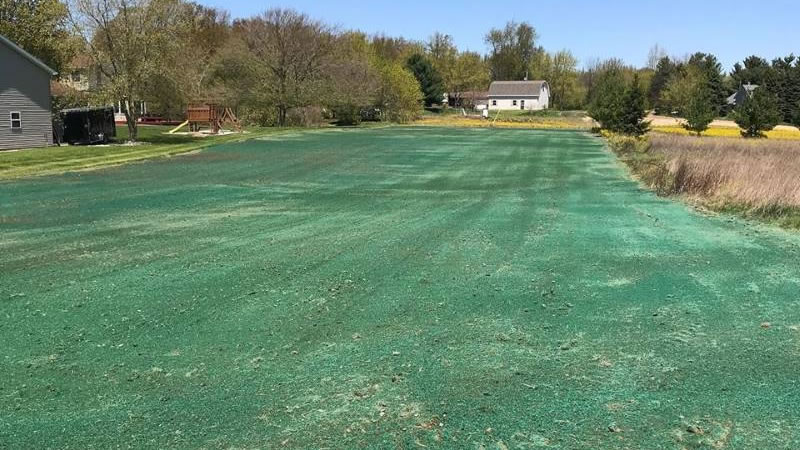
The timeline question is one of the first things homeowners ask when they start researching hydroseeding — and the answers they find are typically either too vague to be useful or too specific to be accurate for their individual situation. Three to four weeks is the most common answer online and it is not wrong but it is not complete either. The actual timeline for a specific hydroseeding application depends on a specific set of factors that can make the same grass grow noticeably faster or slower than that generic number suggests.
This guide gives you the complete honest answer — what the general timeline looks like what factors accelerate or slow it and what to expect at each stage so you can accurately plan for your project and recognize whether your specific application is on track or behind.
The general timeline: what to expect in most cases
For a Bermudagrass hydroseeding application in the DFW area during the optimal spring window with appropriate soil preparation consistent establishment watering and normal weather conditions the general timeline from application to first mow is four to five weeks.
That general timeline breaks down into specific stages that each occupy a predictable portion of the total window.
Days one through five: no visible germination. The slurry is drying and bonding. The seed is activating below the surface but nothing is visible above it. This stage feels like nothing is happening. It is not.
Days five through seven: first sprouts visible in the fastest-responding sections. Scattered thin individual green hairs emerging from the mulch in sections with the best soil contact best light and consistent moisture. Still sparse still limited to the most favorable areas.
Days seven through fourteen: germination spreading across most of the yard. Early sections developing beyond single sprouts to small clusters of grass. Late sections catching up to where early sections were at day seven. The lawn starting to look like something is happening across its full area.
Weeks two through three: visible growth and thickening. The sparse early coverage developing into recognizable grass. Mulch fading from application-day green toward the lighter tone of biodegrading fiber. The distinction between mulch color and grass color increasingly clear.
Weeks three through four: solid coverage developing. The lawn looking like a lawn rather than a work in progress. The density still lower than a mature established lawn but clearly heading in the right direction. Foot traffic restriction still in effect through this stage.
Weeks four through five: first mow timing. Grass reaching three to four inches across the majority of the lawn. First mow with sharp blade at high setting completing the transition from establishment to growing season management.
This four to five week timeline assumes the factors described below are favorable. Each factor that is not optimal adds time to the timeline — and understanding which factors are most influential helps you predict whether your specific project will be at the faster or slower end of the range.
Factor one: soil temperature — the most influential variable
Soil temperature is the single factor that most dramatically affects germination speed and therefore the establishment timeline. Bermudagrass germination is directly triggered by soil temperature at the seed depth — not air temperature not calendar date but actual soil temperature at the germination zone.
At soil temperatures consistently above 70 degrees Fahrenheit Bermuda germinates aggressively — first sprouts at days four to five under good moisture conditions and spreading germination by days seven to ten. This is the summer establishment timeline when Texas soil temperatures are well above the threshold.
At soil temperatures in the 65 to 70 degree range — the early spring window in the DFW area — Bermuda germinates more slowly. First sprouts at days seven to ten spreading germination through days ten to fourteen. The same quality application in the same conditions but at lower soil temperatures takes noticeably longer to show visible progress.
At soil temperatures below 65 degrees Bermuda germination is unreliable and slow. Applications made in early spring before soil temperatures have reliably crossed the 65-degree threshold produce the delayed sparse germination that homeowners attribute to seed quality or application problems when the actual cause is the soil temperature that was not yet adequate for reliable germination.
The practical implication is that summer applications produce visible germination faster than spring applications — not because the seed or application is better but because the soil temperature is higher. A homeowner who applies in July and sees sprouts at day five and a homeowner who applies in early April and does not see sprouts until day ten may have received equivalent-quality applications with the soil temperature difference explaining the timeline difference.
Factor two: watering consistency — the management variable you control
Watering consistency during the germination window is the factor that the homeowner controls most directly and the one that most commonly produces the timeline delays that homeowners interpret as application problems.
Consistent twice to three-times daily watering during the first fourteen days maintains the surface moisture that germination requires continuously — the biological process of germination once activated needs uninterrupted moisture to complete. A consistently watered application germinates at the rate that soil temperature and seed quality support. An inconsistently watered application — one that misses sessions has coverage gaps or experiences dry periods during the germination window — germinates at a lower rate and takes longer because seeds that started the germination process and then dried before completing it lose viability.
The timeline difference between consistent and inconsistent establishment watering is measurable and visible. A lawn at day fourteen with consistent watering looks clearly established with good coverage across the full area. The same application at day fourteen with inconsistent watering looks sparse in sections where the dry periods affected germination — and those sections take additional weeks to reach the coverage level that consistent watering produced in day fourteen.
Factor three: grass type — the biological constraint
Different grass types have different germination timelines that reflect their biology rather than anything about the application quality.
Bermudagrass at appropriate soil temperatures germinates in five to seven days under consistent moisture — one of the faster-germinating common lawn grasses available for the Texas market.
Tall Fescue in fall cool-season conditions germinates in five to ten days — slightly variable depending on soil temperature within the 50 to 65 degree germination range.
Buffalograss is the slowest common grass type for Texas — germination at ten to fourteen days or longer is normal and the full establishment timeline extends significantly beyond the four to five week Bermuda timeline. A Buffalograss hydroseeding application that shows no sprouts at day ten is likely on track rather than behind — the biology of this grass simply requires more time for the same stages that Bermuda completes faster.
If you are not sure which grass type was used in your application — and the timeline you are observing seems inconsistent with the four to five week Bermuda timeline — confirming the grass type with the contractor clarifies whether the timeline is normal for the specific grass rather than indicating a problem with the application.
Factor four: shade — the light availability constraint
Shaded sections of a hydroseeded lawn germinate and establish more slowly than full-sun sections even when the same grass type is applied across both — and in cases where the wrong grass type is applied to shaded sections they may never reach the establishment quality that full-sun sections achieve regardless of timeline.
For the correct grass type in shaded sections — Fescue in shade conditions where it is the appropriate choice — the germination timeline is extended by the reduced soil temperature that shade creates relative to full-sun sections. The shade that keeps the soil temperature two to three degrees cooler than the sunny sections produces germination that starts a few days later and develops a few days more slowly than the sunny section timeline.
This is why the most common early establishment observation is that the open full-sun center of the yard is further along than the shaded edges at any given point in the first two weeks. The shaded sections are not behind in the way that a problem indicates — they are on a slightly extended version of the same timeline that the full-sun sections are running on.
Factor five: seed quality — the starting point that determines the ceiling
Seed germination rate specification — the percentage of seed in the bag that is viable and capable of germinating — directly affects both the timeline and the ultimate coverage quality of the hydroseeding application. Premium certified seed with high germination rate specifications produces more rapid and more consistent germination across the application area than commodity seed with lower or unspecified germination rates.
The timeline effect of lower germination rate seed is a sparser initial germination — fewer seeds activating per square foot in the first week — that creates a slower-looking establishment than high germination rate seed in the same conditions. The sparse early germination from lower-quality seed takes longer to develop into solid coverage because there are fewer starting plants filling in the gaps.
When a timeline seems significantly slower than the general framework suggests despite adequate soil temperature consistent watering and no obvious management problems seed germination rate quality is worth investigating. Ask the contractor specifically about the seed grade and germination rate certification used in the application — the answer reveals whether seed quality could be contributing to a slower-than-expected timeline.
Factor six: application quality — the delivery variable
The hydroseeding application quality affects germination timeline through the consistency of seed-to-soil contact that the slurry delivers. A quality application with appropriate tackifier and fiber content delivers seed in consistent protected contact with the soil surface across the full area — producing consistent germination timing and coverage development across the full yard.
A thin application that does not provide adequate mulch coverage produces less consistent seed-to-soil contact and less consistent moisture retention between sessions — resulting in more variable germination timing across the application area than a full-rate quality application produces.
The visible evidence of application quality impact on timeline is the pattern of germination variability — a quality application produces relatively consistent germination timing across similar conditions in the full yard while a thin or inconsistent application produces dramatically more variable timing with some sections well ahead and others significantly behind even in comparable sun exposure and drainage conditions.
What a behind-schedule timeline actually looks like
Understanding what a genuinely behind-schedule timeline looks like — as distinct from normal timeline variation within the factors described above — helps you distinguish between a situation that warrants contractor contact and one that warrants continued patient management.
No germination anywhere across the majority of the application area at day twelve to fourteen despite consistent watering and appropriate soil temperatures is a genuinely behind-schedule signal. Some sections later than others is normal. No germination anywhere is not.
Germination that appeared in the first week and has stalled — no expansion of coverage beyond the early-germinating sections through day fourteen — combined with the surface showing drought stress signals suggests that the watering has not been consistent enough to sustain the germination that started. This is a management issue that increased watering frequency can still address if caught by day fourteen but that represents a behind-schedule situation.
Germination sparse across the full area at day fourteen — coverage that looks like ten to twenty percent of what you would expect — may indicate seed quality issues or soil temperature problems that affected the germination rate of the full application.
For any genuinely behind-schedule observation contact the contractor before day twenty-one — the window within which a touchup application can still establish in the same germination cycle as the original application is closing by the end of week three.
The bottom line on hydroseeding growth timeline
The honest answer to how long hydroseeding takes to grow is four to five weeks for Bermudagrass in optimal spring conditions with consistent management — and noticeably faster in summer heat with higher soil temperatures and noticeably slower with lower spring soil temperatures inconsistent watering or specific factors like shade that extend the timeline in affected sections.
The timeline is not a fixed number — it is the output of the specific factors that affect each specific application. Understanding those factors before the application starts produces the accurate expectation that allows you to recognize normal progress at every stage and identify the genuinely behind-schedule situations that warrant contractor contact rather than anxious over-management of a process that is working correctly.

Questions about the expected timeline for your specific hydroseeding project?
Fox Hydroseeding LLC gives every homeowner a specific germination timeline estimate based on the current season soil temperatures and grass type before the application begins — not a generic number but an expectation calibrated to the actual conditions of your specific project.
Get Your Free Estimate → foxhydroseeding.com/contact
Bring Your Property to Life With Expert Hydroseeding
Find Us On


Email address

Phone Number

