


Dethatching and hydroseeding — why removing thatch before the application makes all the difference
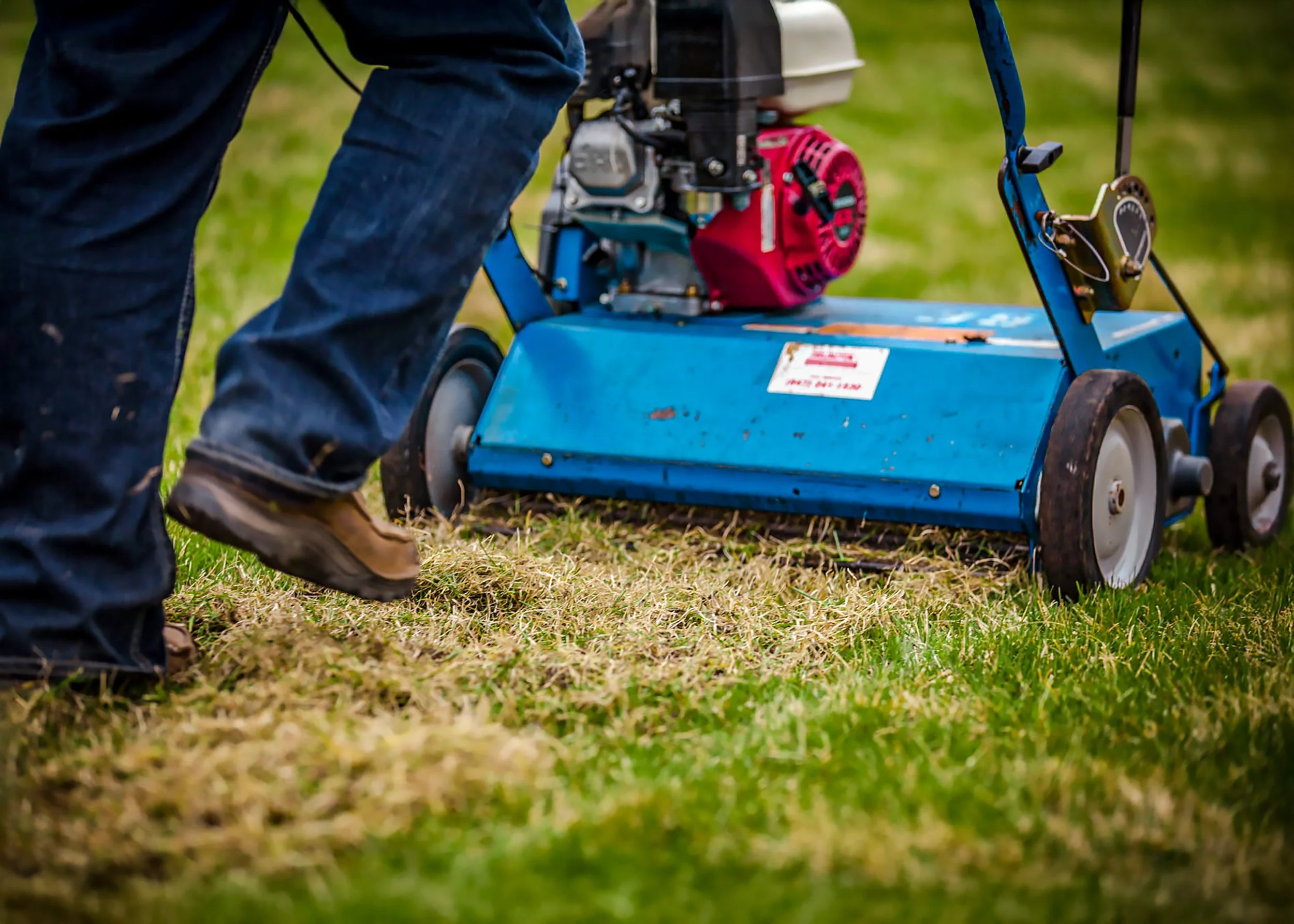
Thatch is the layer of dead and living organic material that accumulates between the soil surface and the visible grass above it. A thin thatch layer of half an inch or less is normal and beneficial — it moderates soil temperature and moisture. Beyond that threshold thatch becomes the barrier that prevents hydroseeding from working correctly on an existing lawn — not by affecting the germination biology but by physically preventing the slurry from reaching the soil where germination needs to happen.
Understanding specifically what thatch does to a hydroseeding application — why the slurry that looks like it is reaching the ground is actually sitting in the thatch layer rather than on the soil — is what motivates the dethatching step that most homeowners skip and that most renovation overseeding failures can be traced back to.
What thatch actually is and how it accumulates
Thatch is not the grass clippings that most homeowners assume cause it — research has shown that mulch mowing of normal clipping volumes does not significantly contribute to thatch buildup because the clippings decompose relatively quickly. Thatch is primarily the accumulation of stems stolons and roots that decompose more slowly than blade clippings because their higher lignin content resists the biological decomposition that breaks down softer plant material.
Bermudagrass is particularly prone to thatch accumulation because of its aggressive stoloniferous growth habit — the above-ground runners that spread across the surface and root at nodes as they contact the soil create a dense horizontal layer of organic material that builds progressively if the rate of accumulation exceeds the rate of biological decomposition.
Thatch accumulates faster when soil biological activity is reduced — compacted soil with low organic matter and limited biological community breaks down thatch more slowly than biologically active well-structured soil. Excessive nitrogen fertilization that pushes rapid top growth faster than the soil biology can decompose the resulting organic material also accelerates thatch accumulation.
The half-inch threshold where thatch transitions from beneficial to problematic is the point where the layer is thick enough to intercept the slurry of a hydroseeding application before it reaches the soil surface below.
How thatch prevents hydroseeding from working
The slurry of a hydroseeding application is a liquid when it leaves the nozzle and it appears to cover the surface uniformly when applied. What is not visible from above is whether the slurry is penetrating through the thatch layer to reach the soil below or sitting in the thatch canopy without reaching the soil at all.
When thatch depth is below half an inch the slurry penetrates through the thin layer and makes the soil contact that germination requires. When thatch depth exceeds half to three-quarters of an inch the dense horizontal mat of the thatch layer intercepts the slurry — the fiber mulch seed and fertilizer land in the thatch rather than on the soil. The seed that is held in the thatch layer germinates into the thatch but without soil contact the developing root system finds no mineral soil to penetrate and the seedlings die before establishing.
This is the specific mechanism that produces the frustrating pattern of germination that appears to be occurring but does not result in establishment — first sprouts visible at day seven that disappear by day fourteen because the roots have nowhere to develop past the thatch layer they germinated in.
The homeowner who overseed a thatchy lawn repeatedly and gets the same result of apparent germination followed by die-off before establishment is experiencing exactly this mechanism — the thatch barrier that no amount of high-quality slurry penetrates adequately without the physical removal that creates the direct soil access germination requires.
How to assess thatch depth before scheduling
Assessing the thatch depth of an existing lawn before scheduling a hydroseeding renovation takes three minutes and requires only a soil probe screwdriver or pen.
Push the probe through the grass layer to the soil surface and note the distance between the visible grass surface and the soil. The material between the two points is the thatch layer — the organic mat that the probe had to pass through to reach mineral soil.
Less than half an inch — the slurry can penetrate adequately and dethatching may not be required for the hydroseeding application to work correctly.
Half to three-quarters of an inch — borderline. Dethatching before the application is recommended to ensure adequate slurry penetration across the full application area rather than accepting the inconsistent penetration that moderate thatch produces.
More than three-quarters of an inch — dethatching before the application is required. The slurry applied to this thatch depth will sit in the thatch rather than reaching the soil and the germination that appears at day seven will die before establishing regardless of the quality of the seed mulch and application.
Check the thatch depth in multiple locations across the yard — near the center along fence lines under tree canopy and in sections that have been declining in density. Different sections often have different thatch depths depending on their growth history and the cultural management they have received.
The dethatching methods and which is appropriate
Power dethatching — also called vertical mowing or scarifying — uses rotating vertical blades to cut through the thatch layer and pull material to the surface where it can be collected and removed. This is the most effective thatch removal method for significant thatch accumulation and the one that creates the soil surface condition that hydroseeding benefits from most directly.
Power dethatching on a lawn with significant thatch accumulation is aggressive — it removes significant amounts of material and temporarily makes the lawn look considerably worse than before the dethatching. The appearance immediately after power dethatching is alarming to homeowners who have not been through the process — the scalped disturbed surface looks like a step backward rather than a preparation improvement. Within days of hydroseeding that surface the appearance concern is irrelevant — the prepared surface is exactly the soil-accessible condition that produces the establishment quality the renovation is trying to achieve.
Dethatching rakes — manual tools that pull thatch material to the surface — are appropriate for light thatch accumulation below the half-inch threshold where a light surface cleaning improves slurry penetration without the more aggressive power dethatching that significant accumulation requires. For thatch above half an inch the manual rake does not remove enough material to meaningfully change the slurry penetration through the remaining thatch.
Liquid dethatch products that claim to biologically decompose thatch without mechanical removal are not adequate preparation for a hydroseeding application — the biological decomposition they promote operates too slowly to create the soil surface condition that same-season hydroseeding requires.
The specific timing relationship between dethatching and hydroseeding
Like the aeration and hydroseeding combination the optimal timing for combined dethatching and hydroseeding is same-day or within twenty-four to forty-eight hours. The freshly dethatched surface — soil exposed debris cleared rough but receptive — is the surface condition that hydroseeding benefits from most directly.
Dethatching that is completed weeks before the hydroseeding application allows new thatch accumulation to begin covering the exposed soil surface. Bermudagrass in active growth produces the horizontal stolon spread that begins covering the dethatched surface within days of the disturbance — not at the original thatch depth but as new surface material that begins the thatch accumulation process again. The completely fresh dethatched surface that the same-day hydroseeding application lands on is more receptive than the surface that has had two weeks to begin recovering growth.
Scheduling the dethatching and hydroseeding as a combined project from the same contractor captures the optimal timing naturally — the contractor who completes both operations in the same visit does the dethatching immediately before the hydroseeding application without the timing degradation that separate scheduling introduces.
What to do with the thatch material that dethatching produces
Power dethatching produces a significant volume of material — the accumulated thatch of multiple seasons pulled to the surface is often surprisingly voluminous. This material needs to be removed from the application area before the hydroseeding application.
Leaving the dethatched material on the surface and hydroseeding over it creates the same slurry penetration problem that the original thatch created — the removed material piled on the surface is a barrier between the slurry and the prepared soil just as the original attached thatch was. Complete removal of dethatched material before the application is required for the dethatching preparation to produce the benefit it is intended to create.
Dethatched material can be composted — it is organic material that biodegrades into the soil amendment that compost topdressing provides. Bagging and discarding it is the most common approach on residential projects where composting is not practical.
Combining dethatching aeration and hydroseeding
For renovation projects on established lawns with both significant thatch accumulation and soil compaction combining dethatching aeration and hydroseeding in the same project captures the preparation benefits of both in the optimal timing relationship with the hydroseeding application.
The sequence for the combined three-step project is dethatching first — removing the thatch barrier before aeration so the aerator tines can penetrate to soil depth rather than stopping in the thatch layer. Aeration second — core aeration through the freshly dethatched surface to create the root penetration channels that the loosened surface now allows the aerator to create fully. Hydroseeding third — the application onto the freshly dethatched and aerated surface that captures both preparation benefits simultaneously.
This three-step combined project represents the most comprehensive single-visit renovation preparation available for an established lawn with multiple compounding limitations — thatch compaction and declining coverage addressed together in the preparation that positions the hydroseeding application to produce the best possible establishment result.
The cost and time comparison with separate scheduling
The same reasoning that makes combined aeration and hydroseeding more cost-efficient than separate scheduling applies to the combined dethatching and hydroseeding project.
Separate dethatching as a standalone project and separate hydroseeding as a standalone project each require contractor mobilization equipment setup and the full project management overhead of independent visits. Combining both in a single project reduces the mobilization cost to one and allows the contractor to complete both operations in a single efficient visit.
Ask any hydroseeding contractor whether they offer combined dethatching and hydroseeding projects. The contractor who offers combined services and understands the timing relationship between the two operations is the contractor who has done enough renovation work to understand why the combination matters — and that understanding typically reflects in the quality of their overall renovation approach.
The bottom line on dethatching and hydroseeding
Thatch above half an inch prevents hydroseeding from working on an existing lawn — not by affecting the application or the seed but by physically preventing the slurry from reaching the soil where germination requires contact. Dethatching before the application removes that barrier and creates the soil-accessible surface condition that hydroseeding produces its best results on.
The homeowner who has attempted renovation overseeding on a thatchy existing lawn and gotten the germination-then-die-off pattern that thatch produces has experienced exactly what dethatching before the next attempt would have prevented. The preparation step that seemed unnecessary is the step that makes the difference between an apparent germination and a real establishment.

Have an existing lawn with thatch buildup that needs renovation hydroseeding?
Fox Hydroseeding LLC offers combined dethatching and hydroseeding projects across the DFW area — the preparation and the application done together at the optimal timing for your specific lawn condition.
Get Your Free Estimate → foxhydroseeding.com/contact
Bring Your Property to Life With Expert Hydroseeding
Find Us On


Email address

Phone Number

